
Your customers don’t wake up thinking, “I hope I get a marketing email today.” They wake up trying to solve a problem, buy something, or make a decision faster.
That’s why lifecycle email marketing works. It meets people where they are, with messages that match their intent, timing, and context. When it’s set up well, it feels less like marketing and more like good service.
This guide breaks down how to automate emails across the customer journey, what to send at each stage, and how to keep your system simple enough to maintain (even on a small team).
The simple definition (and why it beats “batch and blast”)
Lifecycle email marketing is an automated email strategy that changes based on where someone is in their relationship with your business. Instead of sending one newsletter to everyone, you send the right message when a person triggers a meaningful event (signup, first purchase, renewal date, inactivity, and more).
The result is usually better engagement because the email has a reason to exist.
If you want a broader view of lifecycle programs worth building, Customer.io’s breakdown of essential lifecycle marketing campaigns is a helpful reference point.
The 7 stages of the customer journey (and the triggers that power automation)
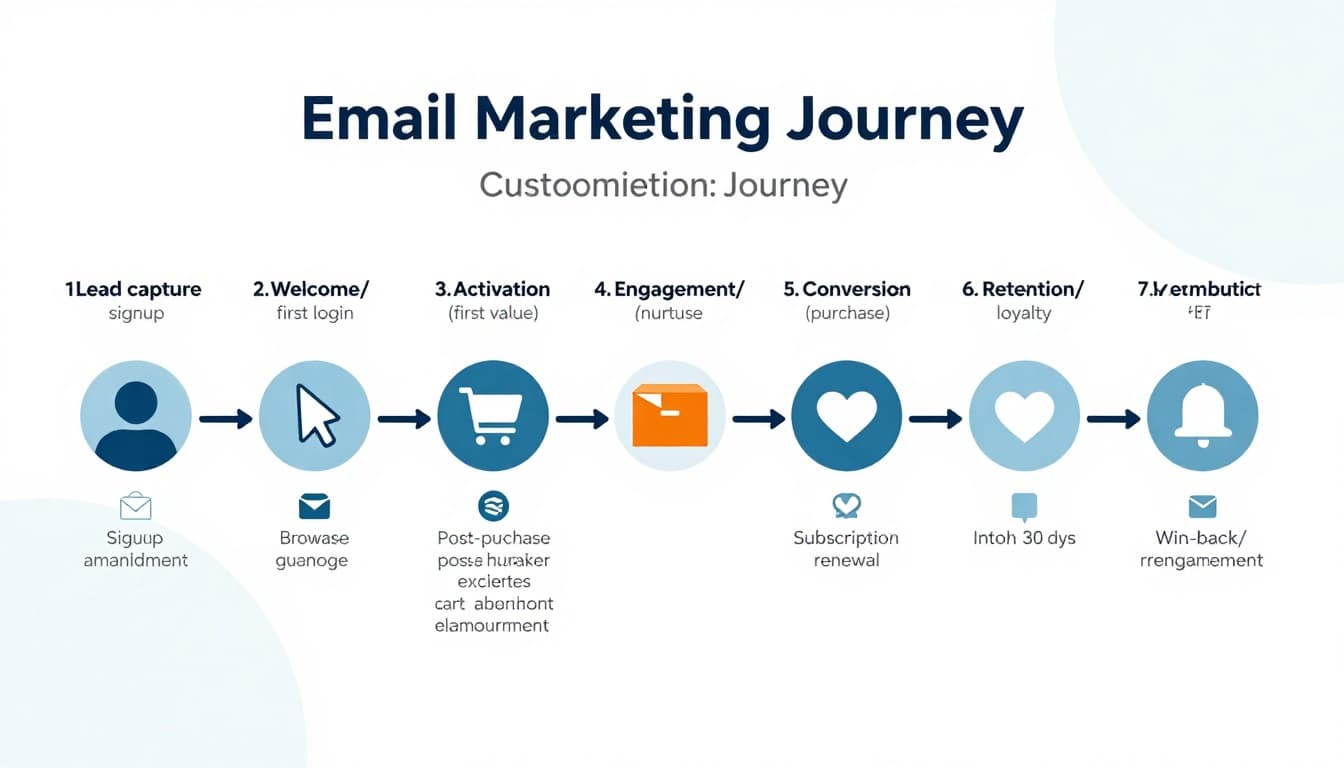
A practical lifecycle setup usually maps to seven stages. You can run this for SaaS, ecommerce, service businesses, newsletters, and marketplaces.
| Lifecycle stage | Typical trigger | Primary goal |
|---|---|---|
| Lead capture | Form signup, lead magnet download | Get the next action (confirm, schedule, browse) |
| Welcome/onboarding | Account created, email confirmed | Set expectations and reduce early drop-off |
| Activation (first value) | First login, first project created | Get them to the “aha” moment |
| Engagement/nurture | Viewed feature, read content, repeat visits | Build habit and trust |
| Conversion (purchase) | Cart started, checkout abandoned, pricing page | Remove friction and close the sale |
| Retention/loyalty | Renewal window, repeat purchase | Keep them satisfied and buying |
| Win-back/re-engagement | Inactive 30 to 90 days | Restart interest or clean your list |
Klaviyo’s guide to lifecycle marketing and the customer journey is a solid reminder that these stages aren’t just for ecommerce. They apply anywhere a relationship develops over time.
Start with data you already have (no fancy stack required)
Most small teams over-complicate lifecycle automation. You don’t need a warehouse or a custom event pipeline to start. You need a few reliable signals.
Focus on these data points first:
- Identity: email address, name (optional), acquisition source (optional)
- Lifecycle events: signup, purchase, booking, trial start, renewal
- Behavior: product usage, key pages visited, cart activity, inactivity window
- Preferences: topics, frequency, product category, location (if relevant)
Here’s the catch: automation falls apart when your triggers are fuzzy. Pick events that are unambiguous. “Visited the site” is vague. “Viewed pricing twice in 7 days” is clear.
The emails that do most of the work (and what they should say)
You don’t need 40 emails to win. You need a handful that are direct, useful, and timed well.
Welcome email (send immediately)
Set expectations and point to the next step.
Good content includes:
- What they’ll get from you (and how often)
- The fastest way to get value today
- A simple reply prompt (helps deliverability and feedback)
Activation nudge (within 24 to 72 hours)
This is the “training wheels” email. Show the shortest path to success.
Example: A project tool might highlight “create your first board.” A service business might highlight “book your first call.”
Conversion assist (when intent is high)
These emails should reduce risk, not add hype. Use:
- FAQs and objections (pricing, timing, contract terms)
- Social proof (short, specific)
- A clear call to action
For ecommerce, Mailjet’s overview of lifecycle email marketing campaigns offers practical examples that translate well into automated flows.
A stage-by-stage automation playbook you can copy
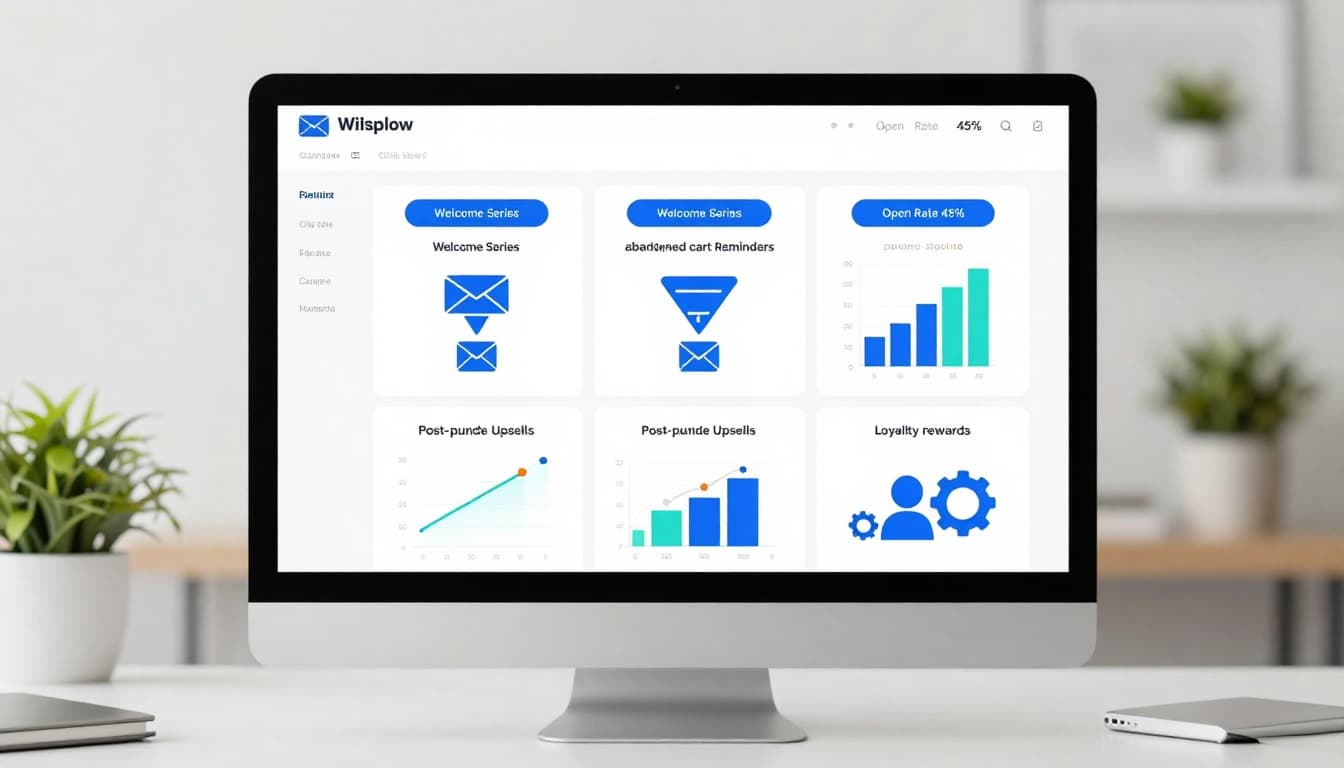
Below is a clean starting set. Keep each flow to 2 to 4 emails at first, then expand only after you see results.
Lead capture: turn interest into a next step
Why it works: people forget fast.
Send:
- A “here’s what you asked for” email (deliver the asset)
- A follow-up that recommends one next action
Business ideas angle: If you sell a lead magnet or mini-course, this is where you can upsell a low-cost product without sounding pushy.
Welcome/onboarding: reduce buyer’s remorse
Why it works: early confusion kills retention.
Send:
- Setup checklist
- “Start here” resources based on their goal (segment this if you can)
Activation: get to first value quickly
Why it works: value beats persuasion.
Send:
- One “do this now” email (single action)
- One example of a successful outcome (short story, short steps)
Engagement/nurture: build habits
Why it works: trust is built in small touches.
Send:
- Tips based on behavior (what they viewed or used)
- Content that matches their industry or role
If you use inbound content to feed your nurture sequences, this guide on inbound content marketing strategies for email campaigns pairs well with lifecycle flows.
Conversion: recover the sale or close the deal
Why it works: it catches real intent.
Send (ecommerce):
- Cart abandonment reminder
- Product comparison, reviews, shipping clarity
Send (SaaS or services):
- “Still deciding?” email with one strong case study
- A short, direct offer (trial extension, consultation slot)
Retention/loyalty: protect your recurring revenue
Why it works: renewals don’t happen by accident.
Send:
- Usage recap and wins (monthly or quarterly)
- Renewal reminders with value highlights
- Loyalty perks for repeat customers
Win-back/re-engagement: revive or release
Why it works: stale lists hurt performance.
Send:
- “Are you still interested?” with preference options
- A best-of recap or strongest offer
- A final notice before you pause emails (keeps your list healthy)
Measure what matters (so automation doesn’t become busywork)
Open rates are nice, but they don’t pay the bills. Track metrics that map to each stage:
- Activation rate: % who reach the first key action
- Conversion rate: % who buy or book after a flow
- Time-to-value: how fast people hit the “aha” moment
- Retention: renewals, repeat purchase rate, churn rate
- List health: bounces, unsubscribes, spam complaints
A simple testing rule: change one thing at a time, subject line or offer or timing, not all three.
Common lifecycle email mistakes (and quick fixes)
- Too many branches early: Start with one path per stage, then segment later.
- Triggers without context: Add a line that explains why they’re getting the email.
- Sales pressure too soon: If they haven’t seen value, selling feels random.
- No exit conditions: Stop sending cart emails after purchase, stop win-back after re-activation.
- Set-and-forget: Review flows quarterly, especially after product changes.
Conclusion: automation should feel like good timing
Lifecycle programs aren’t about sending more emails. They’re about sending fewer, better ones that match what the customer is doing and needing right now.
If you build just the welcome, activation, conversion, retention, and win-back flows, you’ll already be ahead of most brands. Then you can refine, segment, and scale with confidence.
The real win is that lifecycle email marketing turns your customer journey into a system, one that keeps working while you’re busy building the business.

Adeyemi Adetilewa leads the editorial direction at IdeasPlusBusiness.com. He has driven over 10M+ content views through strategic content marketing, with work trusted and published by platforms including HackerNoon, HuffPost, Addicted2Success, and others.