
Hiring a remote employee for a regulated role can feel like hiring through frosted glass. You can see the outline, but details matter, and a small mistake can turn into a compliance problem.
If you’re testing new business ideas or scaling a remote team in finance, healthcare, insurance, or legal services, you’ll run into the same three questions fast: Who is this person, where are they actually working, and are they allowed to work there? That’s the heart of remote hiring compliance.
This guide is for startup founders, small business owners, and ops leaders who need a practical way to verify identity, location, and work eligibility across borders, without turning hiring into a month-long audit.
Why regulated remote roles are different (and riskier)
In many jobs, a wrong hire is an expensive learning moment. In regulated roles, it can become a reportable incident.
Regulated teams often face tighter rules around:
- Customer data access (patient records, payment data, investor info)
- Financial authority (approving payouts, underwriting, trading support)
- Professional licensing (clinical care, legal advice, accounting sign-offs)
- Supervision and audit trails (who approved what, when, and from where)
And here’s the catch: for cross-border remote work, the laws of the place where the worker physically performs the job often apply, even if your company is based elsewhere.
That’s why global remote work policies have become a must-have, not a nice-to-have. You can read this Deel’s guidance on building a compliant work-from-anywhere policy.
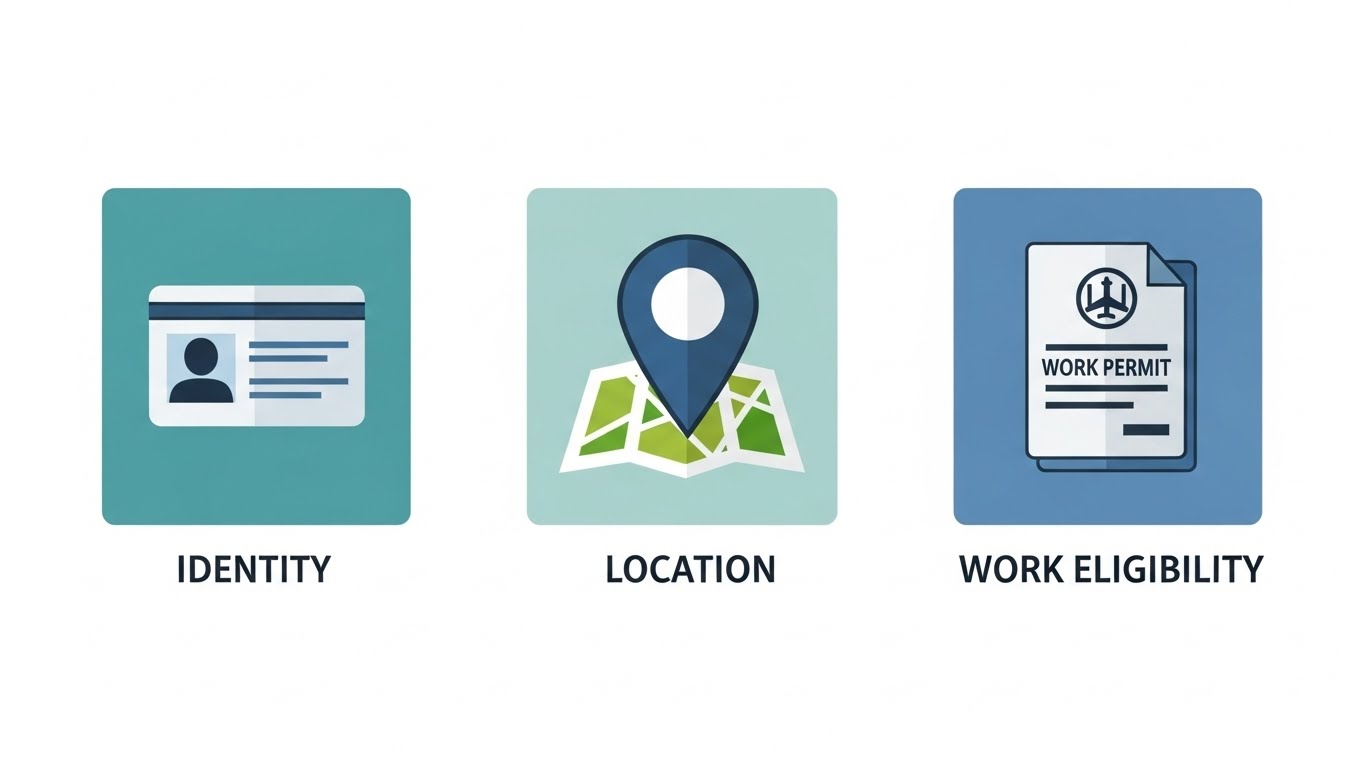
The 3 Verification Pillars: Identity, Location, and Work Eligibility
Think of compliant remote hiring like airport security. One check is never the whole answer. You need layered checks that make sense for the risk level of the role.
1. Identity verification (prove they’re real, and it’s them)
For regulated roles, identity checks should be consistent, documented, and repeatable. A casual “send a passport photo” process won’t hold up if you’re audited later.
A solid identity verification flow usually includes:
- Government ID validation: confirm the ID is authentic and unaltered.
- Liveness check: confirm a real person is present, not a replay or deepfake.
- Video review (as needed): for higher-risk roles, a live or recorded session helps confirm the person matches the ID.
- Audit log and retention: keep evidence of what was checked, when, and by whom (stored securely, with access limits).
Write down your acceptance rules upfront (which IDs you accept, what constitutes a failure, and what triggers manual review). Consistency is part of compliance.
2. Location verification (prove where work is actually happening)
Location isn’t trivia. It drives payroll tax, labor rules, privacy requirements, and, for regulated work, whether the employee can even perform the role from that jurisdiction.
Use a layered approach:
- Work location attestation: require a signed confirmation of the employee’s primary work address and country (and sometimes state or province).
- Relocation notice clause: your contract should require notice before moving, and allow you to pause access until re-checks are complete.
- Light-touch technical signals: IP logs or sign-in anomaly alerts can support investigations, but don’t treat them as the “source of truth.”
Be careful with tracking. Some jurisdictions restrict location monitoring, especially if it’s continuous or tied to personal devices. If you allow BYOD, privacy obligations get more complex fast. TermsFeed’s overview is a helpful starting point.
3. Work eligibility verification (prove they have the right to work there)
“Right to work” depends on where the person will physically work, not where your company is incorporated.
Your process should answer:
- Are they legally allowed to work in that country (and region, if relevant)?
- Will they be an employee, contractor, or hired via an Employer of Record (EOR)?
- Do you need local payroll registration, tax withholding, or statutory benefits?
If the worker is in the US, follow the required steps for employment eligibility verification (often tied to Form I-9 obligations). For cross-border hires, eligibility often means verifying local authorization or using an EOR to employ them compliantly in-country.
Extra checks for regulated roles (what most companies forget)
Identity, location, and right-to-work are the baseline. Regulated roles usually need more layers, especially when the employee will touch money, sensitive data, or regulated decisions.
1. Licensing and jurisdiction fit
A license is often tied to a specific place. A clinician licensed in one state may not be able to treat patients in another. The same logic can apply to legal services, accounting sign-offs, and some financial activities.
What to do:
- Verify the license is valid for the worker’s location and scope of work
- Track renewals with a calendar and proof of review
- Document who approved the role as “in-scope” for that jurisdiction
2. Background checks that match the country
A “standard” background check package can be meaningless outside its home country.
Better practice:
- Use country-appropriate checks (criminal history where lawful, education, employment)
- For finance roles, consider regulatory and fraud-related checks
- Re-check periodically for higher-risk access (frequency based on your risk policy)
3. Sanctions and watchlist screening (finance and fintech, especially)
If someone will handle funds, payments, or customer onboarding, add sanctions screening and adverse media checks that fit your compliance program.
4. Supervision, segregation of duties, and access controls
Regulators care about controls, not slogans.
Keep it simple:
- Role-based access (only what they need)
- Multi-factor authentication
- Logged admin actions for sensitive systems
- Clear reporting lines and reviewer assignments
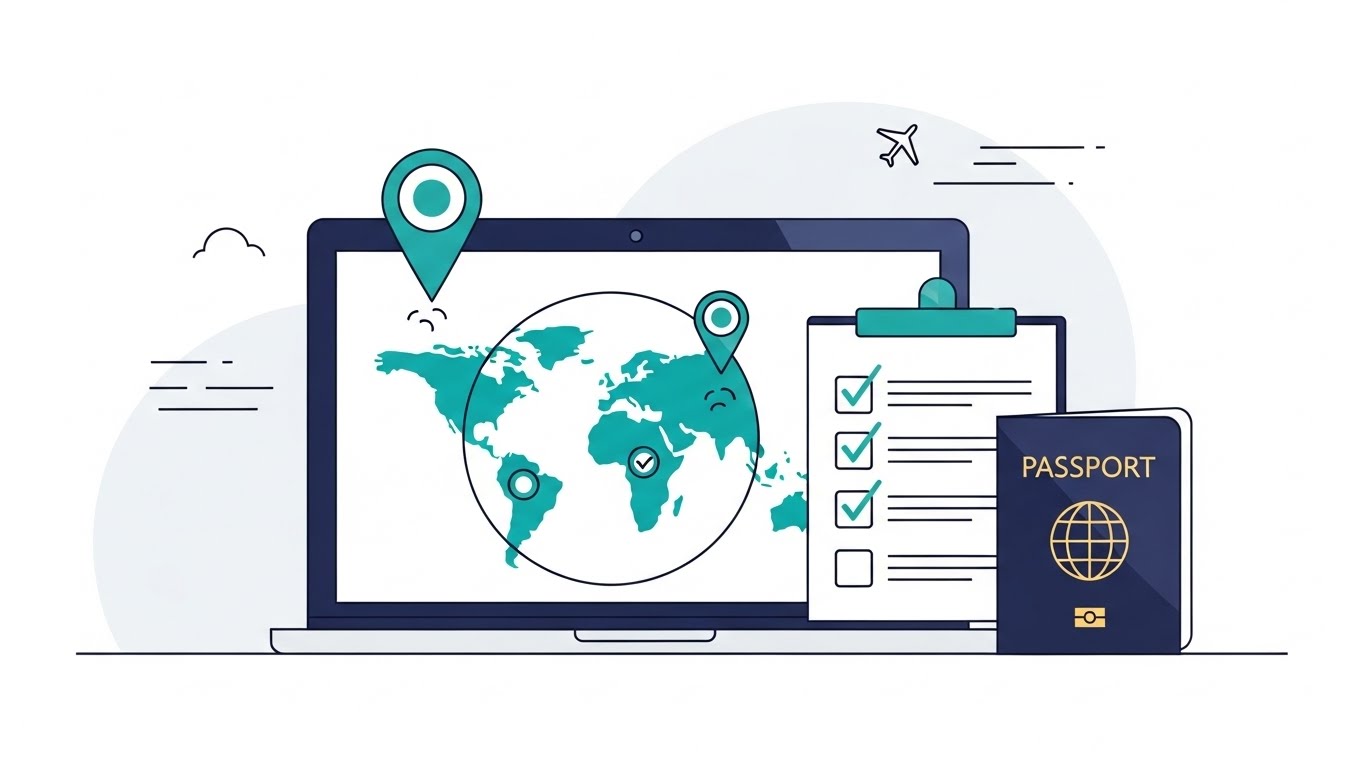
A practical workflow you can run for every cross-border hire
Here’s a repeatable sequence that works well for most small and mid-sized teams.
1. Define the role risk level (low, medium, high) based on data access, money movement, and regulatory exposure.
2. Confirm work location (address, country, and any region that affects licensing).
3. Verify identity (ID, liveness, and manual review if flagged).
4. Verify right to work in the work location, pick the hiring model (entity, EOR, or contractor), and document why.
5. Run regulated-role checks (license, background screening, sanctions screening as needed).
6. Lock onboarding to controls: only grant production access after checks pass, training is done, and acknowledgments are signed.
7. Set re-verification triggers: relocation, role change, access upgrade, or periodic review for sensitive roles.
Quick Comparison Table: Common Compliance Tools
| Tool or platform type | Best for | Starting cost | Key benefit |
|---|---|---|---|
| ID verification (ID + liveness) | Proving identity remotely | Varies | Stronger fraud defense with audit logs |
| Employer of Record (EOR) | Hiring employees abroad without an entity | Varies | Handles local payroll, tax, and contracts |
| Background screening platform | Regulated checks across countries | Varies | Country-appropriate screening workflows |
| Device management (MDM) | Securing endpoints for sensitive access | Varies | Controls data leakage and device risk |
| HRIS + access provisioning | Consistent onboarding and offboarding | Varies | Reduces “shadow access” and missed steps |
Common failure points (and how to avoid them)
1. Mismatch between “home address” and “work location.” Someone can live in one country and work long-term in another. Require clarity on where work happens.
2. Over-collection of personal data. More data isn’t safer if you can’t protect it. Collect the minimum, encrypt it, and restrict access.
3. No relocation process. People move. If your policy doesn’t force a review before a move, you’ll find out after the fact, usually when something breaks.
Make remote hiring compliance repeatable, not heroic
Regulated remote hiring works when you treat it like a system, not a scramble. Build your process around identity, location, and work eligibility, then add the extra checks your industry expects.
If you can document decisions, keep audit trails, and re-check when circumstances change, you’ll reduce risk without slowing the business down. That’s what strong remote hiring compliance looks like in practice.

Adeyemi Adetilewa leads the editorial direction at IdeasPlusBusiness.com. He has driven over 10M+ content views through strategic content marketing, with work trusted and published by platforms including HackerNoon, HuffPost, Addicted2Success, and others.