
Most business plans fail for a simple reason: they describe the start, but ignore the middle and the end.
A lifecycle management plan fixes that. It’s the practical playbook for how you’ll design, build, run, improve, and eventually retire a product, service, system, or even a whole process. If you’re a founder shipping features fast, a marketer running campaigns, or a small business owner buying tools and equipment, lifecycle thinking keeps you from paying twice for the same lesson.
This guide breaks down a clear framework you can copy, plus the steps to execute it without turning it into a binder no one reads.
What a lifecycle management plan is (and why teams regret skipping it)
A lifecycle management plan is a documented approach for managing something from “we need this” to “we don’t need this anymore.” That “something” might be:
- A software product or internal tool
- Customer onboarding and retention process
- An ecommerce SKU line
- A service offering (bookkeeping, consulting, home services)
- Business assets like laptops, vehicles, or POS systems
Why bother? Because costs and risks don’t show up at purchase time, they show up later. The plan forces you to answer the uncomfortable questions early: Who owns it? What does “done” mean? How do we measure value? What happens when it breaks, or when it’s outdated?
If you want a broader view of lifecycle phases (from a project management angle), Atlassian’s breakdown of the project life cycle phases is a helpful reference point.
A simple 6-phase lifecycle framework you can use anywhere
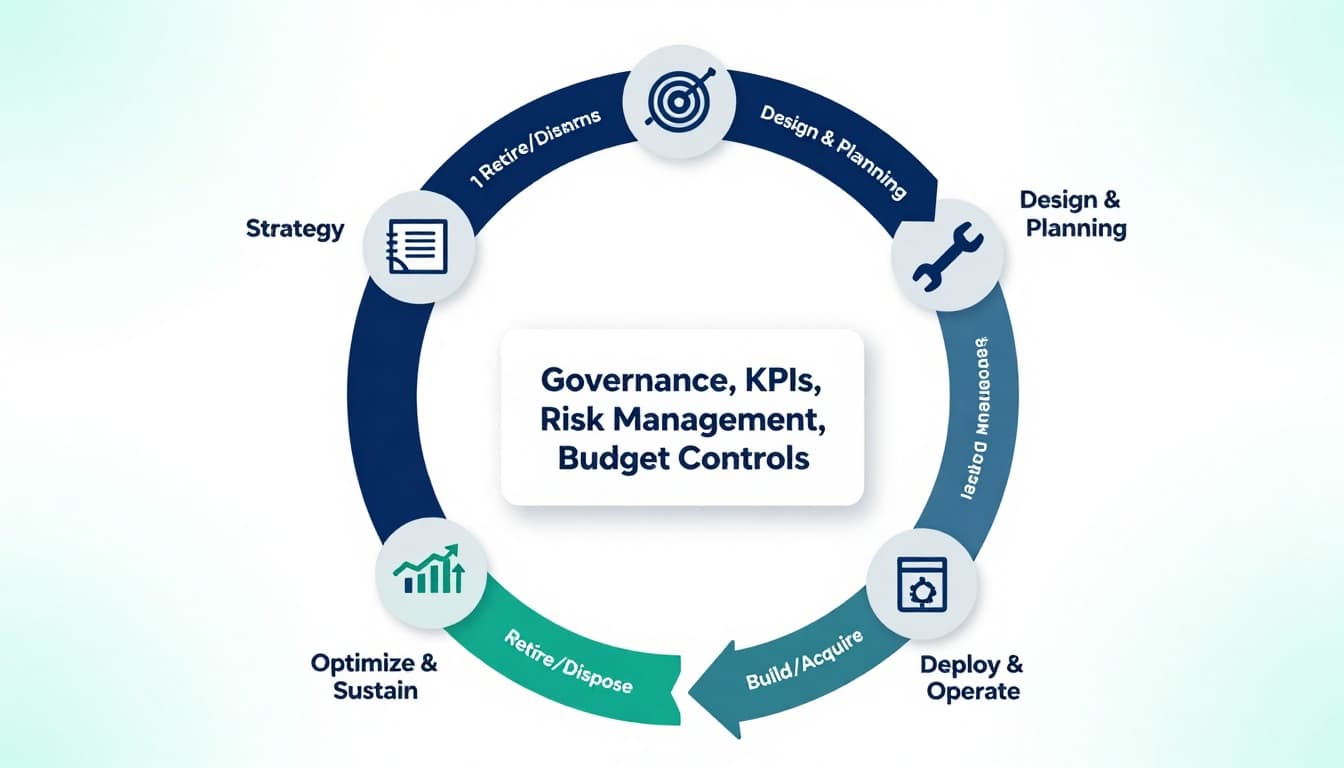
Here’s the lifecycle model that works for products, projects, and operational assets. Think of it like owning a car: buying it is one moment, maintaining it is the relationship.
1) Strategy and requirements
Define the business outcome and the boundary lines.
A useful prompt: “What problem are we paying to solve, and what would success look like in 90 days?” Get specific about scope, users, constraints (security, compliance), and non-negotiables (budget cap, launch date).
2) Design and planning
Turn the need into a plan people can act on.
This is where you set milestones, dependencies, and acceptance criteria. For bigger work, a tight proposal can prevent months of drift. If you need a structured way to document it, use this step-by-step guide to writing a project proposal.
3) Build or acquire
Decide whether you’ll create it, buy it, or partner for it.
For SaaS and tools, include trial criteria, security checks, and data ownership terms. For physical assets, define vendor standards, warranty needs, and replacement parts availability.
4) Deploy and operate
Put it into real use, with real owners.
Operational reality matters here: training, handoffs, support, backups, documentation, and “what to do when it breaks at 2 a.m.”
5) Optimize and sustain
Improve results, reduce waste, keep quality high.
This is the phase most teams skip, then wonder why costs climb. Put feedback loops on a calendar (monthly metrics review, quarterly roadmap check).
If you want a practical view of how teams manage work end-to-end, this overview of project cycle management phases and best practices can help you connect lifecycle planning to day-to-day execution.
6) Retire and dispose
Remove, replace, or sunset with intention.
Retirement is not failure. It’s good hygiene. Plan for data archiving, customer comms (if relevant), contract cancellation, access removal, and disposal policies.
How to design a lifecycle management plan (without overcomplicating it)
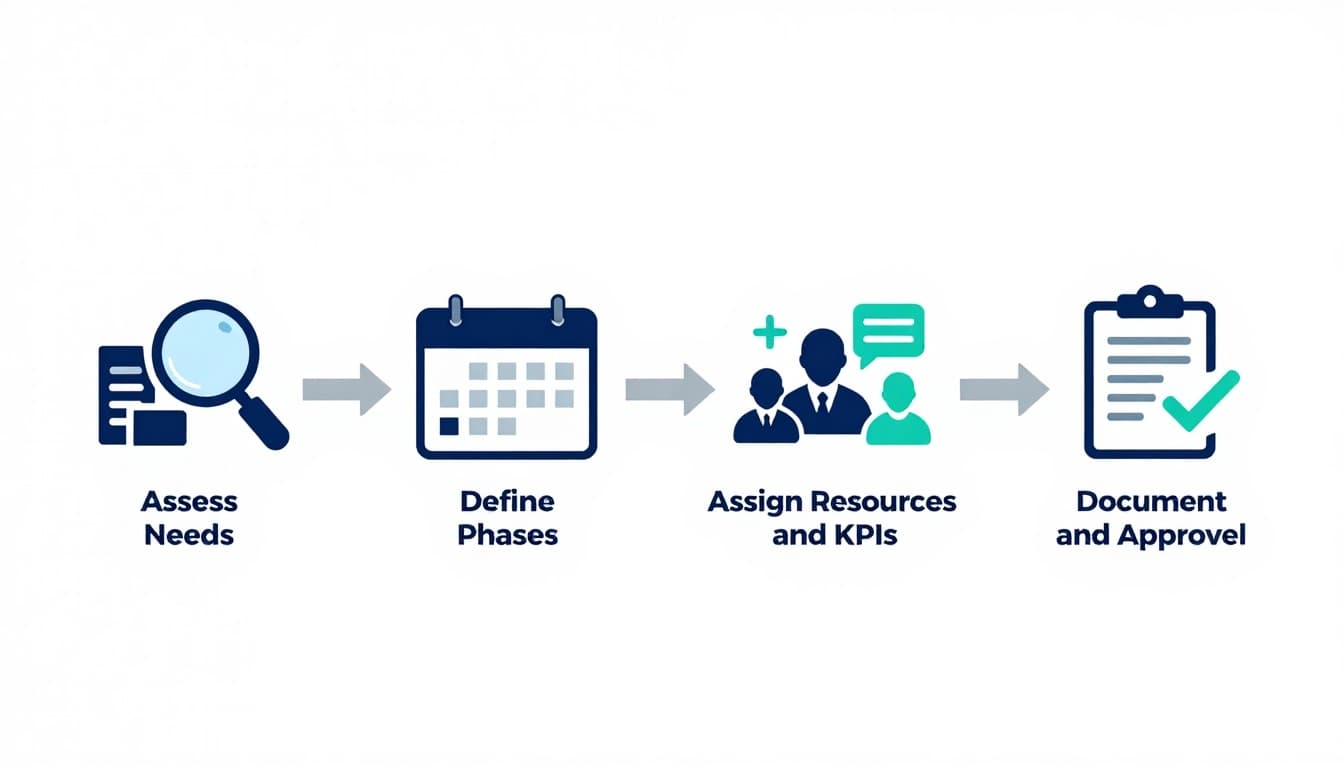
A solid plan is short, clear, and easy to run. Aim for 2 to 5 pages, plus a one-page summary.
Step 1: Pick the “unit” you’re managing
Don’t plan for “growth.” Plan for something concrete: “Customer onboarding flow,” “CRM system,” “Subscription box product line,” or “Fleet vehicles.”
Step 2: Write a one-line purpose and the primary metric
Examples:
- “Reduce onboarding time,” metric: time-to-first-value
- “Increase renewal rate,” metric: net revenue retention
- “Control tool spend,” metric: cost per active seat
This metric becomes your north star for decisions.
Step 3: Define owners, not committees
Use three roles:
- Accountable owner: one person who answers for outcomes
- Operators: people who run the day-to-day
- Approvers: finance, security, leadership, when needed
If ownership is fuzzy, everything else will be fuzzy.
Step 4: Add guardrails (budget, risk, and change control)
Budget needs a life-cycle view, not a purchase view. A “cheap” tool that needs heavy setup and constant admin time isn’t cheap.
For product work, budgeting discipline matters early. This guide on product development budgeting best practices is a good reminder of how costs sneak in through scope creep and wishful estimates.
Step 5: Decide what “done” looks like in every phase
Write simple exit criteria for each phase. Example for Deploy and Operate:
- Training completed for users
- Support channel assigned
- Baseline metrics captured
- Rollback plan documented
Step 6: Put the plan on rails with a cadence
A plan without dates is a wish. Add:
- Monthly health check (metrics + issues)
- Quarterly roadmap review (changes + budget)
- Annual lifecycle review (renew, replace, retire)
The execution layer: governance, KPIs, and tools that keep it working
Execution fails when the plan lives in a doc, not in the workflow. Two fixes help most teams fast:
Fix 1: Use a lightweight dashboard. One page showing status, cost, key risks, and next milestones.
Fix 2: Choose tools that match your scale. A startup doesn’t need an enterprise stack, but it does need consistency.
Here’s a quick comparison to keep choices practical:
| Tool/platform | Best for | Starting cost | Key benefit |
|---|---|---|---|
| Asana | Small teams running repeatable projects | Low | Clear task ownership and timelines |
| Jira | Product and engineering teams | Low to mid | Strong issue tracking and releases |
| Notion | Lightweight docs + internal wikis | Low | Plan and process documentation in one place |
| Google Sheets | Early-stage ops and budgets | Low | Fast tracking without setup overhead |
To connect lifecycle planning to delivery habits, this article on the project delivery process and best practices can help you align milestones, stakeholders, and handoffs.
Common failure points (and how to avoid them)
A lifecycle management plan usually breaks in predictable places:
- Too many KPIs: pick 1 primary metric, then 2 to 3 support metrics.
- No retirement plan: every tool and product needs an exit path.
- Hidden work: training, support, and admin time must be budgeted.
- Ownership gaps: if “everyone” owns it, no one does.
A simple test: if a new hire can’t understand the plan in 10 minutes, it’s too complex.
Conclusion: make the lifecycle management plan a weekly habit
A lifecycle management plan isn’t paperwork, it’s how you stop good business ideas from turning into expensive clutter. Define phases, assign real owners, track one primary metric, and review on a fixed cadence.
Start small: apply your lifecycle management plan to one asset or process this month, then expand once the rhythm feels natural. The payoff is calmer launches, fewer surprises, and smarter spending. What would change in your business if nothing important was allowed to drift without an owner?

Adeyemi Adetilewa leads the editorial direction at IdeasPlusBusiness.com. He has driven over 10M+ content views through strategic content marketing, with work trusted and published by platforms including HackerNoon, HuffPost, Addicted2Success, and others.