
A dormant account isn’t “lost,” it’s just quiet. The hard part is waking it up without crossing a compliance line that turns a retention win into a regulator headache. That’s why iGaming player reactivation needs more than a discount and a catchy subject line. It needs rules, guardrails, and proof.
This guide breaks down practical triggers, compliant messaging scripts, and the controls that keep campaigns safe for players and defensible for audits, across common frameworks like GDPR, UKGC expectations, and MGA-style responsible marketing.
Start with a lifecycle map (because “send a promo” isn’t a strategy)
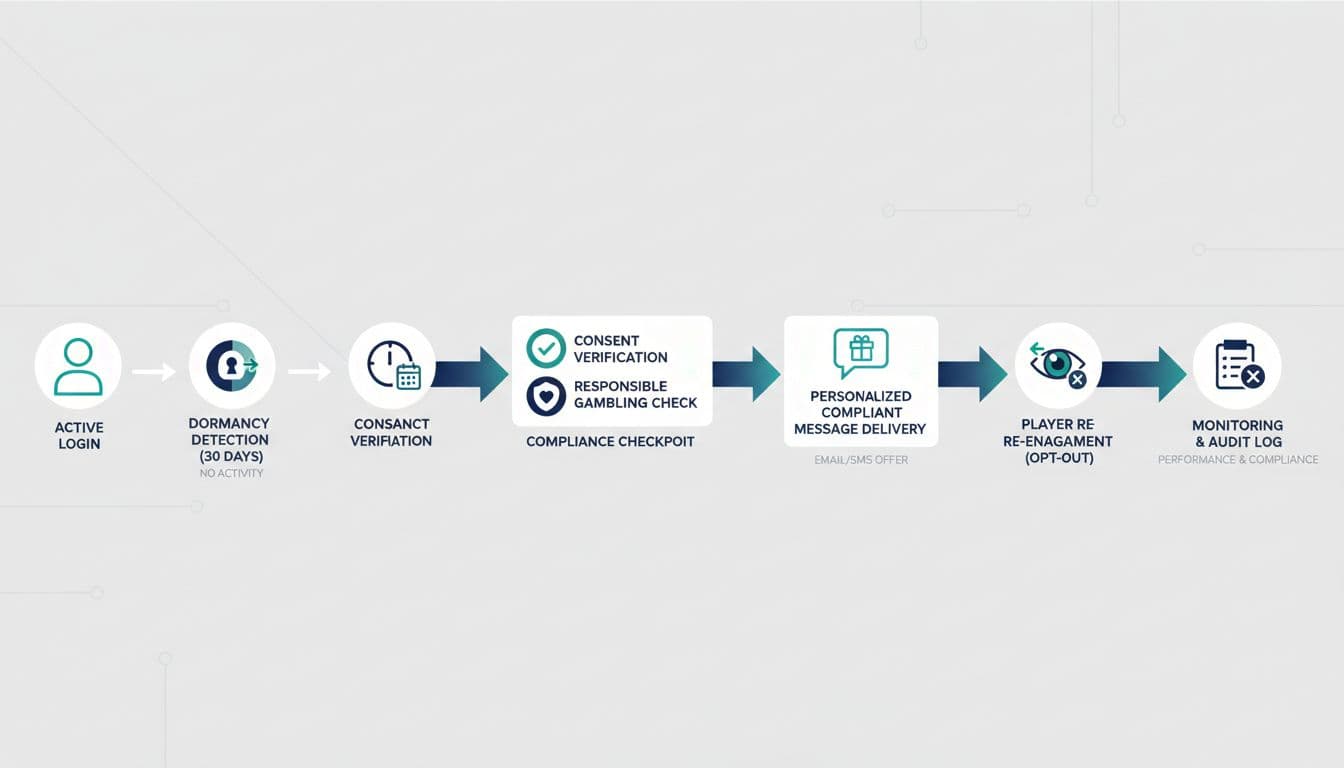
Think of reactivation like restarting a car after winter. You don’t floor the gas. You check the battery, the fuel line, and the warning lights first.
A clean lifecycle map usually includes:
- Dormancy detection (inactivity window by product and market)
- Eligibility checks (consent, age/KYC status, jurisdiction)
- Safety checks (self-exclusion, time-out, RG risk markers)
- Message selection (content, offer size, channel)
- Frequency caps (so you don’t spam)
- Monitoring and audit log (what was sent, why, and who approved it)
If you’re building multi-channel journeys, it also helps to review tool stacks and workflows like those discussed in Top tools for multi-channel reactivation in iGaming, then adapt the approach to your own compliance constraints.
Define “dormant” the smart way (and separate marketing from account status)
“Dormant” for CRM usually means “no activity we care about,” not “inactive under financial or account-closure rules.” Keep the definition simple, written down, and consistent.
A practical dormancy segmentation model:
- 7 to 14 days inactive: early drift, use reminders, not heavy promos
- 15 to 30 days: light incentive, clear terms, low pressure
- 31 to 90 days: stronger personalization, careful offer sizing
- 91 to 365 days: consider a final touch or preference refresh
- 365+ days: re-check data retention rules and local requirements before contacting
Before any message goes out, run a hard eligibility filter:
- Marketing consent is valid for that channel (email vs SMS vs push)
- Player is not self-excluded, cooling off, or RG-closed
- Player is not blocked for AML/fraud review
- Player is in an allowed jurisdiction and is age-verified
- Your privacy notice covers profiling for marketing, where applicable
For a marketing-focused view of why players go quiet and how operators approach outreach timing, see Retargeting dormant iGaming users and compare it to your own seasonality and consent rules.
Build compliant triggers that include safety gates (not just timers)
Timing triggers are easy. Compliant triggers are layered.
Core trigger types that work well for dormant accounts
Inactivity timer: last login, last bet, last deposit (use the least invasive metric that still works).
Product lapse: sportsbook active but casino dormant (or vice versa).
Interrupted journey: registered but never deposited, deposited once then stopped.
Operational triggers: KYC expiring soon, payment method disabled (be careful to avoid “fake service” subject lines that are really promos).
The compliance gates to apply before each send
Consent check: channel-specific opt-in, with a stored timestamp/source.
RG screen: exclude self-excluded and time-outs, suppress offers for high-risk markers.
Offer suitability: keep bonuses modest for lower-value segments, avoid “chase” mechanics.
Jurisdiction policy: wording, bonus rules, and required disclosures differ by market.
A simple way to document this is to treat every send as: Trigger → Segment → Safety gates → Content variant → Proof (logs).
Write compliant scripts that don’t sound like a robot (or a loan shark)
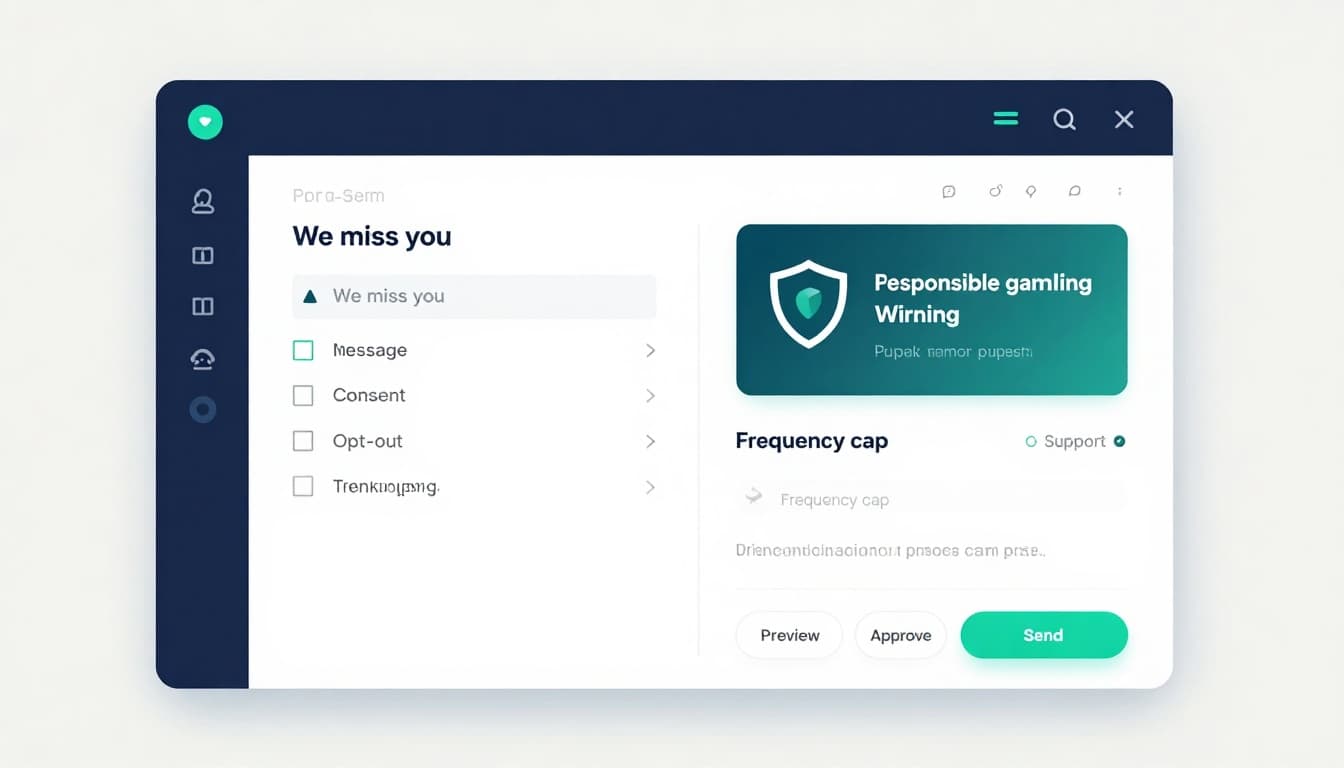
Good reactivation copy reads like a polite nudge, not a countdown timer. It also makes key terms easy to spot.
Script 1: Soft reminder (no bonus)
Subject: Still interested in [product type]?
Body:
Hi [First name], we noticed you haven’t logged in for a bit. If you’d like, you can jump back in and see what’s new.
You can manage limits or take a break anytime in your account tools. Prefer not to get offers like this? Unsubscribe or update preferences here: [link].
Why it’s compliant: no pressure, clear control language, easy opt-out.
Script 2: Small bonus with clear “key terms”
Subject: A small thank you, available for 72 hours
Body:
Hi [First name], here’s 10 free spins to welcome you back.
Key terms: min deposit [X], wagering [X] (slots only), expires in 72 hours, max win [X]. Full terms: [link].
Play responsibly. You can set limits or time-out anytime here: [RG tools link]. Unsubscribe: [link].
Why it’s compliant: transparent terms near the offer, not hidden behind tiny links.
Script 3: High-value player (keep it respectful)
Subject: An offer based on what you like to play
Body:
Hi [First name], we set up an offer for you based on your past play in [category].
Key terms: [short list]. Full terms: [link].
If you’d rather not receive VIP offers, update preferences here: [link]. Responsible play tools are always available in your account.
Why it’s compliant: personalization without emotional pressure, clear preference control.
Phrases to avoid (they create risk fast)
- “Win back your losses”
- “Guaranteed win” or “risk-free” (unless it truly is)
- “Last chance” urgency that pushes deposits
- Any framing tied to money stress, debt, or personal problems
If your content team needs a plain-language reminder of safer play principles, this guide on playing real-money online slots safely is a useful baseline for what responsible messaging should sound like.
Control fatigue with frequency caps (and prove you did)
Reactivation fails when your brand becomes that friend who texts 12 times in a row. Set caps, then enforce them across channels.
Practical starting caps (adjust by market and player feedback):
- Email: 1 to 2 per week for dormant segments
- SMS: 1 per week (only with explicit opt-in)
- Push: 2 per week max, and only if pushes add real value
- On-site: show once per session, then cool down
Also add suppression rules:
- Suppress promos for X days after a player opts out of any channel.
- Suppress offers after a complaint, RG interaction, or responsible gambling resource click, route to safer-play content instead.
Make your campaigns audit-friendly (because someone will ask “why them?”)
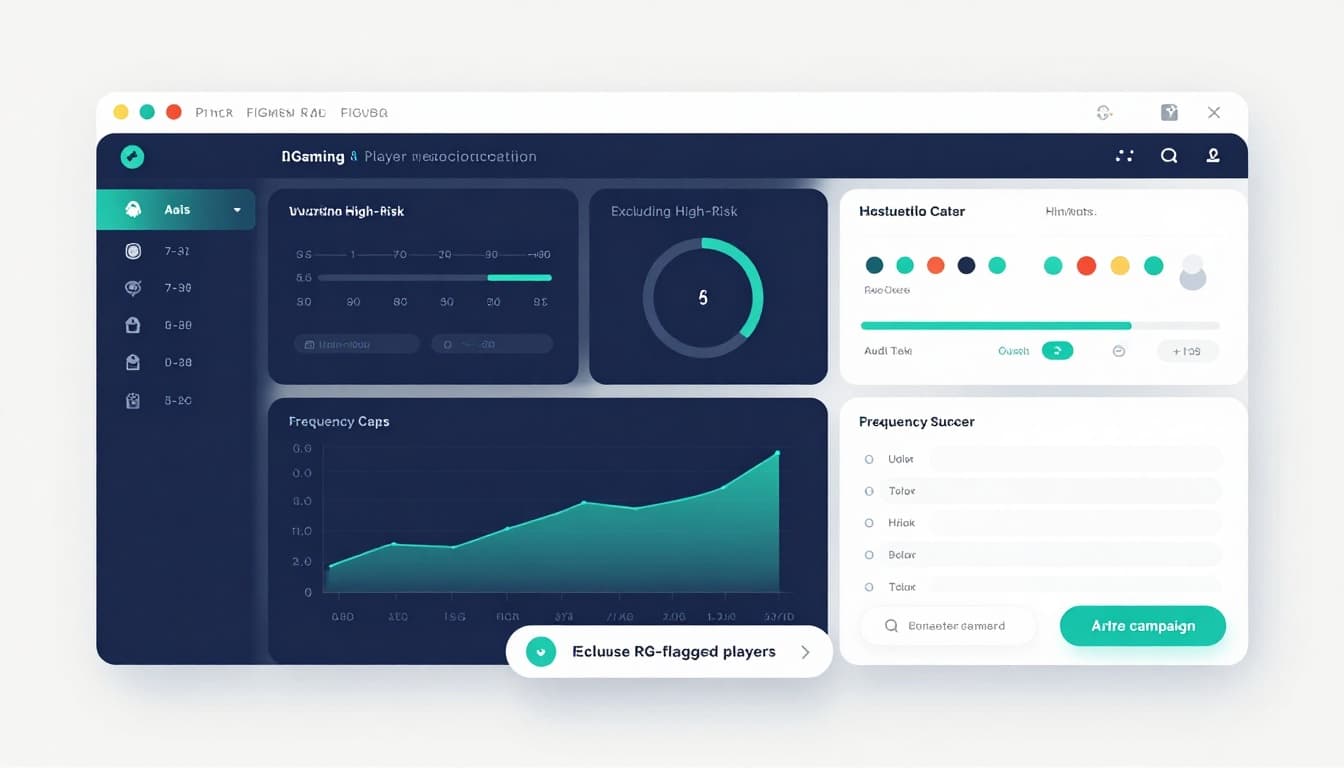
If a regulator or internal auditor asks why a player got a message, you need an answer that fits in one breath.
Use an approval and logging standard:
- Who approved the template and segment logic (marketing, legal, RG)
- When it changed (version history for copy and triggers)
- What checks ran (consent, self-exclusion, jurisdiction)
- What was sent (channel, timestamp, exact content variant)
A/B testing is fine, but keep it safe:
- Test subject lines, timing, and offer size.
- Don’t test “pressure language” versus “normal language.”
- Track opt-out rate and RG interactions as primary health metrics, not just reactivation rate.
For a real-world example of data-driven reactivation lift, review this case study on Ninja Casino’s player reactivation uplift and focus on the methodology (real-time segmentation and measurement), not just the headline number.
Quick reference table: triggers, safe content, and channel fit
| Dormant window | Best trigger | Safest message type | Best-fit channels |
|---|---|---|---|
| 7 to 14 days | No login since last session | Reminder, product updates, no bonus | Push, email |
| 15 to 30 days | No bets and no deposits | Small incentive with clear key terms | |
| 31 to 90 days | Product lapse by category | Personalized offer with RG checks | Email, SMS (opt-in only) |
| 91+ days | Long inactivity + consent re-check | Preference refresh or final low-pressure touch |
Conclusion: win the player back, keep the proof
Dormant accounts respond best to calm, relevant outreach, sent at the right time, to the right people, with the right controls. When your triggers include consent and safety gates, and your scripts stay honest and low-pressure, reactivation becomes repeatable instead of risky.
Treat iGaming player reactivation as a compliance-first lifecycle, not a last-minute promo blast, and you’ll protect players, protect the license, and still bring revenue back online.

Adeyemi Adetilewa leads the editorial direction at IdeasPlusBusiness.com. He has driven over 10M+ content views through strategic content marketing, with work trusted and published by platforms including HackerNoon, HuffPost, Addicted2Success, and others.