
If your regulated job ads keep getting views but few qualified applicants, it’s rarely a “talent shortage.” More often, the ad reads like a policy memo, hides the real work, or scares good candidates off with vague risk language.
Regulated roles (healthcare, finance, insurance, legal, clinical research, privacy, safety) have extra rules, extra screening, and extra pressure. Candidates already know that. Your job ad should prove the role is real, the team is prepared, and the process is fair.
This guide shows a practical structure you can reuse, plus before-and-after examples for regulated roles that people actually respond to.
Why regulated job ads get ignored (even when the pay is solid)
Candidates skim job posts like they skim restaurant menus. If they can’t picture the job in 20 seconds, they move on.
Common response-killers in regulated hiring:
- Wall-of-text compliance language that says nothing about day-to-day work.
- Laundry lists of requirements that read like a wish list, not a real role.
- No pay range (or no clarity on bonus, shift diffs, call, or overtime).
- Unclear license and background check expectations, buried at the bottom.
- “Must be able to…” fluff that replaces outcomes with generic traits.
- A cold, one-way tone that makes candidates feel like suspects, not professionals.
A strong job ad can be compliant and still sound human. Think “clear contract,” not “legal threat.” For a broader hiring risk context, see these hidden hiring risks and recruitment drawbacks that often show up after a rushed posting.
A high-response structure for compliant regulated job ads
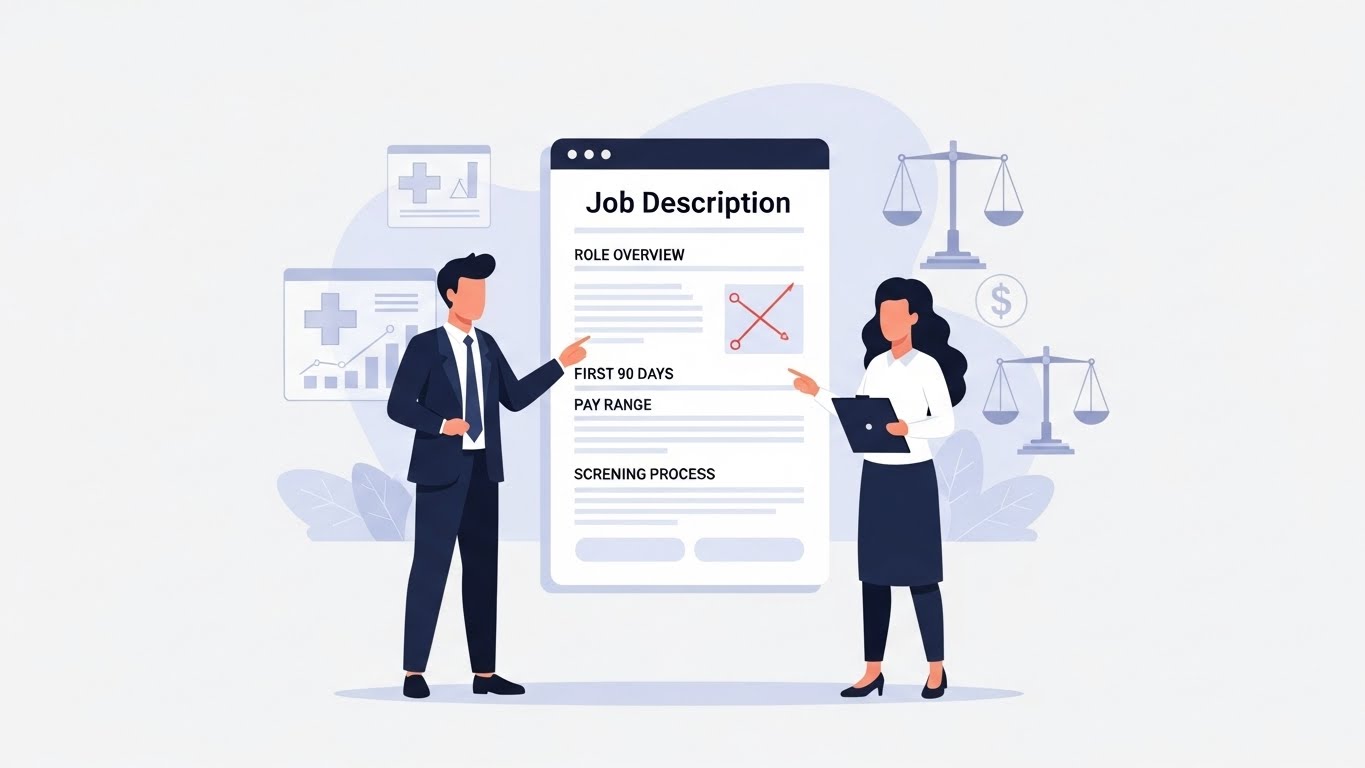
You don’t need a longer job description. You need a clearer one. Use this 7-part layout to keep regulated job ads readable and defensible.
1. Start with the work, not the company
Lead with the role’s purpose in plain language.
Bad: “Seeking dynamic self-starter to support compliance initiatives.”
Better: “You’ll review transactions for AML red flags, write clear case notes, and partner with Legal to close alerts.”
2. Add a “first 90 days” snapshot
Regulated hires want to know what success looks like, fast. Include three outcomes, such as:
- Close X priority items.
- Pass onboarding checks and required training.
- Take ownership of a defined process.
3. Separate “must-have” from “nice-to-have.”
This is where many regulated ads quietly fail. If everything is required, nothing is believable.
A quick rule. Licenses and legal eligibility are must-haves. Tool preferences go in the nice-to-have.
4. Be direct about compliance and screening
Don’t bury it, but don’t overdo it. Say what’s required: background check type, drug screen (if applicable), credential verification, and why it exists (patient safety, fiduciary duty, etc.).
If you want a refresher on safe screening practices, read this guide on the importance of pre-employment background checks.
5. Include pay range and the real schedule
Pay transparency expectations continue to rise, and many jurisdictions now require salary ranges to be included in postings. If you hire across states, align with your counsel and current guidance.
Also spell out the schedule details candidates care about:
- Shift, weekends, call rotation
- Hybrid rules (and what “hybrid” means)
- Travel percent
6. Keep EEO and accommodation language short (but present)
Include an EEO statement and an accommodation line. The EEOC’s best practices of private sector employers is a solid reference point.
7. Make the next step easy
One clear call to action, one link, one timeline promise if you can keep it.
Here’s a quick “tighten the ad” reference:
| Job ad section | Common weak version | Higher-response version |
|---|---|---|
| Opening | “Exciting opportunity…” | “You’ll do X, for Y, using Z.” |
| Requirements | 14 bullets, all “required.” | Must-have vs nice-to-have |
| Compliance | Hidden, vague | Clear screening steps, plain reasons |
| Pay and schedule | Missing or unclear | Range, shift, location rules |
| Close | “Only shortlisted…” | Simply apply the steps, expected timeline |
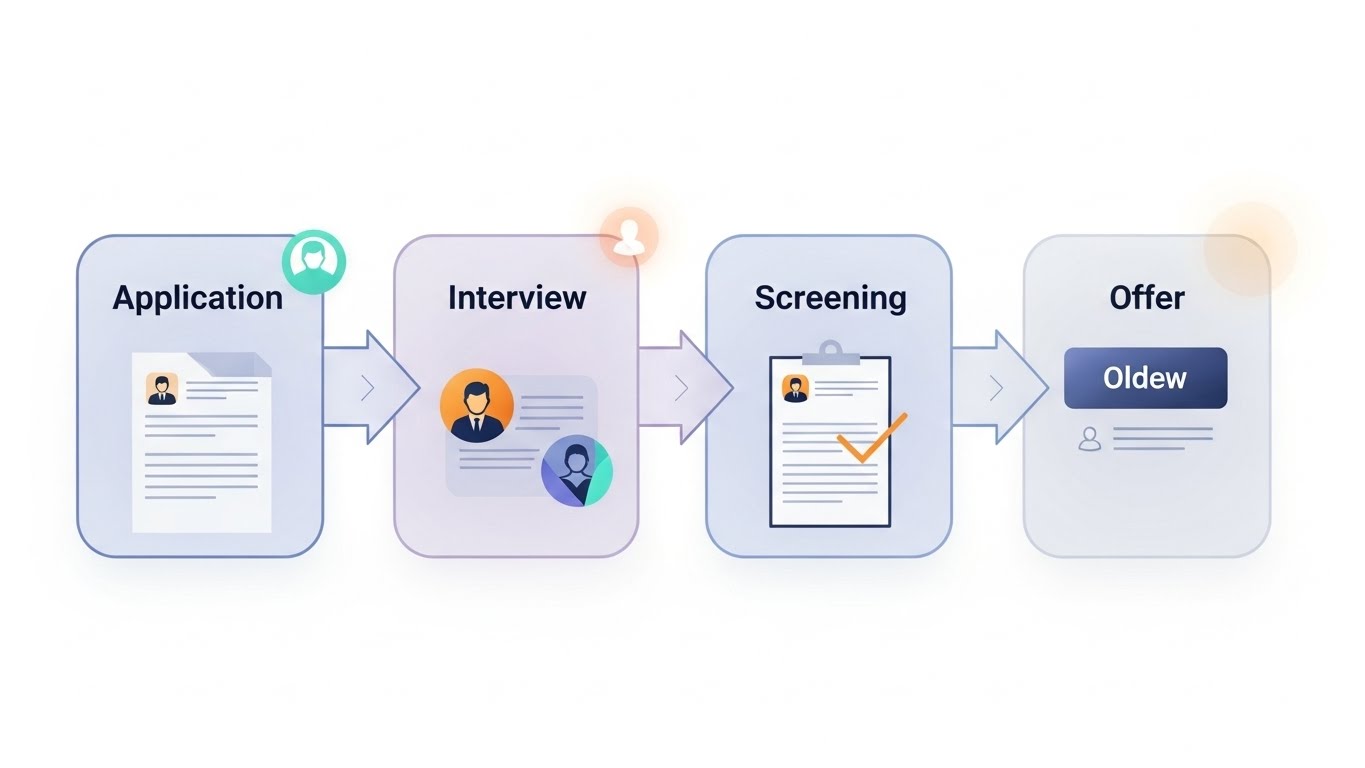
Before-and-after examples for regulated roles (what changes, and why)
The “before” versions below are the kinds of posts that get ignored. The “after” versions keep the same compliance needs, but earn responses.
Example 1: Registered Nurse (Outpatient Clinic)
Before (low response):
“Seeking experienced RN. Must be a team player. Must work in fast-paced environment. Competitive pay. Responsibilities include patient care and other duties as assigned. Must pass background check.”
After (compliant and answerable):
Registered Nurse, Outpatient Clinic (Mon-Fri, no nights)
You’ll run intake, administer ordered meds and vaccines, coordinate referrals, and document care in the EHR. Most visits are scheduled, not urgent care.
Pay: $38 to $48 per hour (based on experience), plus benefits.
Must-have: Active RN license (state), 1+ year clinical experience, basic life support certification by start date.
Screening: License verification, employment verification, and background check (patient safety requirement).
We provide reasonable accommodations in the hiring process. Apply with a resume, we reply within 5 business days.
Why it works: it names the workflow, sets expectations, and states screening without sounding accusatory.
Example 2: AML Compliance Analyst (Bank or Fintech)
Before (low response):
“We need an AML analyst to support BSA/AML program. Must be detail-oriented and able to work independently. Familiar with regulations. Duties include reviewing alerts.”
After (compliant and answerable):
AML Compliance Analyst (Transaction Monitoring)
You’ll investigate alerts, write clear narratives, and recommend disposition (clear, escalate, SAR support) based on documented facts. You’ll also improve one rule or workflow per quarter with the team.
Pay: $85,000 to $110,000 base, plus bonus eligibility.
Must-have: 2+ years in AML investigations or transaction monitoring, strong writing, comfort with case tools and spreadsheets.
Nice-to-have: CAMS, experience with crypto typologies, SQL basics.
Screening: Identity verification and background check (role has access to sensitive financial data).
We welcome applicants from non-traditional paths if you meet the must-haves.
Why it works: it turns “familiar with regulations” into specific outputs, and it reduces the “gatekeeping” tone.
Example 3: Privacy Officer (HIPAA, healthcare group)
Before (low response):
“Privacy Officer needed. Responsible for HIPAA compliance, policies, and training. Must keep information confidential. Other duties as assigned.”
After (compliant and answerable):
Privacy Officer (HIPAA), Multi-site Practice
You’ll handle privacy incidents end-to-end: intake, triage, documentation, breach risk assessment, and coordination with Legal and IT. You’ll also run quarterly HIPAA training and update two policies per year based on audit findings.
Pay: $105,000 to $135,000, depending on experience.
Must-have: 3+ years in HIPAA privacy (provider or payer), strong incident documentation, experience partnering with IT/security.
Process: Structured interview, skills scenario (written), reference checks.
We’re an equal opportunity employer and provide accommodations.
Why it works: it spells out the incident’s work, which is what candidates in privacy roles care about most.
If you need more compliance-focused posting guidance, Ongig’s overview of job post compliance across regulated industries is a helpful reference.
Compliance checkpoints to run before posting (so Legal doesn’t rewrite it later)
Use a quick pre-post check:
- Bias scan: remove age-coded or gender-coded words, focus on skills. Massachusetts shares practical tips in its recommendations for writing inclusive job postings.
- Licenses tied to duties: only require what the job truly needs.
- Pay and location rules: confirm your range, remote language, and any state-specific posting rules.
- OFCCP needs (if you’re a federal contractor): align with an OFCCP-ready format, see Datapeople’s guide to create OFCCP-compliant job posts.
- Screening language: describe steps, avoid early disqualifiers that conflict with fair chance rules.
A simple workflow that keeps regulated job ads consistent
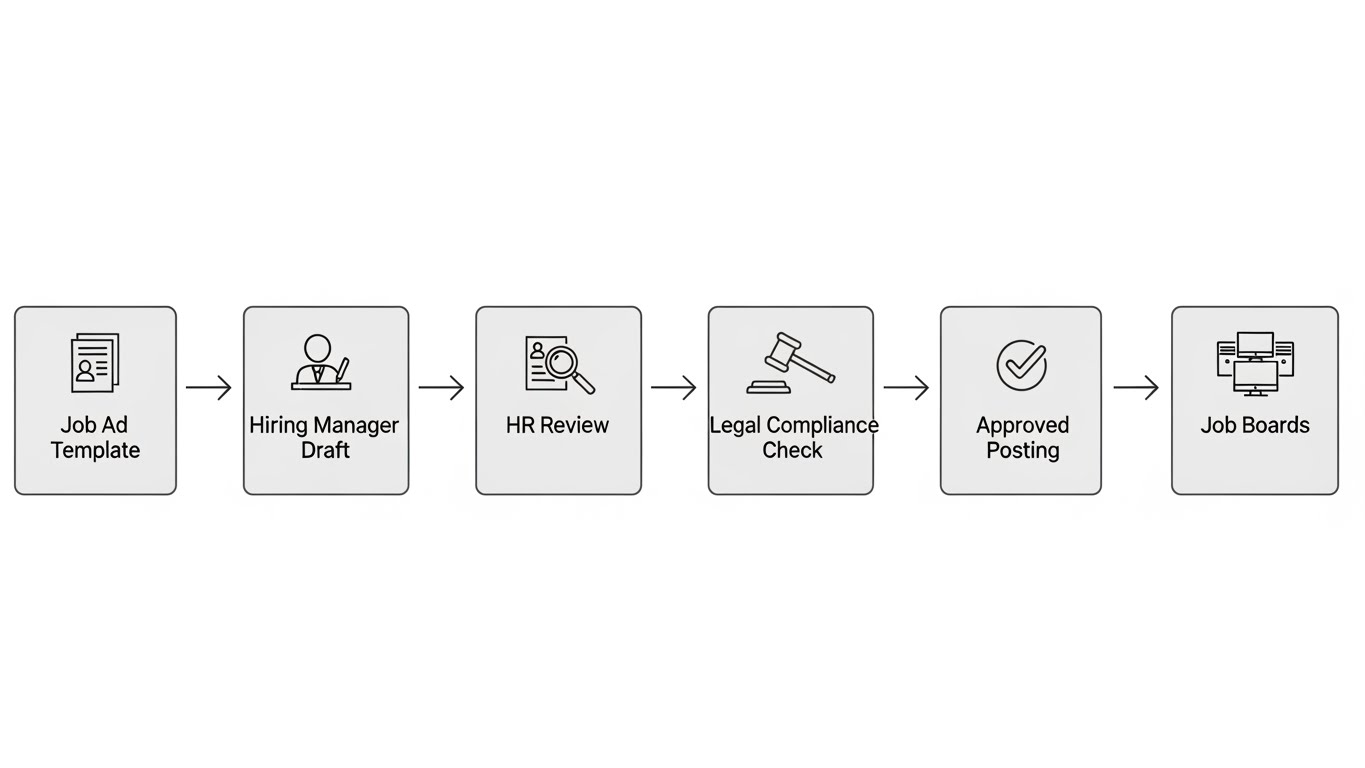
Consistency is a quiet advantage in regulated hiring. Build a reusable system:
Template library: one approved template per role family (clinical, compliance, privacy, safety).
Approval path: hiring manager writes, HR edits for clarity, Legal reviews only the compliance sections.
One source of truth: keep the final ad in one doc, then syndicate to job boards.
This reduces rewrites, speeds approvals, and lowers the chance of posting mismatched versions across channels.
Conclusion
Candidates don’t avoid regulated work; they avoid unclear, cold job posts. When your regulated job ads read like a real contract for real work, you get more qualified replies and fewer mismatched applicants.
Keep the structure tight, name the outcomes, be clear about screening, and publish pay and schedule details. Then watch what happens: fewer “spray and pray” applications, more serious conversations, and faster closes. Your next regulated hire should feel predictable, not painful.

Adeyemi Adetilewa leads the editorial direction at IdeasPlusBusiness.com. He has driven over 10M+ content views through strategic content marketing, with work trusted and published by platforms including HackerNoon, HuffPost, Addicted2Success, and others.