
PCI DSS compliance cost can feel like a moving target. One vendor says it’s a few hundred dollars, another says it’s six figures, and your bank just wants “proof” by next quarter.
If you accept card payments, though, this isn’t optional. It’s like renting a storefront: the rent changes based on size, location, and foot traffic. PCI costs work the same way. Scope, complexity, and card volume decide the bill.
This guide breaks down typical 2025 cost ranges, what you’re actually paying for, and practical business ideas that help you reduce cost without turning security into a gamble.
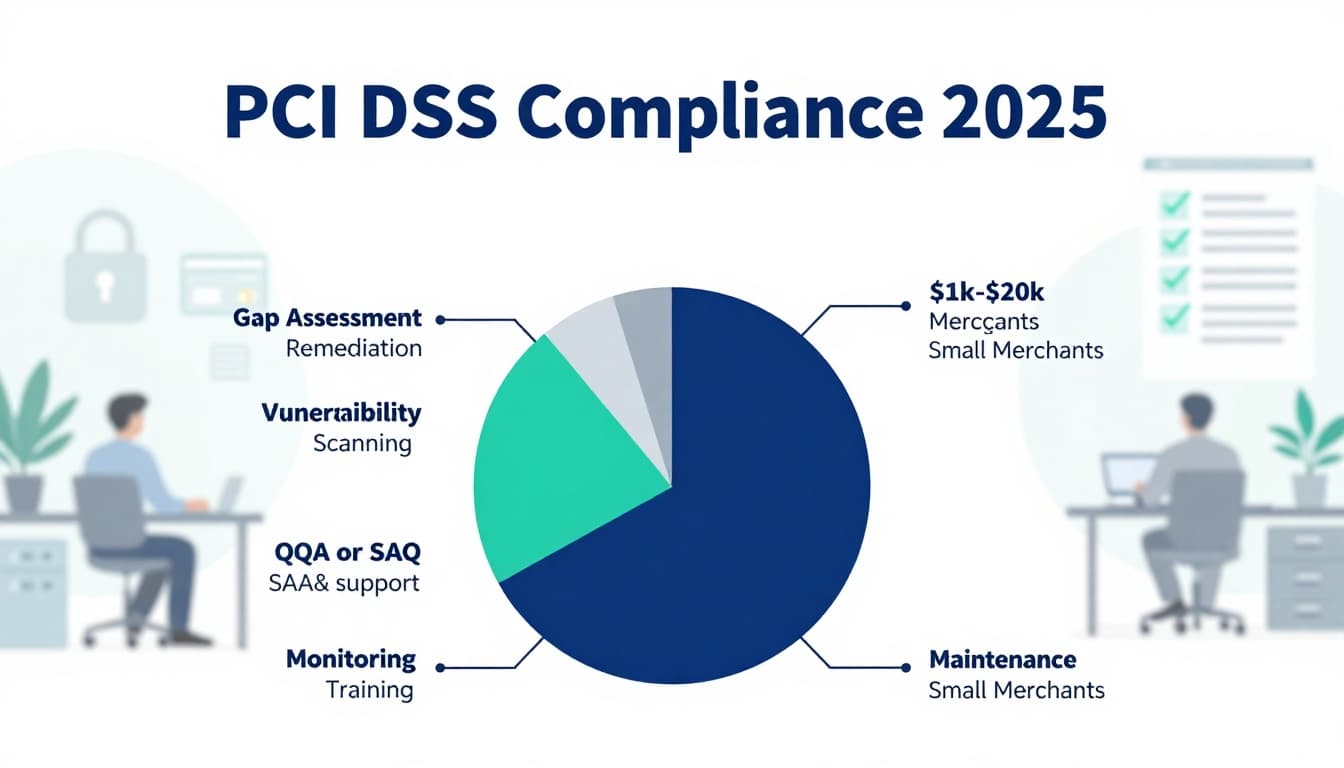
What drives PCI DSS compliance cost in 2025?
PCI expenses rise for the same reasons home repairs do: more rooms, older wiring, and surprises behind the walls.
Common cost drivers include:
- Your merchant level (based on transaction volume)
- How you take payments (hosted checkout vs custom code, e-commerce vs in-store)
- How many systems are in scope (web apps, POS devices, office networks, call centers)
- Whether you store card data (this can multiply your workload)
- How much security you already have (patching, logging, access controls, policies)
If you want a practical walkthrough of how teams budget for PCI activities, this 2025 guide on calculating PCI compliance cost is a useful reference point.
Typical PCI DSS compliance cost ranges by merchant level
In 2025, annual cost ranges often fall into these bands (your mix of systems and vendors can push numbers up or down):
| Merchant level (typical) | Card transactions/year (rule of thumb) | Typical annual PCI DSS compliance cost |
|---|---|---|
| Level 4 (small businesses, startups) | Under 20,000 e-commerce or up to 1 million total | $1,000 to $20,000 |
| Level 3 (growing online businesses) | 20,000 to 1 million e-commerce | $10,000 to $50,000 |
| Level 2 (midsize) | 1 to 6 million total | $10,000 to $50,000 |
| Level 1 (enterprise) | Over 6 million | $50,000 to $250,000+ |
A deeper breakdown of 2025 pricing drivers (including why costs jump fast at Level 1) is covered in How Much Does PCI Compliance Cost in 2025?.

The main cost buckets (and what they usually cover)
Think of PCI as two piles: getting compliant, then staying compliant.
1) Gap assessment and planning
A gap assessment commonly runs $5,000 to $15,000, especially if you need an outside expert to map systems and interpret requirements.
2) Remediation (the expensive part when you’re behind)
Remediation varies widely. For small environments, it’s often $1,000 to $20,000, but it can go higher if you need to replace POS devices, rebuild networks, or refactor checkout code.
3) Vulnerability scanning (ASV)
External scanning commonly runs $200 to $2,500 per IP per year, depending on provider, scope, and reporting.
4) Penetration testing
Pen testing often lands around $3,000 to $30,000 per year. The range depends on how many apps you run, whether you have APIs, and how often you release changes.
5) Validation and audit support (SAQ vs ROC/QSA)
Small merchants may only need SAQ support (sometimes lightweight, sometimes hands-on) while Level 1 firms often need QSA involvement and a ROC. QSA and ROC work can run from tens of thousands to well into six figures for complex environments.
For more context on budgeting and ROI thinking (especially for leadership teams), see Understanding PCI DSS Compliance Costs.
6) Ongoing maintenance
Ongoing work (training, access reviews, logging, patching, vendor management) is often $1,000 to $10,000+ per year for smaller teams, not counting internal labor.
10 business ideas that reduce PCI DSS compliance cost (without weakening controls)
These aren’t “shortcuts.” They’re practical moves that shrink scope, reduce repeat work, and cut vendor spend.
1) Hosted checkout-first storefront
Summary: Build your checkout around hosted payment fields so card data never hits your server.
Why it’s valuable: Less scope, simpler SAQ path.
Who it’s for: E-commerce startups.
How to start: Switch from DIY forms to hosted checkout.
Tools: Stripe Checkout (see this Stripe PCI compliance overview).
Example: A Shopify-style store avoids SAQ-D by not touching PAN data.
2) Scope-map service for growing SMBs
Summary: Offer “PCI scope mapping” as a productized service (fixed fee, clear deliverables).
Why it’s valuable: Most waste comes from guessing what’s in scope.
Who it’s for: Agencies, IT consultants.
How to start: Document data flows and system boundaries.
Tools: Diagram tools, asset inventory, ticketing.
Example: A 2-location retailer discovers one forgotten POS VLAN drives extra testing.
3) Tokenization and “no-storage” policy package
Summary: Help businesses stop storing card data, then lock it in with policy and checks.
Why it’s valuable: Cutting storage usually cuts controls and audits.
Who it’s for: Membership sites, clinics, B2B invoicing teams.
How to start: Replace stored cards with tokens from a PSP.
Tools: Payment gateways with token vaults.
Example: A subscription business drops a database table and halves its audit prep time.
4) Quarterly scan and patch calendar as a subscription
Summary: Sell a simple monthly subscription that keeps scanning, patching, and evidence on schedule.
Why it’s valuable: Prevents “panic spending” before attestation deadlines.
Who it’s for: SMBs with lean IT.
How to start: Set SLAs for scans, patch windows, and reports.
Tools: ASV scanning, patch management.
Example: A SaaS company avoids last-minute emergency pen test add-ons.
5) Evidence folder and audit-ready ops
Summary: Turn audit evidence into a weekly habit, not a yearly fire drill.
Why it’s valuable: Labor cost is real PCI cost.
Who it’s for: Founders and ops leads.
How to start: Create an evidence checklist by requirement, then assign owners.
Tools: Google Drive/SharePoint, Jira/Asana.
Example: Access reviews and firewall changes are stored as you go, not reconstructed later.
6) Secure merchant account selection consulting
Summary: Advise merchants on payment setups that keep PCI scope small from day one.
Why it’s valuable: Your processor choice changes your compliance workload.
Who it’s for: E-commerce builders and fractional CFOs.
How to start: Compare providers by integration model and reporting support.
Tools: Use this guide on top ecommerce merchant accounts for secure payments.
Example: A seller moves off manual card entry and avoids expanding scope into staff laptops.
7) “One app, one pen test” release discipline
Summary: Reduce pen test churn by batching releases and keeping environments consistent.
Why it’s valuable: Constant changes can trigger extra testing.
Who it’s for: SaaS and app teams.
How to start: Set release trains and freeze windows around testing.
Tools: CI/CD, change management.
Example: A team tests twice a year instead of after every large sprint.
8) Logging and alerting baseline build-out
Summary: Implement a right-sized logging setup that meets needs without paying enterprise SIEM prices.
Why it’s valuable: Overbuying tools is common.
Who it’s for: SMBs that need visibility.
How to start: Define what to log, who reviews, and how long you retain.
Tools: Cloud logging, lightweight alerting.
Example: A 12-person shop uses built-in cloud logs plus alerts, not a $50k platform.
9) Staff training that targets “real risk” roles
Summary: Train the people who touch payments, support, refunds, and admin access first.
Why it’s valuable: Training is cheap, incidents aren’t.
Who it’s for: Retail, hospitality, support-heavy teams.
How to start: Role-based training plus short refreshers.
Tools: LMS platforms, internal SOPs.
Example: Support staff stops taking card numbers in chat, reducing exposure.
10) Outsourced “virtual PCI manager” retainer
Summary: Provide monthly oversight, vendor coordination, and deadline management.
Why it’s valuable: Keeps compliance moving without a full-time hire.
Who it’s for: Growing firms at Level 2 to 3.
How to start: Bundle policies, evidence, and project plans into a retainer.
Tools: Compliance checklists, ticketing, shared evidence drive.
Example: A retailer expands to three locations without doubling compliance chaos.
How to choose the right PCI path (and budget smart)
Use this quick checklist before you commit to tools or consultants:
- Pick your validation path: SAQ (common for smaller merchants) or ROC/QSA (common for Level 1).
- Decide your scope strategy: Reduce systems that touch card data, then document it.
- Budget for both parts: upfront remediation plus ongoing maintenance.
- Buy services when they remove work: not when they just create reports.
If you want another perspective on “hidden” cost items, this PCI compliance cost breakdown covers common line items teams forget to budget.
Conclusion: budget for PCI DSS compliance cost like you’d budget for growth
PCI work isn’t just a checkbox. It’s a set of habits, tools, and proof that you handle payments responsibly. The most predictable budgets come from tight scope, clear ownership, and steady maintenance.
If you want your PCI DSS compliance cost to stay sane in 2026, start by shrinking what’s in scope, then build a simple monthly routine that produces evidence as a byproduct of normal work.

Adeyemi Adetilewa leads the editorial direction at IdeasPlusBusiness.com. He has driven over 10M+ content views through strategic content marketing, with work trusted and published by platforms including HackerNoon, HuffPost, Addicted2Success, and others.