
If your business ideas include taking card payments, there’s a document that can quietly decide whether you can keep processing cards next month: the PCI DSS AOC (Attestation of Compliance).
Think of it like a health inspection, but for your payment systems. No inspection, no proof, and sooner or later your bank, processor, or partners will ask uncomfortable questions.
This guide breaks down what an AOC is, who needs it, what’s inside it, and how to get it without turning compliance into a full-time job.
PCI DSS Attestation of Compliance (AOC), explained in plain English
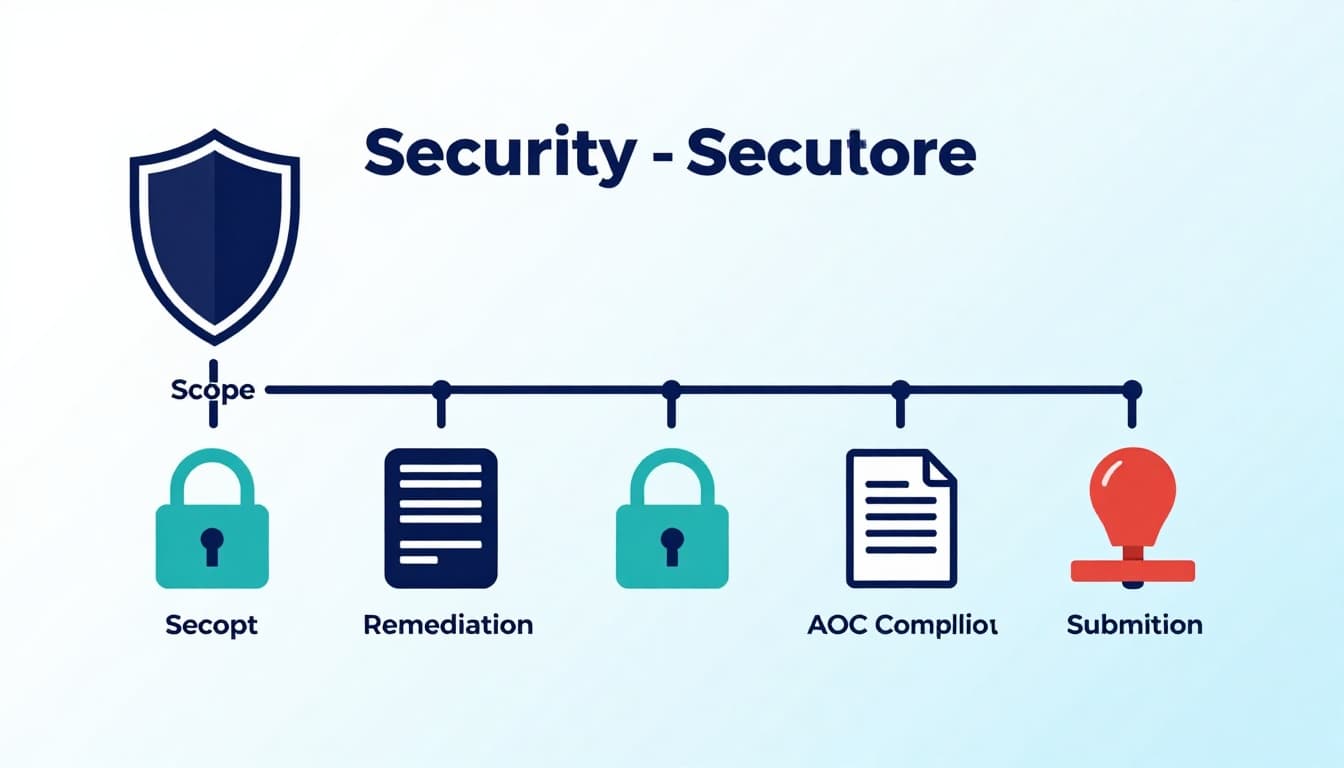
An Attestation of Compliance (AOC) is a formal document stating that your organization meets the Payment Card Industry Data Security Standard (PCI DSS) requirements for the environment being assessed.
It’s not “nice-to-have paperwork.” It’s often the proof your acquiring bank or payment partners require to keep your card processing active, especially as you grow.
As of December 2025, PCI DSS v4.0 is the current major standard, and it became effective on April 1, 2025. For primary source documents and related standards, use the PCI Security Standards Council document library.
Why the AOC matters beyond “checking a box”
An AOC does three practical things:
- Shows partners you take card data protection seriously.
- Forces clarity on what systems touch card data (your real risk area).
- Creates accountability through executive sign-off and annual renewal.
If you’re building business ideas around e-commerce, SaaS billing, subscriptions, marketplaces, or in-person services, this is part of operating responsibly.
What’s inside an AOC (and what reviewers look for)
An AOC isn’t a generic certificate you print and frame. It’s a structured attestation that typically covers:
Scope definition: Which systems, networks, and locations were included (your cardholder data environment, or CDE).
Assessment method: How compliance was validated (QSA/ISA assessment or a self-assessment route, depending on your level).
Compliance status: Whether requirements were met, and whether any items were “in place” versus needing remediation.
Sign-off: An authorized executive attests the information is accurate.
Here’s the catch: most AOC problems aren’t technical, they’re scoping problems. If your scope is fuzzy, the AOC is hard to trust.
Who needs a PCI DSS AOC, and when it’s required
If your company stores, processes, or transmits cardholder data, you typically need to validate PCI DSS compliance and provide an AOC when asked by your acquirer, processor, or partners.
That includes many common business ideas, such as:
- Online stores taking card payments
- Subscription SaaS products charging monthly fees
- Agencies that handle payments for clients
- Platforms that onboard sellers and route payments
- Service providers that touch card data (directly or through managed systems)
Merchant levels and validation paths (quick reference)
| Merchant level | Typical annual card transactions | Common validation approach |
|---|---|---|
| Level 1 | Over 6 million | On-site assessment by a Qualified Security Assessor (QSA) and AOC |
| Level 2 | 1 to 6 million | Often SAQ plus AOC requirements set by the acquirer |
| Level 3 | 20,000 to 1 million e-commerce | SAQ plus AOC |
| Level 4 | Under 20,000 e-commerce | SAQ plus AOC |
Your processor or bank sets the final rules, so confirm requirements early. Stripe’s overview of the process is a helpful starting point for many merchants: how PCI attestation works for businesses.
How to get a PCI DSS AOC (a practical, low-drama workflow)

Most teams struggle because they treat compliance like a single sprint. In reality, getting an AOC is a repeatable cycle. A clean process looks like this:
- Define your scope (CDE) List the systems that touch card data: checkout pages, APIs, databases, support tools, logs, and any third-party vendors. Tight scope reduces cost and risk.
- Choose the right validation path Depending on merchant level and payment flow, you may use a Self-Assessment Questionnaire (SAQ) or require a QSA-led assessment. If you’re unsure, ask your acquirer before you start.
- Run a gap assessment against PCI DSS v4.0 Identify what’s missing: access control, MFA coverage, logging, vulnerability management, secure configs, vendor management, and incident response.
- Fix controls and collect evidence Evidence is the part people underestimate. You’ll need artifacts like policies, screenshots, scan reports, ticket history, and configuration proofs.
- Validate and complete the AOC A QSA/ISA (or your internal route, where allowed) confirms controls are in place, then the AOC is completed and signed.
- Submit and calendar the next cycle An AOC is typically valid for one year from the date of issue, and you usually need quarterly vulnerability scans by an Approved Scanning Vendor (ASV), if applicable.
For a more detailed walkthrough and terminology, this vendor guide is also useful: PCI DSS Attestation of Compliance (AoC) guide.
A real-world example: why payment flow changes your compliance burden
Two founders launch similar business ideas: both sell templates online.
- Founder A uses hosted checkout fields from a provider, so card data never hits their server. Scope stays smaller.
- Founder B sends card data directly to their backend API for a custom checkout. Scope grows fast, and so does the compliance workload.
If you’re building on Stripe, this breakdown can help you understand how certain integrations can affect your scope and validation effort: https://ideasplusbusiness.com/pci-compliance-stripe-business/
Common PCI DSS AOC mistakes that waste time (and increase risk)
Most AOC delays come from avoidable issues:
- Treating scope as an afterthought: If you don’t map where card data flows, you’ll miss systems and fail reviews.
- Skipping quarterly scans: Many environments require them, and missing scan history causes last-minute panic.
- Weak vendor oversight: Your risk includes third parties that touch payment data or connected systems.
- No evidence trail: “We do MFA” isn’t enough. You’ll need proof it’s enforced everywhere it should be.
- Assuming last year’s work carries over: An annual AOC cycle resets expectations, especially after product changes.
A strong habit is to review compliance impact before major releases, new plugins, or vendor changes.
Keeping compliance from slowing down your growth
If compliance feels like it’s fighting your roadmap, it usually means your processes aren’t built for repeatability.
A few practical moves help:
Build “compliance by design” into your stack: tokenization, hosted payment fields, and segmented networks reduce CDE scope.
Assign a single owner: not to do everything, but to keep evidence and deadlines organized.
Treat evidence like accounting: small updates monthly beat a messy scramble once a year.
If your business ideas involve choosing a processor or merchant setup, selecting the right account structure also matters for security and risk management: https://ideasplusbusiness.com/best-ecommerce-merchant-accounts/
For a broader view of PCI DSS 4.x requirements and planning, this overview is useful: PCI compliance guide.
Conclusion: treat the PCI DSS AOC like proof you can be trusted with money
A payment business runs on trust, and trust has receipts. A current PCI DSS AOC is one of those receipts.
Scope your environment carefully, pick the right validation path, collect evidence as you go, and renew on schedule. Do that, and compliance becomes a routine part of growth, not a surprise obstacle when you’re trying to scale.

Adeyemi Adetilewa leads the editorial direction at IdeasPlusBusiness.com. He has driven over 10M+ content views through strategic content marketing, with work trusted and published by platforms including HackerNoon, HuffPost, Addicted2Success, and others.