
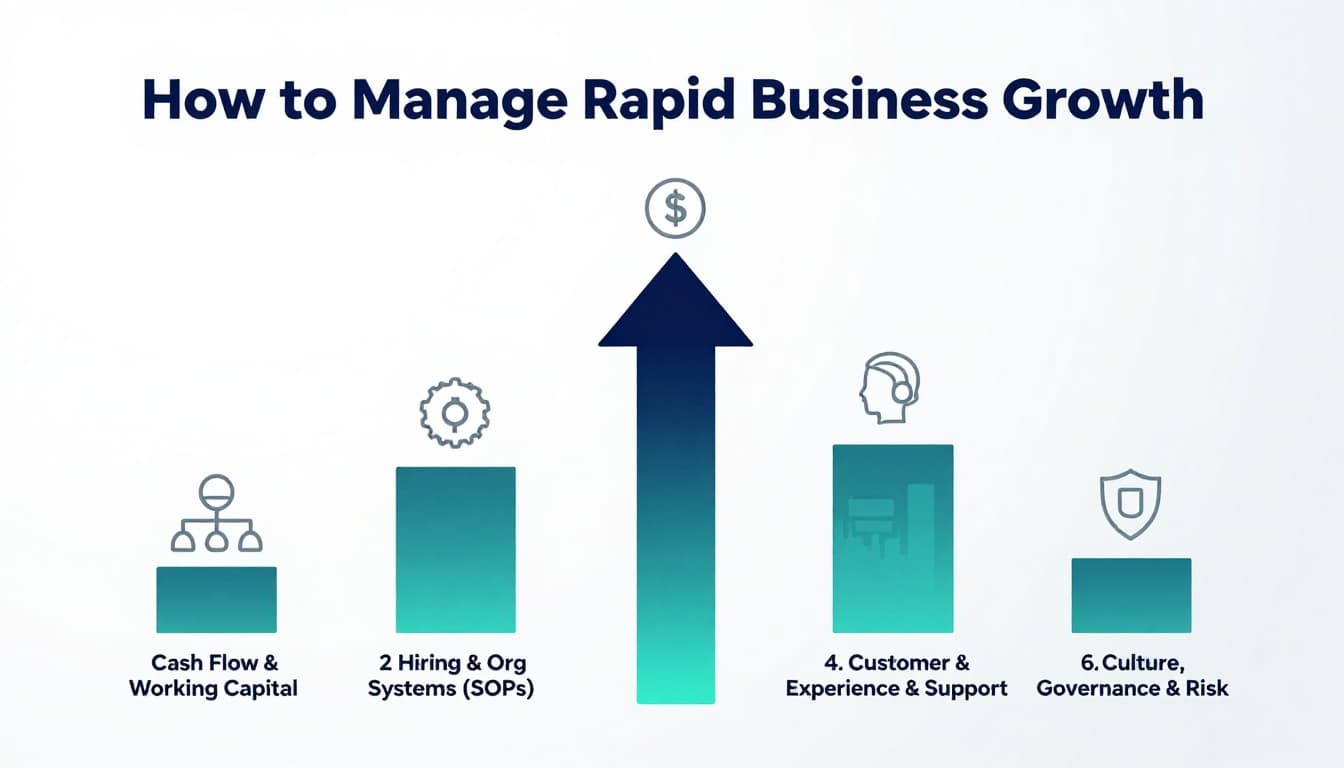
Rapid business growth feels like a rocket launch: exciting, loud, and a little scary. One day you’re chasing customers, the next day you’re apologizing for late deliveries, hiring in a rush, and watching cash leave the account faster than it comes in.
The hard truth is that growth doesn’t “fix” a business. It magnifies what’s already there: messy processes, unclear roles, weak margins, and fragile customer support.
This guide breaks down how to manage fast expansion without losing control of quality, cash, or culture.
Identify what’s driving the growth, then set guardrails
Before you add people, spend more on ads, or sign a bigger lease, get clear on why demand spiked.
Common drivers include a viral channel, a new partnership, a competitor slipping, or a product feature that finally clicked. If you don’t name the driver, you can’t repeat it, and you can’t predict when it fades.
Set growth guardrails that keep you from “buying revenue” at any cost:
- Capacity guardrail: the most orders/projects you can deliver without quality drops.
- Margin guardrail: a minimum gross margin you won’t cross, even to win deals.
- Cash guardrail: a minimum cash buffer (or credit access) you maintain.
If you want extra context on growth planning, DHL’s guide on controlling your growth is a useful reminder that scaling is a series of trade-offs, not just a bigger version of today.
Protect cash flow and working capital (growth can drain you)
Fast growth can create a weird problem: you’re “winning,” but your bank balance is stressed. More orders often mean buying more inventory, paying contractors sooner, upgrading software, and carrying higher support costs.

A practical way to stay safe is to run a simple 13-week cash forecast (weekly in and out). It’s not fancy, but it forces you to see pinch points before they hit.
A few moves that tend to help quickly:
Tighten receivables: shorten payment terms, invoice faster, follow up consistently.
Match costs to demand: rent and headcount are hard to reverse, contractors and usage-based tools are easier.
Negotiate supplier terms: even small changes can ease pressure during a surge.
Build a funding plan early: if you might need capital, start the process before you’re desperate.
For a deeper look at options beyond a standard bank loan, these new funding strategies for business ventures can help you think in choices, not panic.
Hire for structure, not speed
When demand grows, it’s tempting to hire “help” and figure out roles later. That’s how you end up with overlapping work, missed tasks, and a founder who becomes the bottleneck for every decision.
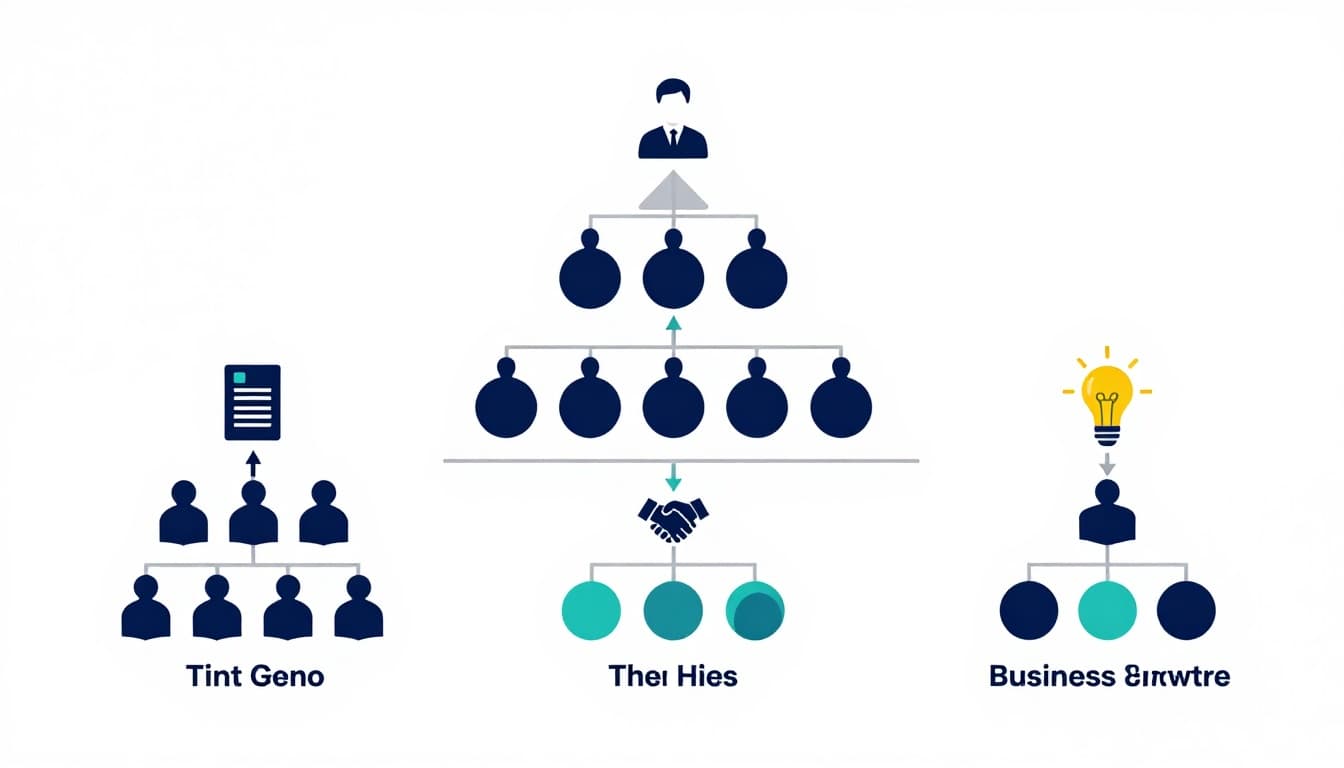
Instead, hire to reduce confusion:
- Define outcomes per role (what “good” looks like in 30, 60, 90 days).
- Add a player-coach manager before the team becomes unmanageable.
- Build an onboarding path that doesn’t rely on tribal knowledge.
A quick test: if you can’t explain what success looks like for a role in two sentences, you’re not ready to hire for it yet.
Turn repeated work into simple processes and SOPs
Rapid growth turns your business into a busy kitchen. If every dish depends on the head chef, tickets pile up and quality slips.
Your goal is to reduce “in-head” work and turn it into steps that others can follow. Start with the areas that cause the most friction: quoting, fulfillment, support handoffs, refunds, renewals, content publishing, billing.
Keep SOPs practical:
One page beats ten: aim for checklists, templates, and examples.
Make ownership clear: one process, one owner.
Review monthly: growth changes workflows, so old SOPs go stale fast.
If you want more ideas on building momentum without chaos, these powerful tactics to accelerate business growth pair well with process-building.
Don’t let customer experience collapse under success
Most businesses don’t lose customers during growth because the product got worse. They lose them because the experience got messy: slower replies, inconsistent delivery, unclear timelines, or billing confusion.
Put a few “non-negotiables” in place:
- Support coverage plan: who handles what, and how quickly.
- A single source of truth for customer details (a CRM or shared workspace).
- Feedback loops: track reasons for refunds, churn, bad reviews, and late projects.
For growing companies, it’s also worth studying broader guidance on execution and discipline. Warren Averett’s overview of strategies for rapidly growing companies is a good reference point for where leadership teams often misstep.
Plan operations and capacity like you’re booking flights, not selling seats
Selling is easy when demand is high. Delivery is where the real work starts.
Capacity planning means you can answer questions like:
- How many orders can we fulfill next week without overtime?
- What’s the lead time if sales double again?
- Which step breaks first, inventory, shipping, onboarding, support, or QA?
A simple approach is to map your delivery into 5 to 8 steps, then identify the constraint. Fix the constraint first, not everything at once.
If you need a practical checklist for handling speed without crashing, Porter Capital’s write-up on how to manage rapid business growth is worth scanning for operational reminders.
Put culture, governance, and risk on the calendar (not “later”)
Growth changes your company’s personality. New hires join, managers appear, and the founder’s “voice” becomes diluted unless you make it visible.
Write down the basics:
Values in action: what you praise, what you won’t accept, how you treat customers.
Decision rights: who can approve discounts, refunds, vendor spend, and hiring.
Controls: basic security, approvals, and documentation, especially for finance.
This isn’t about red tape. It’s about reducing costly surprises.
If you’re also trying to raise the baseline across the company, these 13 strategies to improve business performance can help you tighten execution while you scale.
Conclusion: grow fast, but keep your hands on the wheel
Managing rapid business growth is less about working harder and more about building stability: cash visibility, clear roles, repeatable processes, protected customer experience, and a culture people can follow without you in every room.
Pick one weak spot this week and fix it with focus. What’s the first thing that would break if demand doubled again next month? Start there, and you’ll grow with a lot less stress.

Adeyemi Adetilewa leads the editorial direction at IdeasPlusBusiness.com. He has driven over 10M+ content views through strategic content marketing, with work trusted and published by platforms including HackerNoon, HuffPost, Addicted2Success, and others.