
If you’ve ever felt like your business is “doing fine” right up until it isn’t, you’re not alone. Growth can hide messy ops, weak margins, and shaky retention. Decline can creep in while your team is busy chasing new customers.
A lifecycle framework gives you a way to name what’s happening, pick the right metrics, and change how you manage before problems turn into emergencies. It’s like using a map instead of guessing which road leads to revenue.
This guide breaks down practical lifecycle models, then gives you 10 business ideas you can start or offer as services, based on where companies tend to struggle most.
Lifecycle framework basics: what changes as a business ages
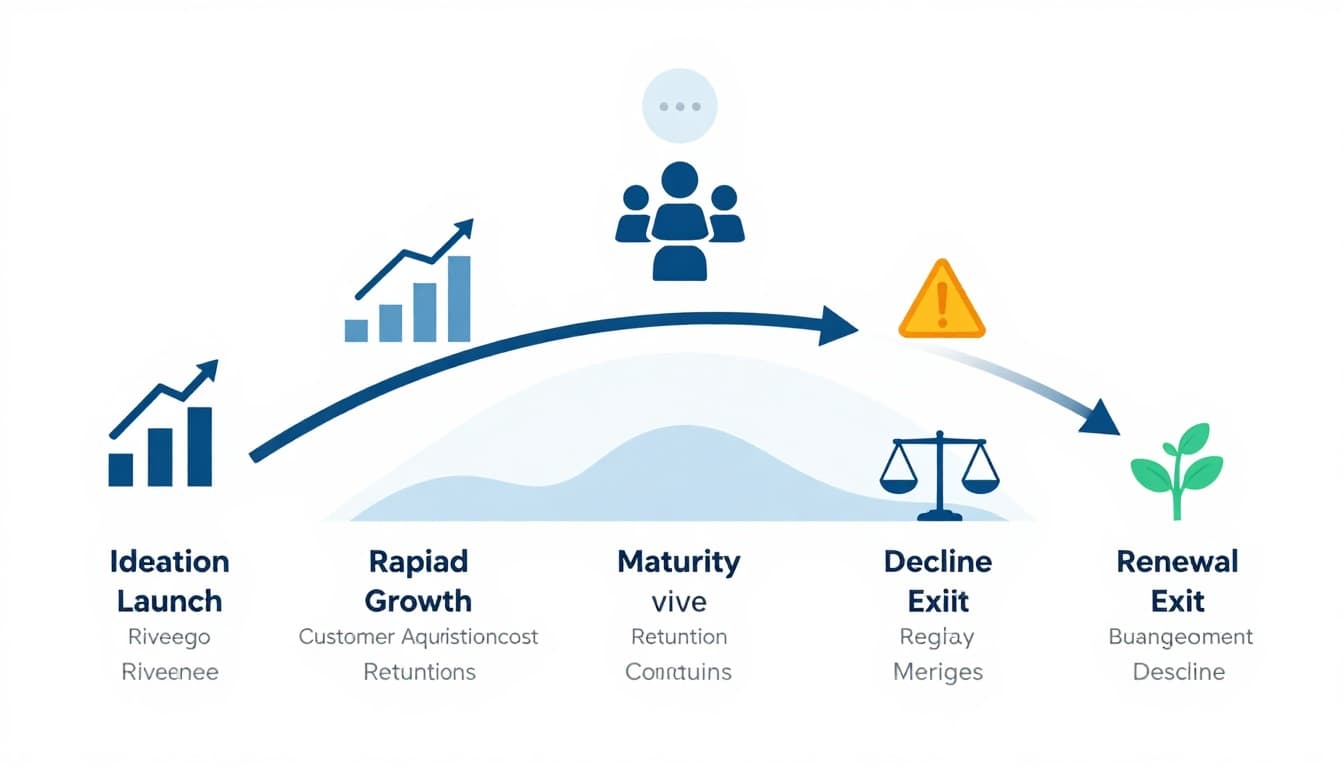
Businesses don’t fail only because the product is bad. They fail because the management style stays the same while the company moves from launch to growth to maturity, then to decline or renewal.
Most lifecycle models share a simple truth: each stage has different priorities. Early on, you’re proving demand. Later, you’re protecting margin and fighting churn. If you want a quick reference to common growth stages, see The Hartford’s overview of the stages of business growth.
Models and management structures that keep you in control
A lifecycle framework doesn’t have to be academic. Think of it as three layers you reuse again and again:
- Stage model: Where are we right now (launch, growth, maturity, decline, renewal)?
- Scoreboard: Which metrics tell the truth in this stage (CAC, retention, margin, cash burn, churn)?
- Operating cadence: How decisions get made (weekly experiments, monthly planning, quarterly cost reviews).
If you want the industry-level view, CFI’s industry life cycle explainer shows how markets themselves also move through growth and decline. Pair that with internal planning so you don’t scale a business inside a shrinking market.
A strong structure also helps you manage multiple products at once. If you’re juggling offers, consider building a portfolio view (what to fund, fix, or sunset). This ties closely to business portfolio design strategies when you’re deciding where to place time and money.
10 lifecycle framework-based business ideas (built around growth and decline)
1) Stage-diagnosis workshop for founders
A fast assessment that labels a company’s stage, risks, and next 90-day priorities.
Why it works: founders need clarity, not more tasks.
Who it’s for: early-stage startups, small agencies.
How to start: offer a 2-hour session plus a one-page plan.
Tools: Google Sheets, Notion.
Example: a SaaS realizes “growth” is actually churn hiding behind ads.
2) Launch analytics setup service
Install the basics so a new business can measure reality from day one.
Why it works: without tracking, teams argue from opinions.
Who it’s for: e-commerce, creators, local services adding online sales.
How to start: sell a fixed-scope package (events, funnels, dashboards).
Tools: GA4, Looker Studio, Shopify analytics.
Example: a store finds carts drop on shipping, not product pages.
3) Rapid growth operations playbook (SOP kit)
Turn chaos into repeatable workflows as demand spikes.
Why it works: growth breaks what “worked fine” at 20 customers.
Who it’s for: fast-growing small businesses hiring their first team.
How to start: build templated SOPs for onboarding, fulfillment, support.
Tools: Loom, Airtable, ClickUp.
Example: a service firm cuts delivery delays by standardizing handoffs.
For companies scaling too quickly, share guidance like managing sudden business expansion.
4) CAC and funnel repair consulting
Improve acquisition efficiency when ad costs rise and conversion slips.
Why it works: many businesses “grow” while profits shrink.
Who it’s for: DTC brands, B2B lead-gen teams.
How to start: audit funnel steps, then test one change per week.
Tools: HubSpot, Hotjar, Unbounce.
Example: a landing page rewrite lifts demo requests without higher spend.
5) Retention and churn reduction program (subscription-friendly)
A done-with-you system to keep customers longer.
Why it works: retention is cheaper than endless new leads.
Who it’s for: SaaS, memberships, subscription boxes.
How to start: map cancel reasons, fix onboarding, add win-back flows.
Tools: Intercom, Customer.io, Stripe.
Example: a SaaS cuts churn by improving setup guidance in week one.
If you run SaaS, keep a clean metric set. This guide on key SaaS metrics for sustainable growth is a solid reference.
6) Maturity-stage margin improvement service
Help stable businesses protect profit when growth slows.
Why it works: maturity rewards discipline, not hype.
Who it’s for: established e-commerce, agencies, local multi-location firms.
How to start: review pricing, packaging, COGS, and process waste.
Tools: QuickBooks, Stripe reports, ProfitWell (if applicable).
Example: a studio adds tiered packages and raises average order value.
7) Product or offer “sunset” manager (decline-stage specialist)
A service to retire offers without hurting the brand or cash flow.
Why it works: messy sunsets drain support and confuse buyers.
Who it’s for: SaaS with legacy plans, agencies with outdated services.
How to start: set timelines, migration paths, and customer comms.
Tools: Help Scout, Notion, email automation.
Example: a SaaS moves users to a new plan with clear incentives.
8) Turnaround content and SEO refresh service
A refresh for traffic and conversions when growth stalls.
Why it works: old content decays, competitors catch up.
Who it’s for: publishers, B2B blogs, service brands with aging sites.
How to start: update top pages, fix intent mismatch, improve internal links.
Tools: Google Search Console, Ahrefs, Surfer (optional).
Example: a consultant updates 10 pages and doubles qualified leads.
9) Customer research and repositioning sprint (renewal-stage)
A sprint that finds a better niche, message, or use case.
Why it works: renewal often means new positioning, not new tech.
Who it’s for: founders after plateau, agencies rebranding services.
How to start: interview customers, spot patterns, rewrite the offer.
Tools: Typeform, Zoom, Miro.
Example: a general VA service shifts to “ops support for therapists.”
10) Exit-readiness and documentation package
Prepare the business to sell, merge, or hand off.
Why it works: exits fail when numbers and processes are unclear.
Who it’s for: owners nearing retirement, operators with a valuable asset.
How to start: organize financials, SOPs, contracts, and key KPIs.
Tools: Google Drive, QuickBooks, DocuSign.
Example: an agency increases valuation by showing stable retention.
Quick comparison: which idea fits which stage?
| Tool/service idea | Best stage | Starting cost | Main benefit |
|---|---|---|---|
| Stage-diagnosis workshop | Launch, Growth | Low | Clear priorities fast |
| Analytics setup service | Launch | Low to medium | Better decisions early |
| Churn reduction program | Growth, Maturity | Medium | Protect recurring revenue |
| Sunset manager | Decline | Low | Cleaner product portfolio |
| Exit-readiness package | Maturity, Renewal | Low to medium | Smoother sale or handoff |
How to choose the right business idea using lifecycle signals
Pick an idea that matches the pain customers already feel.
Use this checklist:
- If sales are rising but cash is tight, focus on CAC, pricing, and ops (growth-stage services).
- If revenue is flat, focus on margins, retention, and packaging (maturity-stage services).
- If customers are leaving or the market is shrinking, focus on repositioning, sunset plans, or exit prep (decline and renewal services).
For a practical lens on execution, these critical strategies for better performance can help you decide what to fix first.
Conclusion
A lifecycle framework keeps you from managing a mature business like a scrappy startup, or treating decline like a short-term dip. When you match metrics, cadence, and decisions to the stage you’re in, you stop guessing and start steering.
If you want a simple next step, choose one of the business ideas above and tie it to a single stage problem you can solve well. What stage are your customers really in right now, and what would they pay to fix this month?

Adeyemi Adetilewa leads the editorial direction at IdeasPlusBusiness.com. He has driven over 10M+ content views through strategic content marketing, with work trusted and published by platforms including HackerNoon, HuffPost, Addicted2Success, and others.