
If your signup flow trusts documents too easily, fraudsters will treat it like a side door.
KYC document fraud isn’t just a bank problem anymore. SaaS tools, marketplaces, iGaming operators, fintech apps, and even B2B platforms now verify users, merchants, or payees, and that makes KYC a target.
This guide breaks down how document fraud works, what to watch for, and how to build controls that stop bad actors without punishing real customers.
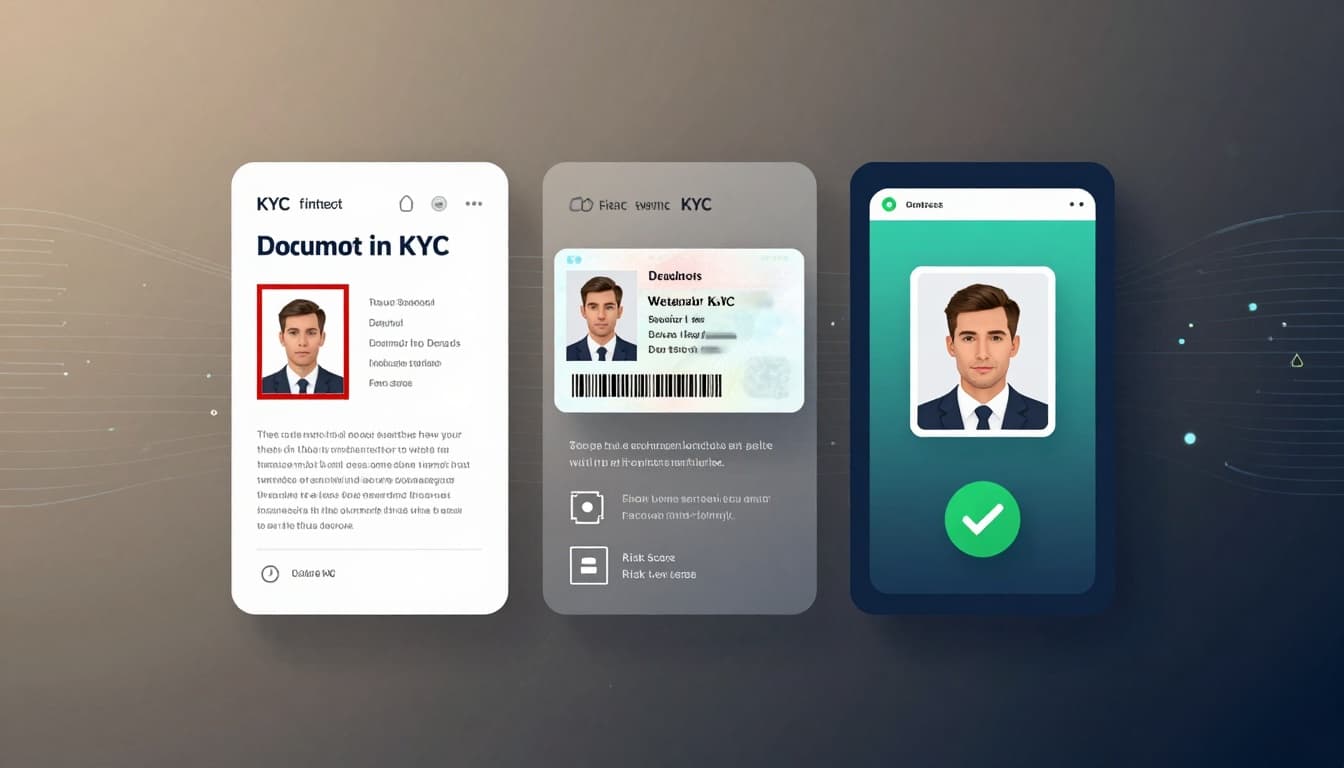
What “document fraud” means inside KYC (and why it hurts fast)
Think of KYC like a bouncer at a busy venue. The bouncer doesn’t just glance at a card, they check the photo, the date, the feel of the card, and the person standing in front of them.
KYC document fraud is when someone submits fake, altered, stolen, or mismatched documents to pass identity checks. The goal can be account takeover, money laundering, bonus abuse, chargeback fraud, or simply bypassing age and location rules.
For operators, the damage tends to show up in predictable places:
- Higher loss rates (chargebacks, refunds, unpaid balances)
- Compliance exposure (failed audits, licensing risk, penalties)
- Operational drag (manual reviews pile up, support gets flooded)
- Brand harm (customers lose trust when fraud hits the news)
For a practical view of how KYC fits into fraud prevention, see how the KYC process helps prevent fraud.
The most common KYC document fraud tactics you’ll see
Fraudsters don’t use one trick. They rotate methods, test your controls, then scale what works. Some use their real identity but “improve” financial details, others build entirely synthetic profiles.
Here’s a quick map of the main categories and what usually stops them.
| Fraud type | What it looks like | Why it passes weak KYC | Best control(s) |
|---|---|---|---|
| Forgery and alteration | Edited photo, name, DOB, address, or cropped edges | OCR reads text, but no authenticity checks | Template detection, tamper detection, edge analysis, metadata checks |
| Counterfeit or synthetic IDs | High-quality fake card, believable data, “new” identity | Looks clean to the eye, matches form fields | Document authenticity signals (MRZ rules, barcode consistency, NFC when available) |
| Impersonation with real docs | Stolen ID photo upload, attacker takes selfie | If selfie check is weak, it slips through | Strong liveness, face match, device and network risk |
| Fake proof-of-address or bank docs | Edited statements, fake PDFs, “rented” utility bills | Teams focus on ID only | Source validation, statement integrity checks, open-banking style verification where allowed |
Real-world document fraud rings can be large and organized. For example, Mobile ID World covered a case where a network produced a high volume of counterfeit KYC documents: PrintSteal KYC document fraud network exposed.
Red flags that often signal KYC document fraud
Some warning signs are obvious. Others hide in patterns across sessions, devices, and customer behavior. The fastest way to miss fraud is to review documents in isolation.
Document-level red flags
Small inconsistencies are often the tell:
- Fonts that don’t match standard templates
- Misaligned text baselines, uneven spacing, warped logos
- Cropped corners, missing margins, unusual glare patterns
- MRZ lines that don’t follow formatting rules (passports and many IDs)
- Barcodes that decode to different data than what’s printed
User and session red flags
If you track only “pass/fail,” you lose context. Watch for signals like:
- Repeated retries with slightly different uploads
- Many signups from the same device, IP range, or emulator pattern
- Sudden country changes (device locale vs document country mismatch)
- New accounts that push withdrawals, payouts, or high-risk actions immediately after approval
This is why KYC should connect to monitoring, not sit alone. If you operate in regulated gaming or similar high-risk flows, this iGaming KYC workflow audit guide shows how to document controls and evidence before a regulator asks.
A practical control stack that stops document fraud without killing conversions
Perfect KYC doesn’t exist, but strong KYC is built in layers. Each layer catches what the one before it misses.
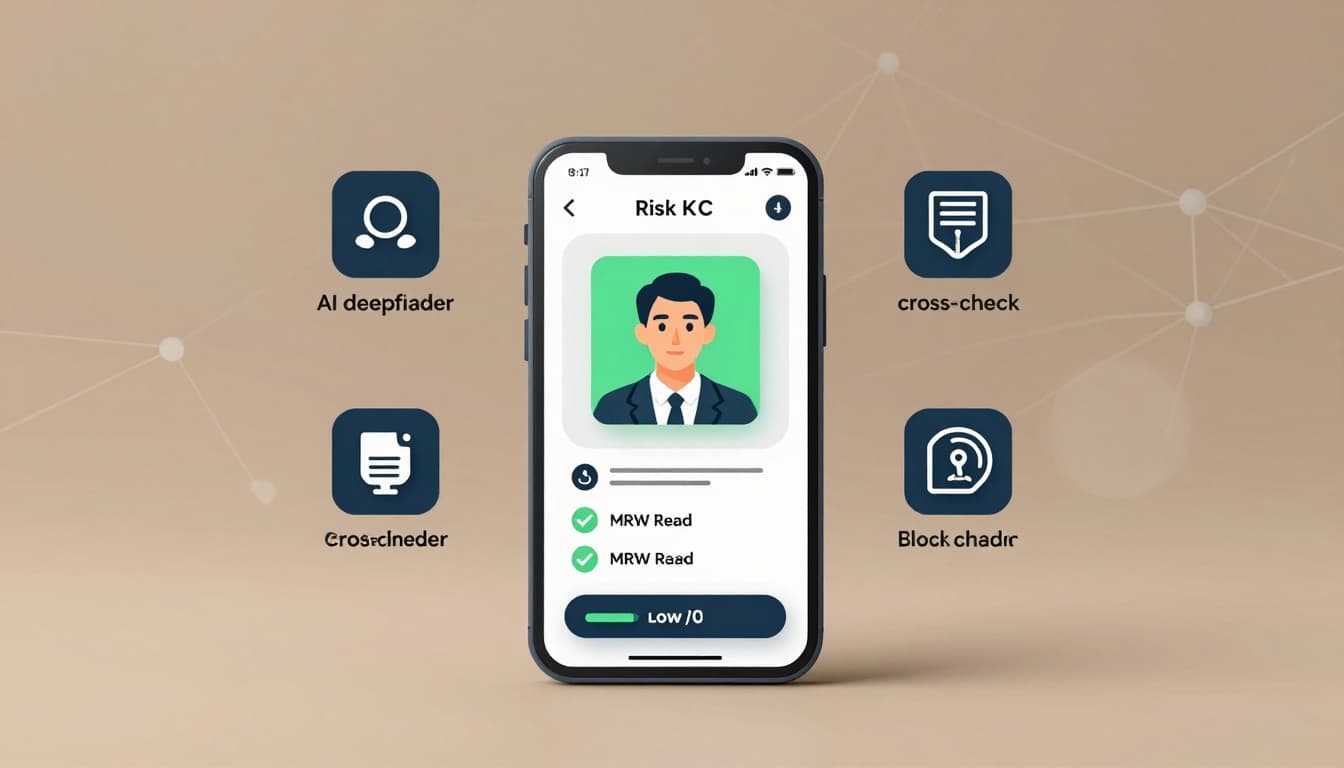
1) Capture quality that reduces “false fails”
Bad capture creates noise, and noise creates manual review. Use in-flow guidance:
- Auto-crop and edge detection
- Blur and glare checks before submission
- Live capture prompts (not only file upload)
You’ll lower re-submits and make fraud signals clearer.
2) Document authenticity checks (not just OCR)
OCR is table stakes. Authenticity is where fraud drops.
Good systems look at template rules, security elements, and data consistency. If your flow supports it, check MRZ logic and barcode payload consistency. For some national IDs and passports, NFC chip reads can add strong assurance.
For strategy ideas, Dock’s overview is a helpful starting point: strategies to prevent KYC fraud.
3) Face match plus real liveness
A selfie isn’t proof. A printed photo can be a selfie.
Use passive and active liveness methods that resist replay and deepfake attempts. Then match face geometry to the document portrait with thresholds that adapt to risk (higher risk, stricter threshold).
AI-assisted identity abuse is getting easier to attempt. Zyphe’s write-up gives context on how fake identity tooling threatens verification: AI-powered fake identity generator risks.
4) Risk scoring that considers behavior, not just identity
Add signals beyond the document:
- Device fingerprint and emulator detection
- Velocity checks (how many attempts, how fast)
- IP reputation and ASN risk
- Email and phone reputation, SIM swap risk where available
- Geolocation mismatch patterns
Don’t make every user jump through every hoop. Use a risk-based path: low-risk users get a smooth flow, high-risk users get step-up checks.
5) A tight manual review playbook (for the edge cases)
Manual review should be a scalpel, not a net.
Give reviewers a checklist that forces consistency:
- What triggered review (specific rule or score)?
- What evidence was checked (front/back, metadata, liveness session)?
- Decision outcome and reason code
- Audit trail saved (screenshots, hashes, timestamps, reviewer ID)
That audit trail matters if a partner bank, regulator, or payment provider asks later.
What to do when you suspect document fraud (a simple response plan)
Catching fraud is only half the job. The other half is responding without creating more risk.
Contain: Limit withdrawals, payouts, credit, or high-risk actions until review completes.
Verify: Step up checks (re-capture, stronger liveness, secondary doc, database check where lawful).
Investigate: Look for linked accounts, shared devices, shared payment instruments.
Decide: Approve, reject, or escalate to enhanced due diligence depending on risk.
Document: Save evidence and rationale. Make it easy to defend later.
If KYC is tied to ongoing financial activity (deposits, withdrawals, payouts), pair it with clear monitoring rules. This guide on simple transaction monitoring rules for iGaming shows how teams catch suspicious patterns after onboarding, when many fraud attempts actually surface.
Conclusion: Make KYC document fraud expensive to attempt
Fraudsters don’t need to beat your best controls, they only need to find your easiest lane. The fix is layered verification, risk-based step-ups, and strong audit trails.
Treat KYC document fraud like a product problem, not a one-time compliance task. Tighten capture quality, validate document authenticity, require real liveness, and connect KYC outcomes to ongoing behavior monitoring.
If you haven’t reviewed your workflow end-to-end recently, start with an audit and write down what happens at each step. What you can explain clearly is what you can defend, improve, and scale.

Adeyemi Adetilewa leads the editorial direction at IdeasPlusBusiness.com. He has driven over 10M+ content views through strategic content marketing, with work trusted and published by platforms including HackerNoon, HuffPost, Addicted2Success, and others.