
Running a small iGaming brand can feel simple at first. A website, game provider, payment provider, and you are live.
Then you hit your first chargeback, odd deposit pattern, or a request from a payment partner about your KYC AML iGaming controls, and things stop feeling simple.
This guide breaks down the basics of KYC (Know Your Customer) and AML (Anti-Money Laundering) for small iGaming operators that do not have in-house lawyers. You will learn what you must do, what you can automate, and how to stay on the safe side without blowing your budget.
Why KYC and AML Matter For Small iGaming Operators
KYC and AML rules are not just for big brands. In 2025, regulators across the UK, EU, US states, Brazil, and Curaçao raised standards for online gambling, including smaller operators. Most now expect ID and age checks at signup, plus ongoing monitoring of player activity.
If you ignore this, the risks stack up fast:
- Fines that can wipe out your profit for the year
- Loss of payment processing or banking partners
- License suspension or blacklisting in key markets
- Reputational damage that scares off serious players and investors
Resources like AML gambling rules every operator must know show how tight expectations have become, even for niche brands.
Good news: with the right setup, strong KYC and AML can be mostly process and tooling, not endless legal work.
KYC Basics: What You Must Check On Every Player
KYC in iGaming is about proving who the player is, how old they are, and whether they pose higher risk. Most regulators now expect this before the first deposit, not later.
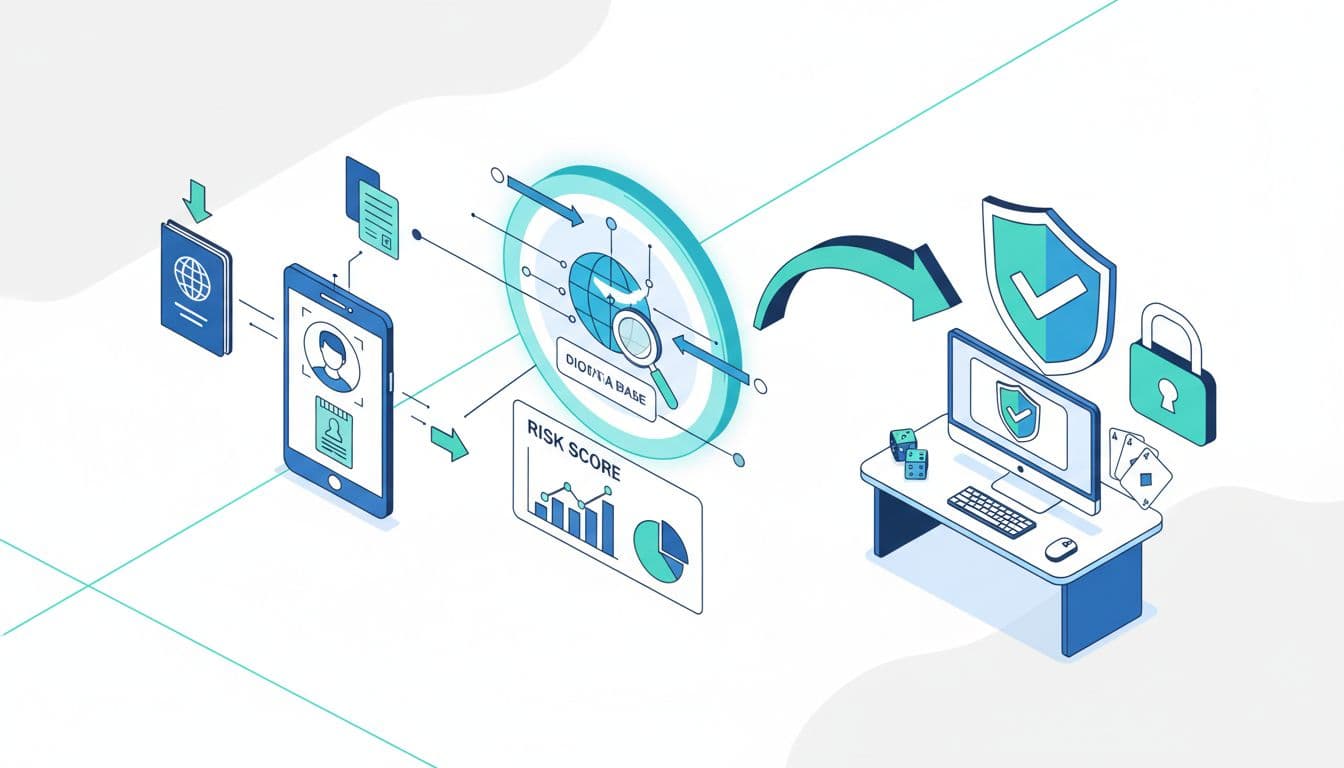
Image created with AI.
Key KYC elements for small iGaming sites:
1. Identity and age verification
Collect and verify:
- Full name, date of birth, and address
- Government ID (passport, ID card, or driver’s license)
- Selfie or short video for biometric match, if supported by your vendor
A modern KYC flow can check document security features, compare face to ID, and confirm the player is over the legal age in seconds. For design tips, the KYC gambling iGaming playbook is a useful benchmark.
2. Sanctions, PEP, and watchlist screening
Every new player should be screened against:
- Sanctions lists
- Politically Exposed Person (PEP) lists
- Law-enforcement or high-risk databases
This usually comes bundled in KYC or AML tools. You set rules for what to do if there is a match, for example, block and review.
3. Risk-based checks and extra documents
Not every player needs the same level of review. You can:
- Keep basic checks for casual, low-stake players
- Ask for more proof (like bank statements) when deposits, withdrawals, or wins reach preset thresholds
- Apply tighter rules for players in higher-risk countries or using higher-risk payment methods
This tiered approach keeps compliance strong without breaking the user experience.
AML Basics: Spotting And Acting On Suspicious Activity
KYC is about who the player is. AML is about what they do with money on your site.
Recent guidance, including SEON’s overview of KYC and AML in online gambling, stresses that operators of all sizes must show active monitoring, not just one-time checks.
For a small iGaming operator, core AML tasks include:
1. Transaction monitoring
Set automated rules to flag:
- Rapid cycles of deposit and withdrawal with little play
- Many small deposits that add up to large sums
- Unusual spikes in stakes or wins for a player
- Heavy use of crypto or high-risk payment methods
Alerts should land in a simple queue where you or a trusted staff member review and decide what to do.
2. Source of funds and source of wealth checks
For VIPs or high-volume players, you may need:
- Bank statements
- Payslips or tax returns
- Proof of business ownership
You do not need to become a tax expert. You only need to see that the level of play matches a believable income or wealth story.
3. Reporting and record keeping
Most regulators expect:
- Internal logs of all alerts, reviews, and decisions
- Suspicious Activity Reports (SARs or STRs) when you see possible money laundering or terror financing
- Records stored for several years, often five or more
Even if you work from a laptop, you can keep this simple with a shared drive, clear file names, and a basic case management template.
For a deeper look at global casino obligations, see this global guide to AML casino compliance and responsible gambling.
Setting Up A Lean KYC AML iGaming Framework (Without A Legal Team)
You do not need a thick policy manual. You need a short, clear framework that you can follow every day.

Image created with AI.
A practical setup for a small operator:
1. Pick the right KYC/AML vendor
Look for:
- iGaming references and regulator-ready reports
- Sanctions and PEP screening included
- Simple API or plug-ins for your platform
- Fair pricing per check, not bloated enterprise contracts
Many providers, such as those discussed in Cellbunq’s guide to KYC and AML in online gambling, now offer packages tailored to smaller brands.
2. Write a 5–7 page policy, not a 70-page book
Cover:
- What checks you run at signup
- When you trigger extra checks
- How you monitor transactions
- Who reviews alerts, and how fast
- When you block, close, or report accounts
Plain language beats legal jargon. This document is mainly for you, your team, and your license or banking partners.
3. Train your small team
At minimum, once a year:
- Walk through real cases you have seen
- Show what a red flag looks like
- Explain how to use your tools and where to document actions
For solo founders, schedule this as a “compliance day” each year to review rules and refresh your own knowledge.
4. Align responsible gambling and AML
Many risk patterns overlap, like big late-night losses, chasing losses, or sudden large deposits. Tie your AML rules to your responsible gambling tools, so one alert can trigger both a financial review and a safer-gambling check.
Quick KYC AML iGaming Checklist For Small Operators
Use this as a working checklist:
- KYC at signup, no deposits before verified
- Sanctions and PEP screening on all players
- Risk-based tiers for extra checks and VIPs
- Automated transaction monitoring with clear rules
- Simple SAR/STR process with stored templates
- Short written policy that matches what you actually do
- Annual review of rules, tools, and sample player accounts
Print this and keep it near your desk. If any box is not ticked, that is your next action.
FAQs: KYC And AML For Small iGaming Operators
Do small iGaming sites really need full KYC and AML?
Yes. In major regulated markets, “no-KYC casinos” are under heavy scrutiny. Even small brands must verify identity, age, and monitor activity.
Can I run KYC manually with email and spreadsheets?
You can start that way, but it does not scale and is easy to mess up. Basic KYC tools are now cheap enough that automation is safer.
What is the biggest KYC mistake small operators make?
Letting players deposit and play before full checks. This creates risk for chargebacks, fraud, and regulatory breaches.
How often should I refresh player KYC?
Set rules to refresh when documents expire, when risk level changes, or after long periods of inactivity followed by big deposits.
Conclusion
Strong KYC AML iGaming controls are not just a legal box to tick. They protect your license, your payment routes, and your brand.
By setting clear rules, using smart tools, and keeping a compact policy that matches real practice, even a small operator without in-house lawyers can stay safe and grow with confidence.

Adeyemi Adetilewa leads the editorial direction at IdeasPlusBusiness.com. He has driven over 10M+ content views through strategic content marketing, with work trusted and published by platforms including HackerNoon, HuffPost, Addicted2Success, and others.