
Running an affiliate program can feel like hiring a sales team you don’t manage day to day. That’s great for growth, until a regulator, payment dispute, or a messy contract turns your “easy channel” into a costly problem.
This iGaming affiliate compliance checklist is built for small operators who need practical controls, not a legal textbook. You’ll get a clear checklist, contract red flags to spot before signing, and payment and tracking warning signs that usually show up after you’ve already scaled.
If you want your affiliate channel to stay profitable and regulator-safe, this is the playbook.
Compliance Checklist Overview (what “good” looks like)
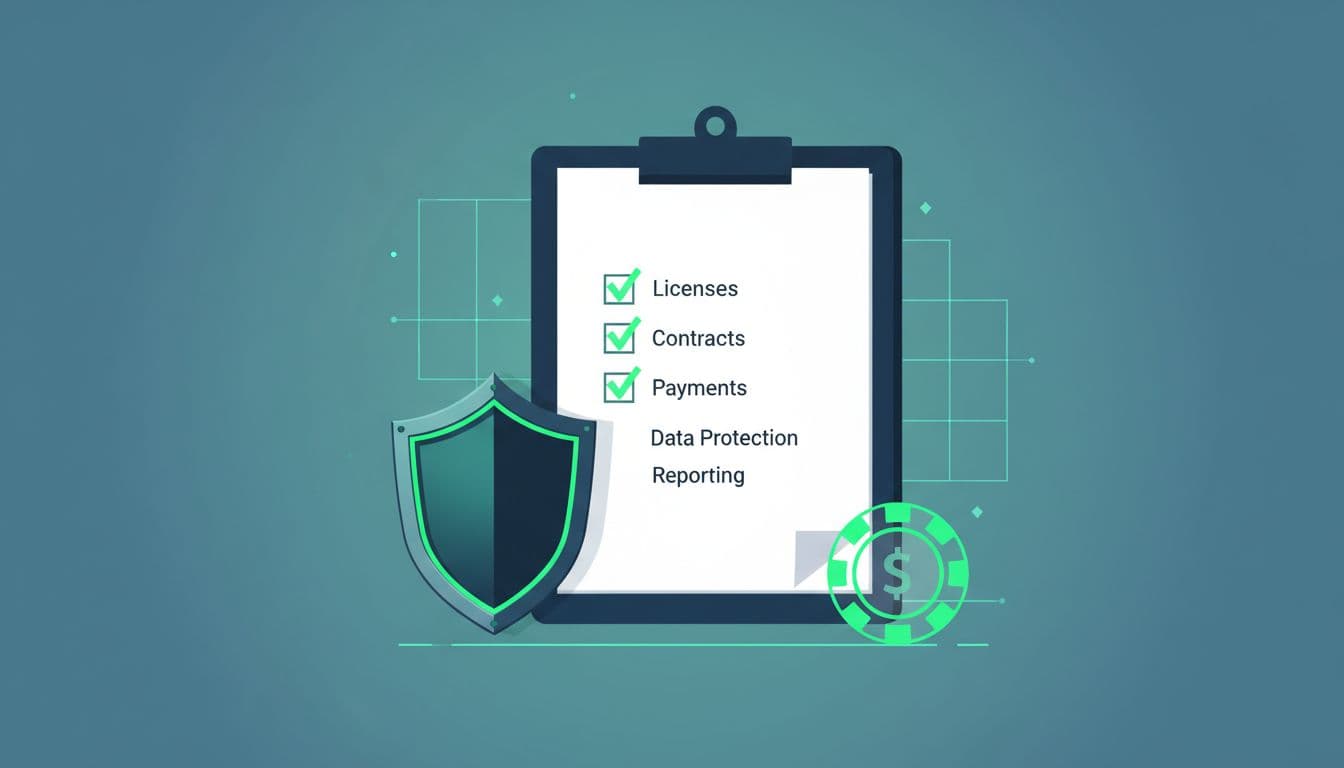
A solid affiliate program is more like a supply chain than a marketing campaign. You need traceability: who sent the traffic, what was promised, what was paid, and why.
Start by aligning your affiliate program with your broader compliance plan. If you’re tightening licensing readiness, it helps to compare your internal controls to an audit-focused checklist like this iGaming compliance 2025 checklist and then map affiliate risks into the same system.
Here’s the operator-side “minimum viable compliance” view:
| Risk area | What can go wrong | Evidence you should be able to show fast |
|---|---|---|
| Affiliate onboarding | Unknown owners, risky traffic sources | KYA file, ownership details, approved channels |
| Ads and promos | Misleading bonuses, wrong geo targeting | Approved creatives, version history, dates |
| Player protection | Underage or vulnerable targeting | Policies, blocked placements, enforcement logs |
| Data privacy | Tracking without consent | Consent records, DPAs, cookie policy alignment |
| Payments and tracking | Disputes, lost attribution | Tracking terms, raw logs, reconciliation reports |
For regulated industries, affiliate compliance is a management problem, not just a marketing one. This guide on keeping affiliate programs compliant in regulated industries is a good reminder that your partners’ behavior can become your liability.
Small-operator iGaming affiliate compliance checklist (do this before you scale)
Use this as an operator checklist you can run quarterly, and again whenever you onboard a major affiliate.
1) Verify affiliate identity and ownership (KYA)
You already know KYC for players. Treat affiliates the same way, at least at a business level.
- Confirm legal entity, beneficial owners, and contact details.
- Require a clear list of websites, social handles, apps, email lists, and sub-affiliate plans.
- Document approved geos and languages, tied to where you’re licensed.
If you don’t have a clear internal owner for this process, fix that first. A defined compliance function, even if it’s part-time, matters. This iGaming compliance officer responsibilities guide helps you define who signs off on marketing partners.
2) Lock down what “allowed marketing” means
Most affiliate disputes start with “we didn’t know that wasn’t allowed.”
Set rules for:
- Bonus wording, wagering disclosures, and terms visibility
- Use of brand terms in paid search (and match types)
- Influencer and streamer disclosures
- Prohibited content (misleading “guaranteed wins,” urgency pressure, or fake reviews)
Make approvals simple: one shared folder, one approval email trail, and dated versions.
3) Geo and licensing controls (no guessing)
Small operators get burned by “global” affiliates who don’t treat borders seriously.
Define:
- Allowed countries and excluded countries
- What happens if an affiliate sends restricted traffic (rejection, clawback, termination)
- How you detect it (IP checks, registration country, payment country signals)
4) Data protection and tracking consent
Affiliate tracking touches personal data quickly (IP address, device IDs, click IDs, sometimes hashed emails).
At a minimum:
- Use a written data processing addendum when required.
- Make sure your cookie and consent setup matches how tracking actually works.
- Limit data sharing to what’s needed for attribution and fraud checks.
5) Fraud prevention signals and escalation
Affiliate fraud isn’t rare, it’s just unevenly detected. A single bad partner can fill your funnel with fake signups that later hit your payments team like a wave.
This overview of iGaming affiliate fraud patterns and defenses is worth reading if your conversion rate suddenly jumps while deposits stay flat.
Operationally, agree on:
- What you classify as invalid traffic (bots, incent, stolen identities)
- Your review window before commissions are finalized
- A dispute process with timelines and evidence standards
Contract red flags in iGaming affiliate agreements (what to fix before signing)
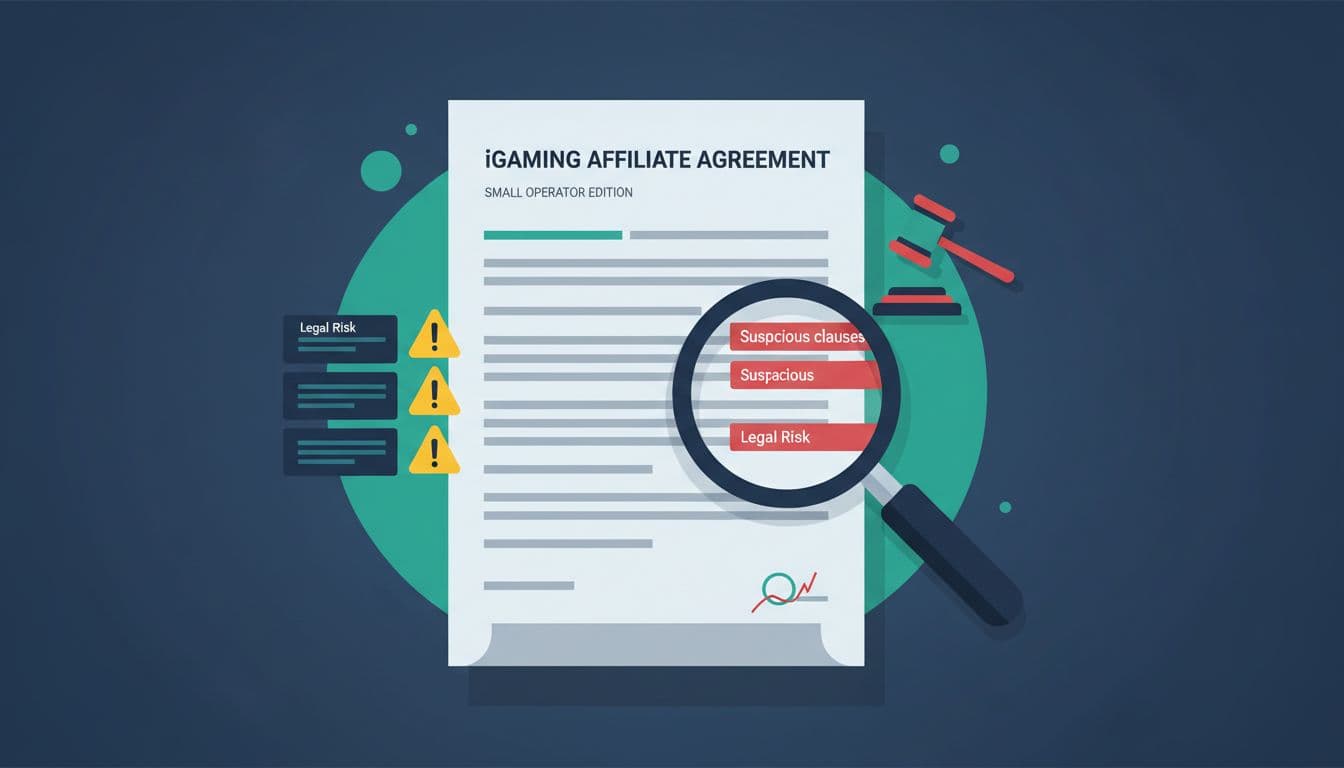
A contract is supposed to reduce arguments. If it reads like a “trust me” document, that’s a warning.
A practical reference for partnership warning signs is Altenar’s breakdown of red flags in iGaming partnerships. Use the same mindset for affiliate deals.
Watch for these contract red flags:
Commission terms that can move without notice: If rates, rev share, or CPA criteria can be changed “at our discretion,” you’re building future conflict.
Vague definitions of “qualified player”: Define it using measurable events (registration, first deposit, wagering requirement, chargeback window).
Negative carryover without clear limits: If negative carryover is allowed, specify when it applies, and whether it resets.
Retroactive program changes: Contract changes should apply going forward, with written notice and an opt-out or termination right.
One-sided audit rights: You need the right to audit affiliate traffic sources and compliance, and affiliates need clear reporting access so disputes don’t turn toxic.
Termination that traps you: Watch for clauses that keep paying indefinitely without a clear baseline, or prevent you from suspending payouts during fraud reviews.
If you want a cleaner contract experience, build a one-page “commercial summary” that both sides sign (rates, geos, tracking model, payment dates, dispute steps). It saves time and prevents selective memory later.
Payment and tracking red flags (where most operators get burned)
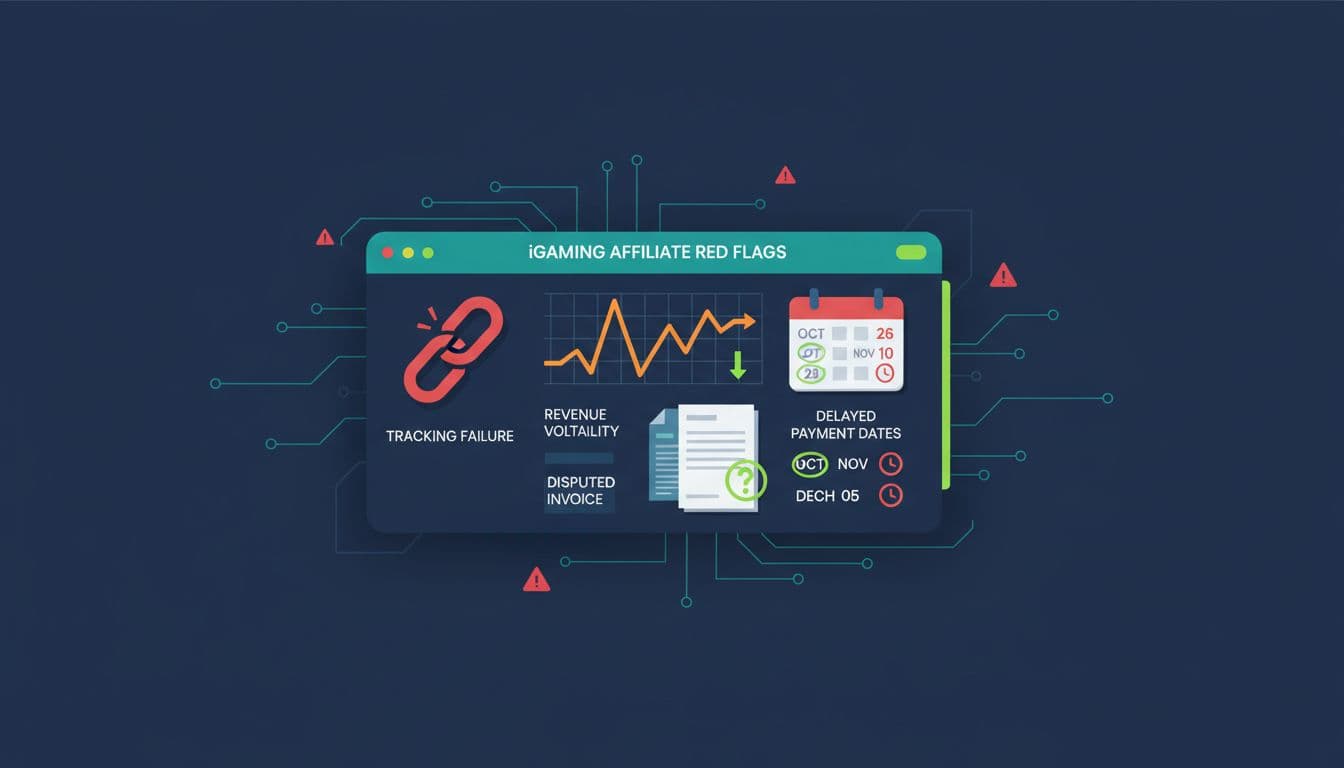
If contracts are the seatbelt, tracking and payments are the brakes. When they fail, everything crashes at once.
Here are the biggest payment and tracking red flags to watch:
Attribution rules you can’t explain in one minute: If your team can’t explain first click vs last click, cookie windows, cross-device handling, and what happens with ad blockers, expect disputes.
No access to raw data: Affiliates don’t need your whole database, but they do need enough detail to validate conversions. Offer click IDs, timestamps, campaign IDs, and event status.
“Manual adjustments” without a policy: Adjustments happen, but they need a written rule (fraud, chargebacks, duplicate accounts), plus a reason code in reports.
Long, flexible payment timelines: Net-30 is common. “Whenever finance approves” is not. Define pay dates, minimum thresholds, and what happens if an invoice is late.
High withholding or rolling reserves with no triggers: If you hold back funds, state the percentage, duration, and release conditions.
Payment method friction: Repeated “bank issues,” surprise fees, or FX confusion are slow leaks that ruin partner trust.
A simple operator test: pick 20 conversions, then reconcile the full path (click, registration, deposit, commission, payout). If you can’t trace five of them cleanly, you don’t have a scale-ready program.
A quick partner risk score you can use internally
When you’re juggling multiple affiliates, use a fast scoring method to decide who gets more budget and who gets a tighter leash.
Rate each category 0 to 2 (0 high risk, 2 low risk):
| Category | 0 | 1 | 2 |
|---|---|---|---|
| Contract clarity | Vague, one-sided | Some clarity | Clear terms, change control |
| Tracking transparency | Black box | Partial | Click-level traceability |
| Payment reliability | Late, disputed | Mixed | Predictable, documented |
| Compliance posture | No proof | Some proof | KYA, approved channels, audits |
Total out of 8:
- 0 to 3: restrict, monitor weekly
- 4 to 6: normal controls
- 7 to 8: scale with confidence
Keep a “regulator-ready” affiliate file (it pays off fast)
Small operators win by being organized. Keep one folder per affiliate with contracts, KYA info, approved creatives, and dispute records.
If you’re tightening your overall licensing posture, this iGaming license compliance documentation checklist is a strong model for how to structure evidence. For player-side controls that often overlap with affiliate risk (fraud, identity, source-of-funds triggers), align with this guide to audit an iGaming KYC workflow for regulators.
Conclusion
Affiliate growth is great, but it shouldn’t come with mystery terms, messy attribution, or payout drama. A strong iGaming affiliate compliance checklist keeps your partners honest, your reports defensible, and your cash flow predictable.
Start with the basics: verify affiliates, document approvals, tighten contracts, and test tracking like it’s a payment system. Then scale the partners who pass, and cut the ones who won’t.

Adeyemi Adetilewa leads the editorial direction at IdeasPlusBusiness.com. He has driven over 10M+ content views through strategic content marketing, with work trusted and published by platforms including HackerNoon, HuffPost, Addicted2Success, and others.