
You can have a strong product and still struggle to get customers. That’s not bad luck, it’s usually a weak go-to-market model.
Think of your business like a new restaurant. The food might be great, but if people can’t find you, don’t understand why you’re different, or don’t trust you yet, the tables stay empty.
This guide is for startup founders, marketers, and small business owners who want a clear way to choose how they’ll reach buyers, close sales, and grow, especially when you’re testing fresh business ideas with limited time and budget.
What a go-to-market model actually is (in plain English)
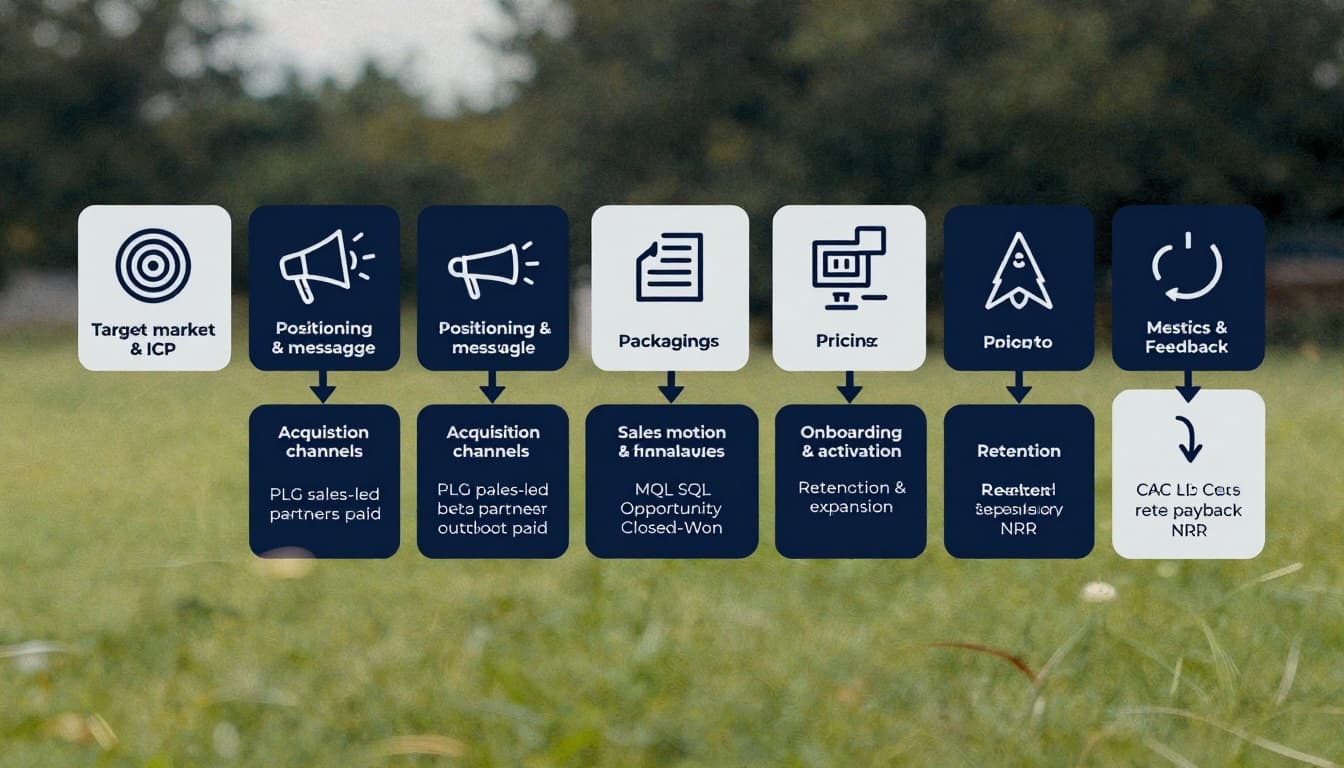
A go-to-market model is your repeatable system for turning a target customer into revenue.
It ties together the basics that often get planned in separate documents:
- Who you sell to (ICP and segments)
- What you say (positioning and messaging)
- How you charge (packaging and pricing)
- How you get attention (channels)
- How you close (sales motion)
- How you keep customers (activation, retention, expansion)
If you want an outside reference point, Stripe’s go-to-market strategy guide for startups is a solid primer on the moving parts.
The 6 common go-to-market models (and what they’re best at)
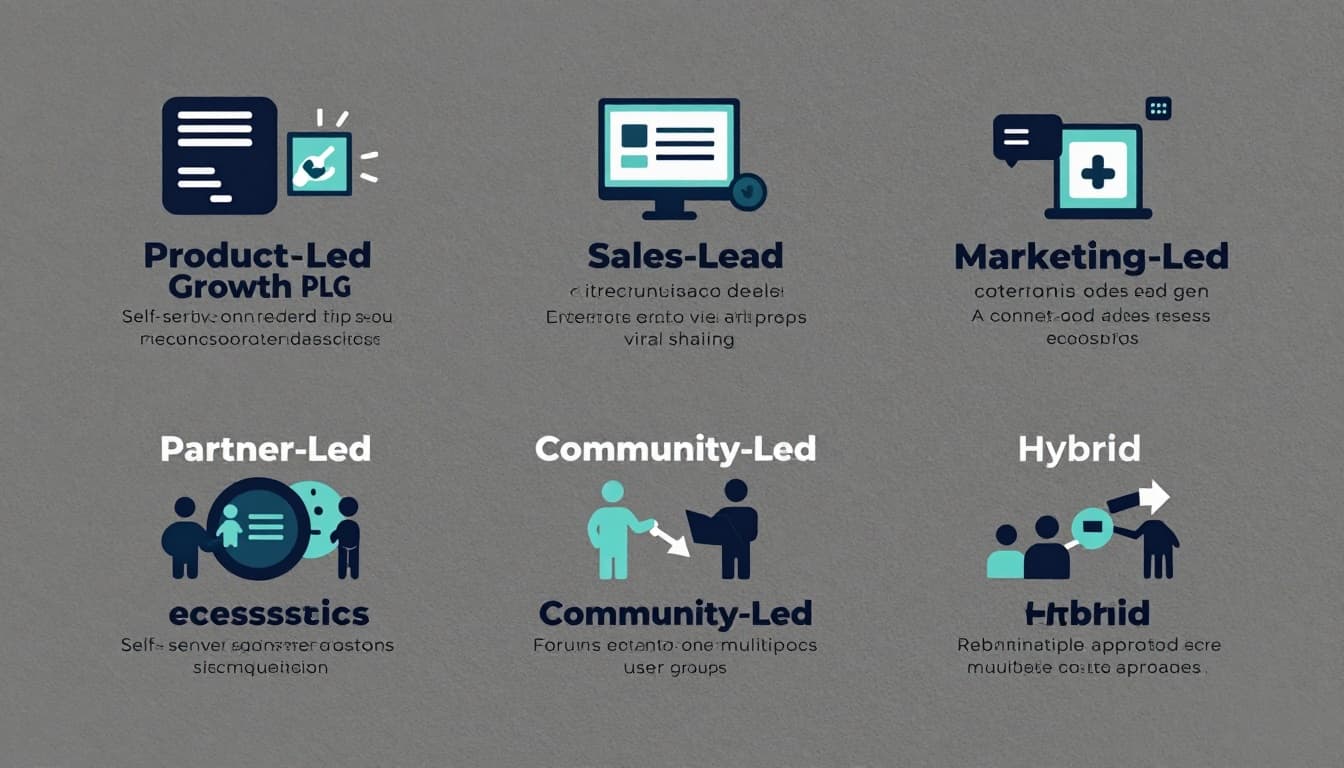
Most launches fall into one of these:
Product-led growth (PLG): The product does the selling through free trials, freemium, templates, or built-in sharing.
Sales-led: You win with outbound, demos, proposals, and deal control.
Marketing-led: Content, ads, and email build demand before a sales call happens.
Partner-led: Agencies, consultants, marketplaces, and resellers bring you customers.
Community-led: Users gather, share wins, and pull others in (often paired with PLG).
Hybrid: You combine models as the business matures.
If you want a deeper look at design choices (team structure, motion, and sequencing), Underscore VC’s go-to-market strategy overview is a helpful read.
10 business ideas, matched to the right go-to-market model
1) AI meeting notes service for remote teams (Product-led)
Summary: Sell a simple tool that turns calls into notes, action items, and follow-ups.
Why it’s unique: Fast time-to-value, easy to trial.
Who it’s for: Small teams, agencies, founders.
How to start: Build a narrow v1 for Zoom or Google Meet; offer free summaries with a paid export.
Tools: OpenAI API, Stripe, Webflow.
Example: A 10-person agency adopts it after one shared meeting recap.
2) Fractional CFO for e-commerce brands (Sales-led)
Summary: Offer monthly finance leadership without hiring full-time.
Why it’s valuable: High trust, high ticket, clear ROI.
Who it’s for: Shopify and Amazon sellers with messy cash flow.
How to start: Define a 3-tier package; book calls through referrals and LinkedIn outreach.
Tools: QuickBooks, Google Sheets, HubSpot.
Example: You help a brand fix inventory spend and stop stockouts.
3) Local home services lead-gen site (Marketing-led)
Summary: Build niche sites that capture search traffic, then sell leads to providers.
Why it works: Search intent is strong and specific.
Who it’s for: Operators who like SEO and simple systems.
How to start: Pick one service and city; publish “cost” and “best provider” pages; add call tracking.
Tools: WordPress, Semrush, CallRail.
Example: “Roof repair in Austin” leads get sold to 3 contractors.
4) B2B onboarding and SOP templates store (Product-led)
Summary: Sell plug-and-play templates for onboarding, SOPs, and checklists.
Why it’s valuable: Buyers want speed and consistency.
Who it’s for: Small teams hiring fast.
How to start: Build templates for one role (VA, SDR, ops); launch on Gumroad; add a free sample pack.
Tools: Notion, Gumroad, Canva.
Example: A founder buys your SDR onboarding kit in 5 minutes.
5) Cybersecurity awareness training for small clinics (Sales-led)
Summary: Provide training and phishing simulations for healthcare offices.
Why it’s unique: Compliance pressure, low internal IT.
Who it’s for: 10 to 200 employee clinics.
How to start: Lead with a risk scan; offer a short pilot; upsell to quarterly training.
Tools: Microsoft 365, KnowBe4 alternatives, Loom.
Example: A clinic reduces risky clicks after your first campaign.
Summary: Build a focused newsletter that becomes a trusted group.
Why it’s valuable: Attention compounds when trust is high.
Who it’s for: Writers with a clear niche (HR ops, indie retail, real estate).
How to start: Publish weekly with a consistent format; collect replies; run small virtual meetups.
Tools: Beehiiv, SparkLoop, Typeform.
Example: Sponsors pay because your readers reply and buy.
7) AI prompt packs and micro-courses for a job role (Marketing-led)
Summary: Sell short training and prompt libraries for a specific role (recruiters, SDRs, designers).
Why it works: Clear outcome, easy to explain.
Who it’s for: Solo creators and coaches.
How to start: Create one “before and after” demo; run webinars; offer a low-cost starter pack.
Tools: Kajabi, Gumroad, ConvertKit.
Example: A recruiter uses your prompts to cut screening time.
8) Shopify conversion copywriting studio (Partner-led)
Summary: Offer copy and landing pages through agencies and dev shops.
Why it’s valuable: Partners already have buyer trust.
Who it’s for: Copywriters who sell outcomes, not hours.
How to start: Build a partner pitch deck; offer rev share; create a repeatable audit process.
Tools: Google Docs, Figma, Loom.
Example: A Shopify agency bundles your offer into every launch.
9) Micro-SaaS for compliance reminders (Hybrid: PLG + sales)
Summary: A simple tool that tracks deadlines and sends reminders (permits, audits, insurance).
Why it works: Sticky workflow, low churn when it’s embedded.
Who it’s for: Small regulated businesses (logistics, clinics, construction).
How to start: Launch self-serve; add “request setup help” for higher plans.
Tools: Bubble, Stripe, Zapier.
Example: A construction firm upgrades for multi-site access.
10) Product adoption consulting for B2B tools (Sales-led)
Summary: Help SaaS teams improve activation, engagement, and renewals.
Why it’s valuable: It ties directly to revenue and retention.
Who it’s for: Early-stage SaaS with churn or low usage.
How to start: Sell an activation audit; run a 30-day sprint; document playbooks.
Tools: Mixpanel, Hotjar, Intercom.
Example: A SaaS lifts trial-to-paid by fixing onboarding steps.
If onboarding is your weak spot, this guide on accelerate product adoption tactics pairs well with any model that depends on activation.
Quick comparison table: models, costs, and best fit
| Go-to-market model | Best for | Starting cost | Key benefit |
|---|---|---|---|
| Product-led (PLG) | Simple tools, templates, self-serve SaaS | Low to medium | Faster learning from user behavior |
| Sales-led | High-ticket B2B services, complex SaaS | Low | Deal control and clear targeting |
| Marketing-led | SEO, newsletters, info products | Low to medium | Scales attention without 1:1 time |
| Partner-led | Agencies, integrations, channel offers | Low | Borrowed trust and warmer leads |
| Community-led | Education, creator brands, power-user tools | Low | Loyalty and referrals over time |
| Hybrid | Growing SaaS and service firms | Medium | Flexibility as you scale |
For teams leaning marketing-led, the Inbound Content Marketing Strategy Guide is a useful refresher on how content creates demand over time.
How to choose the right go-to-market model for your business idea
Use this quick filter:
- Deal size: Under $50 per month often needs PLG or marketing-led. Over $5,000 usually needs sales-led.
- Buyer trust: If trust matters more than features (finance, security, health), expect sales-led or partner-led.
- Sales cycle: If you need approvals, legal, or procurement, plan for sales-led.
- Channel access: If you can rank in search or build an audience, marketing-led is realistic.
- Time to value: If users get value in minutes, PLG gets stronger.
- Retention risk: If churn is likely, invest early in activation and customer success.
Before you scale spend, look at real examples and patterns in Highspot’s go-to-market strategy examples and compare them to your deal size and cycle length.
Conclusion: make the model the boss, not your mood
A good launch isn’t about doing more, it’s about doing the right things in the right order. When your channel, sales motion, and onboarding match your offer, growth stops feeling random.
Pick one primary path, run small tests, and tighten the loop between acquisition, activation, and retention. That’s how a go-to-market model turns business ideas into a business that lasts.

Adeyemi Adetilewa leads the editorial direction at IdeasPlusBusiness.com. He has driven over 10M+ content views through strategic content marketing, with work trusted and published by platforms including HackerNoon, HuffPost, Addicted2Success, and others.