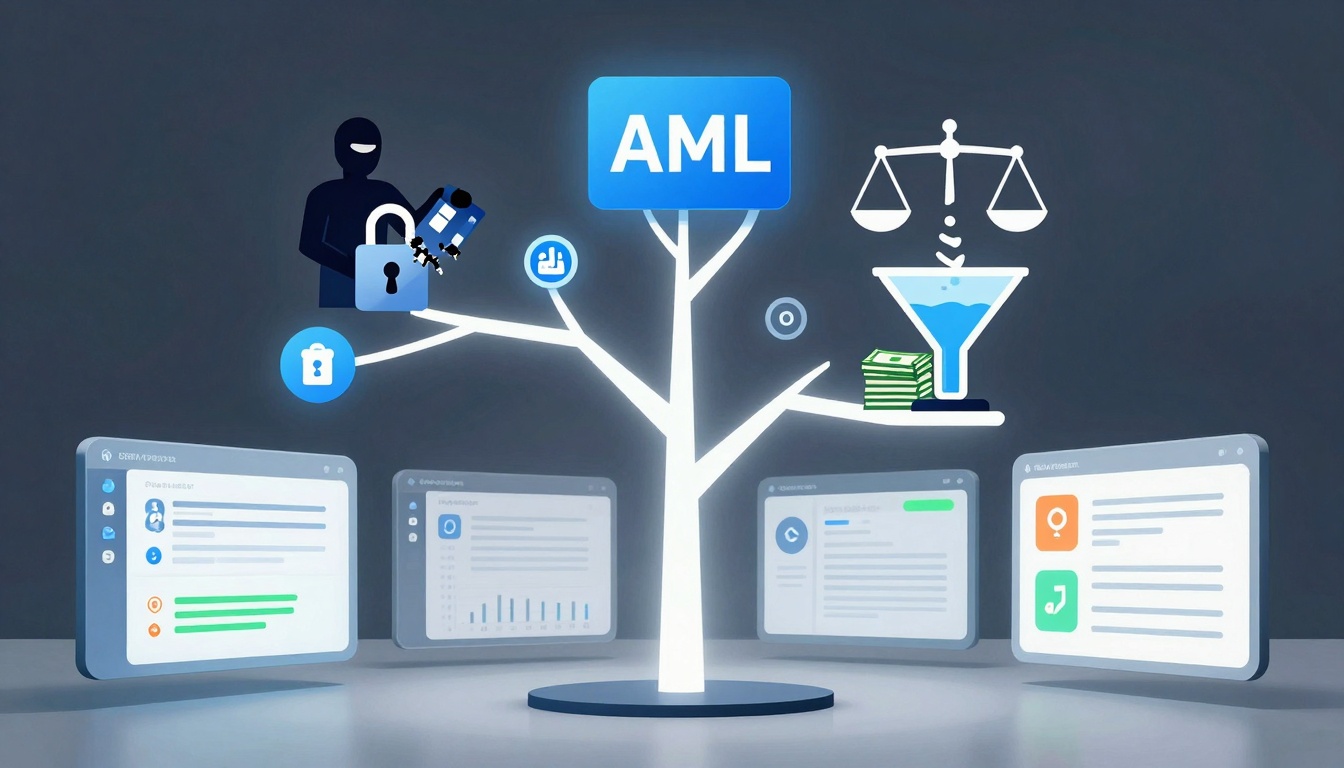
An alert lands in your queue at 2:07 p.m. The customer is shouting, the merchant wants funds released, and someone on the team says, “This feels like AML.” Another says, “No, it’s fraud.” Minutes pass, losses grow, and the case gets bounced around.
That’s why fraud aml triage can’t be a vibe-based decision. It needs a simple decision tree, clear ownership, and a handoff package that doesn’t drop context.
This guide is written for payments ops leads, founders, and small teams that want fewer chargebacks, fewer compliance fire drills, and faster decisions without stepping on each other’s toes.
Fraud triage vs AML triage: the one-sentence difference that ends most debates
Think of fraud like a house fire. You put it out fast to stop immediate damage.
Think of AML like smoke in the walls. It might not burn today, but it can signal something bigger, and regulators will ask what you did about it.
- Fraud triage is about stopping unauthorized activity and reducing direct loss (chargebacks, disputes, account takeover).
- AML triage is about spotting financial crime patterns and meeting legal obligations (monitoring, investigation records, potential SAR filing).
The fastest way to decide ownership is to ask: Are we trying to stop immediate theft, or are we assessing potential criminal proceeds and reporting risk?
For background on how teams blend risk scoring and fraud and AML risk assessment in practice, see AML & Fraud Risk Assessment in 2025.
Where payments ops breaks: “one alert, two mandates”
Payments companies often route everything through one “risk” queue. That sounds efficient until you measure it.
Here’s what usually goes wrong:
- Different clocks: fraud decisions often need minutes; AML investigations may take days.
- Different evidence: fraud leans on device, behavior, and authentication signals; AML leans on pattern, counterparties, and identity consistency over time.
- Different outcomes: fraud outcomes include blocks, refunds, and dispute responses; AML outcomes include enhanced due diligence, restrictions, and formal reporting.
So the goal isn’t to pick one team forever. It’s to route the case to the right owner fast, then hand it off cleanly when the facts change.
A practical decision tree for fraud vs AML triage (who owns what)
Use this as your frontline routing logic. It works best when it’s written into SOPs and ticket templates, not just tribal knowledge.
Examples: account takeover indicators, sudden device change, impossible travel, first-time payee with high velocity, customer claims “not me.”
- Yes: Fraud owns (act immediately: block, step-up auth, hold payout).
- No: go to Step 2.
Step 2: Is the risk tied to identity, sanctions, or known bad entities?
Examples: watchlist match, sanctions screening concerns, identity mismatch, suspicious beneficiary, adverse media, unusual source of funds story.
- Yes: AML owns (open an investigation track, document rationale).
- No: go to Step 3.
Step 3: Is this a fast loss event, or a pattern over time?
- Fast loss event (one-off spike, card testing, promo abuse): Fraud owns.
- Pattern over time (structuring, repeated round-dollar transfers, churn between accounts, rapid in-out movement): AML owns.
Step 4: Is it overlap (fraud that may be laundering)?
Examples: mule accounts, stolen funds being cashed out, scam victims sending repeated wires, merchant collusion.
- Overlap: Fraud leads first response (stop the bleeding), then handoff to AML if indicators of laundering or predicate crime appear.
This “fraud first, then AML” approach prevents the most common failure mode: everyone investigates while the money leaves.
For teams using vendor tools to enforce routing and escalation, it helps to understand how fraud products structure signals and rules. Stripe’s reference is a good starting point: Stripe Radar technical guide.
The ownership model your team can actually follow (RACI table)
When a case is messy, people need to know who decides, who executes, and who documents. A small RACI table stops case ping-pong.
| Activity | Fraud Ops | AML/Compliance | Payments Ops | Support |
|---|---|---|---|---|
| Immediate hold/block/refund decision | A/R | C | R | C |
| Chargeback response strategy | A/R | C | C | I |
| Sanctions/watchlist investigation | C | A/R | I | I |
| Transaction monitoring pattern review | C | A/R | C | I |
| Customer communication templates | C | C | I | A/R |
| Final case closure notes | R | R | C | I |
A = Accountable, R = Responsible, C = Consulted, I = Informed.
The handoff that saves hours: what “good” looks like
A handoff shouldn’t be a chat message that says “looks AML-ish.” It should be a small evidence packet that lets the next owner decide quickly.
Minimum handoff package (copy into your ticket template)
- Why this is being handed off (one sentence, plain English).
- Timeline (first seen, key events, last action taken).
- Entities (customer ID, account IDs, payees, merchants, devices).
- Money movement summary (amounts, rails, in-out flow, velocity).
- Signals observed (device mismatch, IP risk, watchlist hits, pattern flags).
- Actions already taken (holds, locks, KYC refresh, outreach).
- Decision needed (release funds, keep hold, exit customer, file report).
Simple SLA rules (so nothing stalls)
- Fraud to AML: send within 30 minutes when laundering indicators appear.
- AML to Fraud: send within 30 minutes when it’s clearly unauthorized theft.
- Owner response: acknowledge within 1 business hour, decide next step within 1 business day (or your risk appetite).
If you use scoring to drive those SLAs, predictive scoring can reduce noise and speed routing. A useful explainer is Machine Learning Alerts and predictive scoring for operational efficiency.
Overlap scenarios: three examples and how to route them
1) Account takeover with rapid cash-out
Fraud owns first (lock account, stop payout). AML joins if funds route through multiple recipients or show mule behavior.
2) “Customer is a scam victim” push payments
Fraud may handle customer protection controls, but AML should assess whether the counterparties look like organized fraud rings.
3) Merchant collusion and refund abuse
Fraud handles dispute and abuse controls. AML takes ownership if flows suggest laundering (circular movement, layered transfers, multiple related entities).
Tools that make fraud and AML triage faster (without bloating headcount)
You don’t need a massive stack, but you do need signals in one place and a workflow that preserves context.
- Fraud stack: device fingerprinting, velocity rules, behavioral models, chargeback tooling, step-up auth.
- AML stack: transaction monitoring, sanctions screening, case management, customer risk scoring, audit-ready notes.
- Shared workflow: one case ID, one timeline, clear handoff states (Fraud Owned, AML Owned, Joint Review).
If you want a lightweight reference for AML monitoring frameworks and documentation discipline, this open guidance document is useful: AML Monitoring Compliance Guidance (March 2025).
Mini scorecard: are you triaging well?
If you track nothing else, track these:
- Time to first action (fraud queue): are you stopping loss fast?
- Handoff rate: are alerts routed right the first time?
- Reopen rate: are cases bouncing back due to missing info?
- False-positive rate by alert type: are rules too noisy?
- Quality checks: do reviewers agree with the final disposition?
A surprising win is adding a weekly 30-minute calibration where fraud and AML review five closed cases together. It tightens judgment fast.
Conclusion: make fraud AML triage a system, not a debate
When alerts spike, teams don’t rise to the occasion, they fall to their defaults. Clear ownership, a short decision tree, and a real handoff package turn confusion into muscle memory.
If you implement just one change this week, make it this: write down your routing rules, then measure handoff quality. Your fraud aml triage process will get faster, calmer, and easier to audit, and your customers will feel the difference.

Adeyemi Adetilewa leads the editorial direction at IdeasPlusBusiness.com. He has driven over 10M+ content views through strategic content marketing, with work trusted and published by platforms including HackerNoon, HuffPost, Addicted2Success, and others.