
A contract shouldn’t feel like a scavenger hunt across inboxes, shared drives, and “final_v7” filenames. Yet that’s what happens when volume grows, teams spread across regions, and every department has its own way of doing deals.
Enterprise contract lifecycle management is the difference between contracts as paperwork and contracts as controls. Done right, CLM becomes the system that keeps pricing, risk, approvals, and obligations from slipping through cracks you can’t even see.
This guide breaks down what “scaling” really means in CLM, how to build governance that people will actually follow, and how to keep compliance tight without slowing revenue.
What enterprise CLM really is (and why it fails at scale)
At a small company, contract management can be “good enough” with templates and a shared folder. In an enterprise, contracts multiply like receipts in a junk drawer. The problem isn’t just volume, it’s variation:
- Different contract types (sales, procurement, HR, partnerships, data processing)
- Different playbooks by region and business unit
- Different risk thresholds, approval levels, and regulatory requirements
- Different systems that need the same contract data (CRM, ERP, procurement, finance)
If you want a quick baseline on what an enterprise contract management system typically includes, Ramp’s overview is a useful reference: enterprise contract management system overview.
The most common failure pattern is simple: teams adopt a CLM tool, but skip the “rules” part. So the platform becomes a storage box, not a governance engine.
Build the lifecycle like a control system, not a filing cabinet
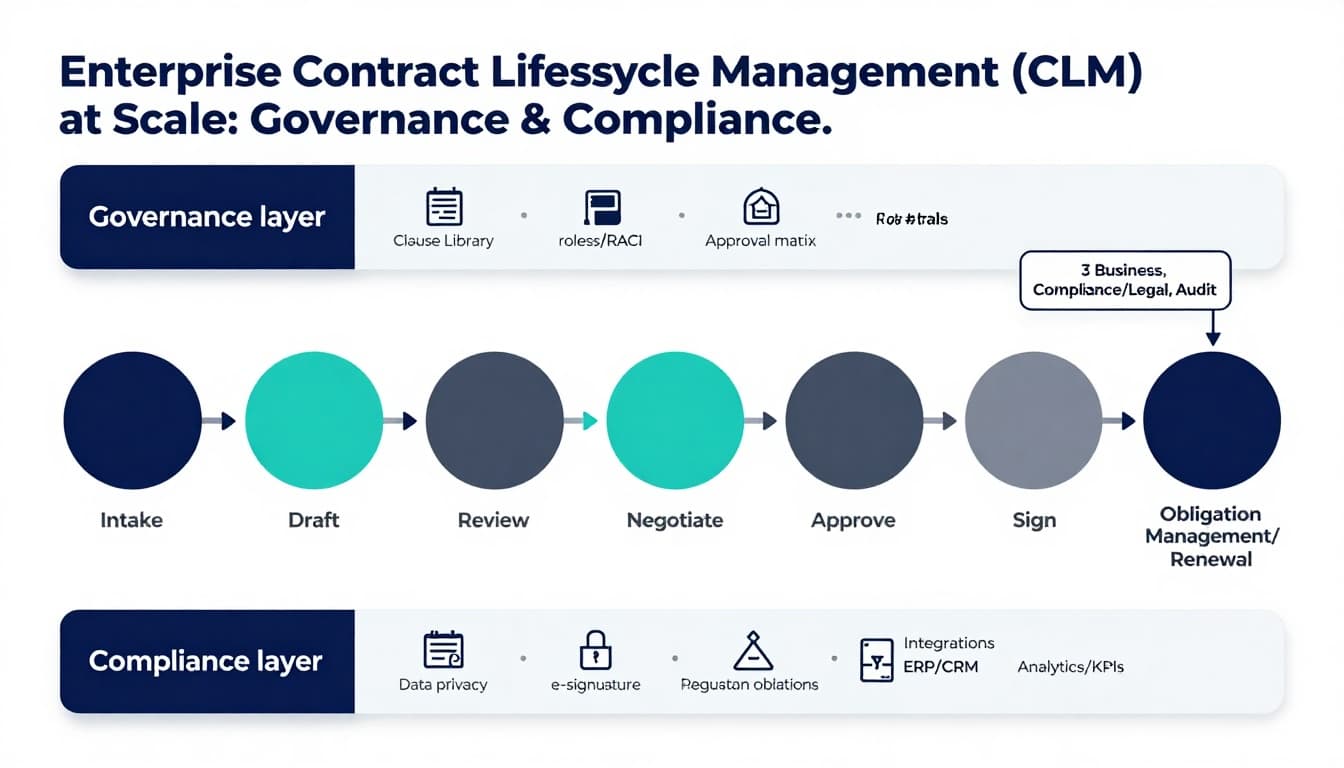
Think of the CLM lifecycle like airport security. The goal isn’t to annoy travelers, it’s to reduce risk using consistent checks. Enterprise CLM should work the same way across seven stages: intake, draft, review, negotiate, approve, sign, and obligation management.
To make that real, you need three building blocks that don’t depend on heroics from Legal:
1) Standard intake with required data
If requesters can submit “Need contract ASAP” with no context, you’ll get slow cycles and bad deals. Intake should capture basics like counterparty, contract type, value band, data access, and renewal terms.
2) A clause library and negotiation playbooks
A clause library isn’t just templates. It’s approved language with fallbacks and “never accept” positions, tied to risk levels and deal types.
3) An approval matrix people can’t bypass
Approvals should be driven by rules (value, region, risk score, data type), not hallway conversations. That’s how you stop shadow contracting.
Governance that scales: ownership, roles, and “3 lines of defense”
Governance breaks when nobody owns the messy middle. The fix is clear accountability and a simple operating model.
A practical approach is the “3 lines of defense” concept adapted for CLM:
- Business teams own deal outcomes and follow the playbook.
- Legal and compliance define standards, exceptions, and escalation paths.
- Audit and risk validate controls, reporting, and retention.
Write this down as a RACI and keep it short. If it takes 20 minutes to explain who approves what, it’s already too complex.
One more point: governance is not the same as control. Governance is who decides, controls are the checks that make decisions consistent (audit trails, version control, approval logs, and exception reporting).
Compliance at enterprise scale: stop treating obligations like an afterthought
Many teams treat “signed” as the finish line. In compliance terms, it’s the starting gun.
Enterprise compliance pressure usually shows up in four places:
Data privacy and security: contracts that govern personal data, security terms, breach notice timelines, and vendor access.
Regulatory obligations: sector rules (finance, health, public sector) that require specific terms and proof of compliance.
Retention and eDiscovery: keeping the right version, for the right period, in the right system.
Obligation tracking: renewals, notice windows, SLAs, insurance certificates, reporting duties, and payment terms.
If your CLM doesn’t surface obligations in a way the business can act on, compliance turns into calendar reminders and luck.
AI in CLM in 2026: faster review, earlier risk signals
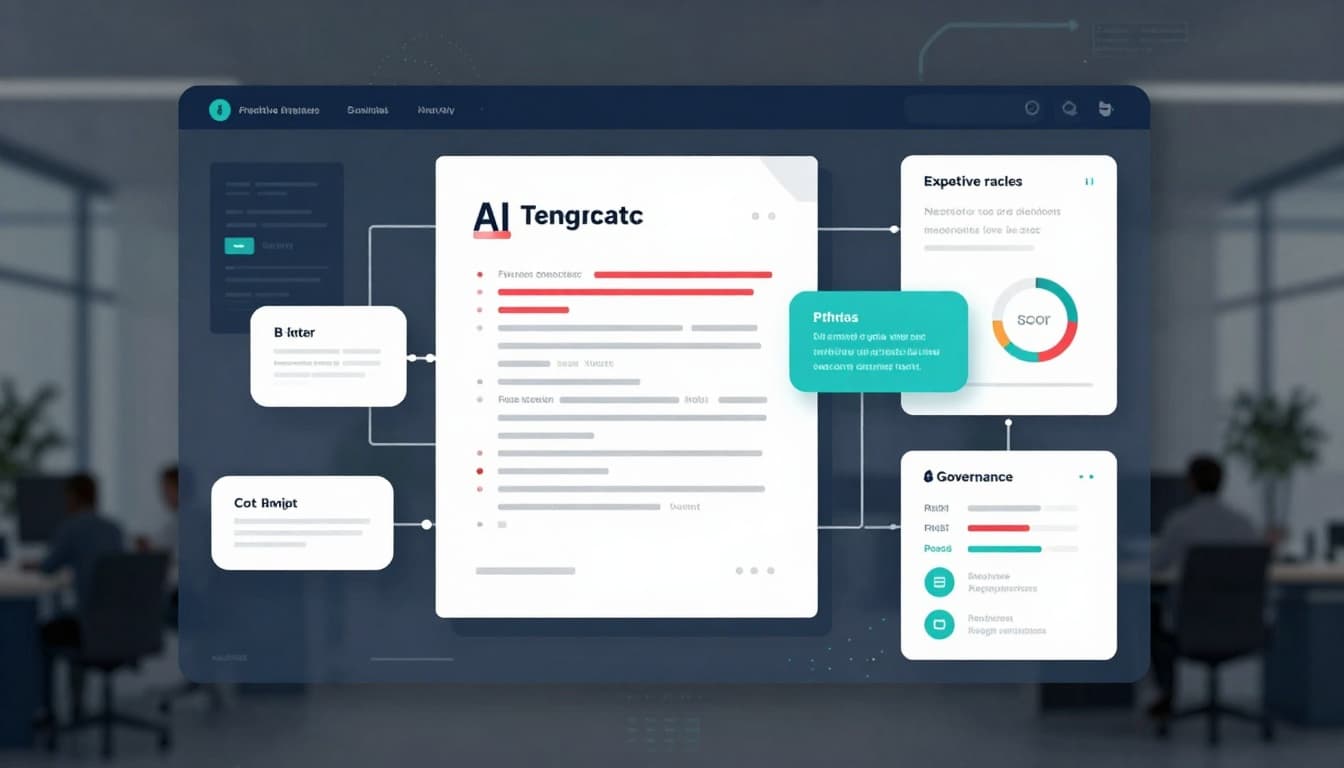
In January 2026, the biggest CLM shift is how AI turns contracts into usable data, not just PDFs. The most valuable AI features aren’t flashy, they’re practical:
- Risk scoring before approval (flag unusual indemnity, auto-renewals, non-standard liability caps)
- Smart extraction (pull dates, obligations, payment terms, renewal windows)
- Instant checks for non-lawyers (plain-language explanations and “this clause deviates from policy” prompts)
- Pattern detection across the portfolio (spot recurring problem clauses or vendors with frequent exceptions)
If you’re comparing platforms, this market roundup can help you frame requirements: CLM software options in 2025 (use it for feature categories, not as a final shortlist).
The main rule: AI should enforce your governance, not invent it. If the policy is fuzzy, AI will scale the fuzz.
Integrations that reduce rework (CRM, ERP, procurement, e-signature)
CLM becomes enterprise-grade when it connects to how work already moves.
Two integrations matter most:
CRM integration (pre-sign)
Sales shouldn’t retype customer details or pricing assumptions. Pull core fields from CRM, push status updates back, and tie approvals to deal stages.
ERP and procurement integration (post-sign)
Once signed, contract terms need to drive purchasing, billing, and vendor management. If finance can’t see payment terms and renewal dates, you’ll miss savings and pay for unused services.
If your stack includes Oracle, it’s worth understanding how ERP data flows affect governance, renewals, and controls. This comprehensive guide to Oracle ERP systems provides helpful context for integration planning.
Also, be realistic about scope. Enterprise-wide CLM has different needs than a single department rollout. This breakdown is a good sanity check: enterprise vs department-level contract management software.
Metrics that prove governance and compliance are working
You don’t need 40 dashboards. You need a few signals that show adoption and risk reduction.
| Metric | What it tells you | Why it matters |
|---|---|---|
| Cycle time by contract type | Where deals slow down | Targets process fixes, not guesswork |
| Clause deviation rate | How often teams go off-playbook | High deviation means weak governance or bad templates |
| Exception approval volume | Where policy doesn’t fit reality | Helps refine playbooks and thresholds |
| Renewal capture rate | Whether you’re missing notice windows | Protects revenue and prevents surprise auto-renewals |
| Obligation completion | Whether duties get done on time | Reduces compliance exposure and vendor disputes |
Pick 5 to start. Publish them monthly. Treat them like operational metrics, not legal trivia.
A practical rollout plan (without boiling the ocean)
Most enterprise CLM projects fail when they try to fix everything at once. A better approach is to start with the contracts that cause the most friction.
First 30 days: map two high-volume workflows (often NDAs plus a core sales or vendor agreement), define the approval matrix, clean up templates.
Days 31 to 60: launch intake, clause library, and basic reporting, train business users with “lite” steps.
Days 61 to 90: add obligation tracking, integrate with e-signature and one system of record (CRM or ERP), then expand by contract type.
A simple test: if a salesperson or procurement manager can’t complete intake in under five minutes, adoption will stall.
Conclusion: scale enterprise CLM like you’d scale financial controls
Contracts are the rules of the game, and at enterprise size, rules only work when they’re consistent, visible, and enforced. Build governance people can follow, connect CLM to the systems teams already use, and track the few metrics that show whether policy is real or just a PDF.
If you want fewer surprises, faster cycles, and cleaner audits, treat enterprise contract lifecycle management like a business control system, not an admin task. Where would tighter contract governance save you money first: renewals, vendor risk, or sales exceptions?

Adeyemi Adetilewa leads the editorial direction at IdeasPlusBusiness.com. He has driven over 10M+ content views through strategic content marketing, with work trusted and published by platforms including HackerNoon, HuffPost, Addicted2Success, and others.