
If growth feels like “more work for the same money,” you don’t have a plan, you have a treadmill.
A strong business growth strategy is what turns effort into momentum. It helps you pick the right customers, build an offer that sells, and grow revenue without chaos behind the scenes.
This guide is for startup founders, marketers, and small business owners who want practical options. You’ll get a clear growth framework, then 10 business ideas built for scaling (with steps, tools, and examples).
What a business growth strategy is (and what it isn’t)
A business growth strategy is a set of choices about how you’ll grow, and just as important, what you won’t do.
It’s not “post more content” or “run ads.” Those are tactics. Strategy answers the harder questions: Which market? Which promise? Which channel? Which numbers matter? Which systems must be in place before you push harder?
If you want a solid reference list of growth options, Salesforce’s overview of small business growth strategies is a helpful starting point.
The 6-part growth strategy system you can reuse for any business
Most companies don’t fail from a lack of ideas. They fail because growth is treated like a mood, not a method.
Use this system like a checklist. If one part is weak, growth gets wobbly.
The 6 modules that keep growth stable
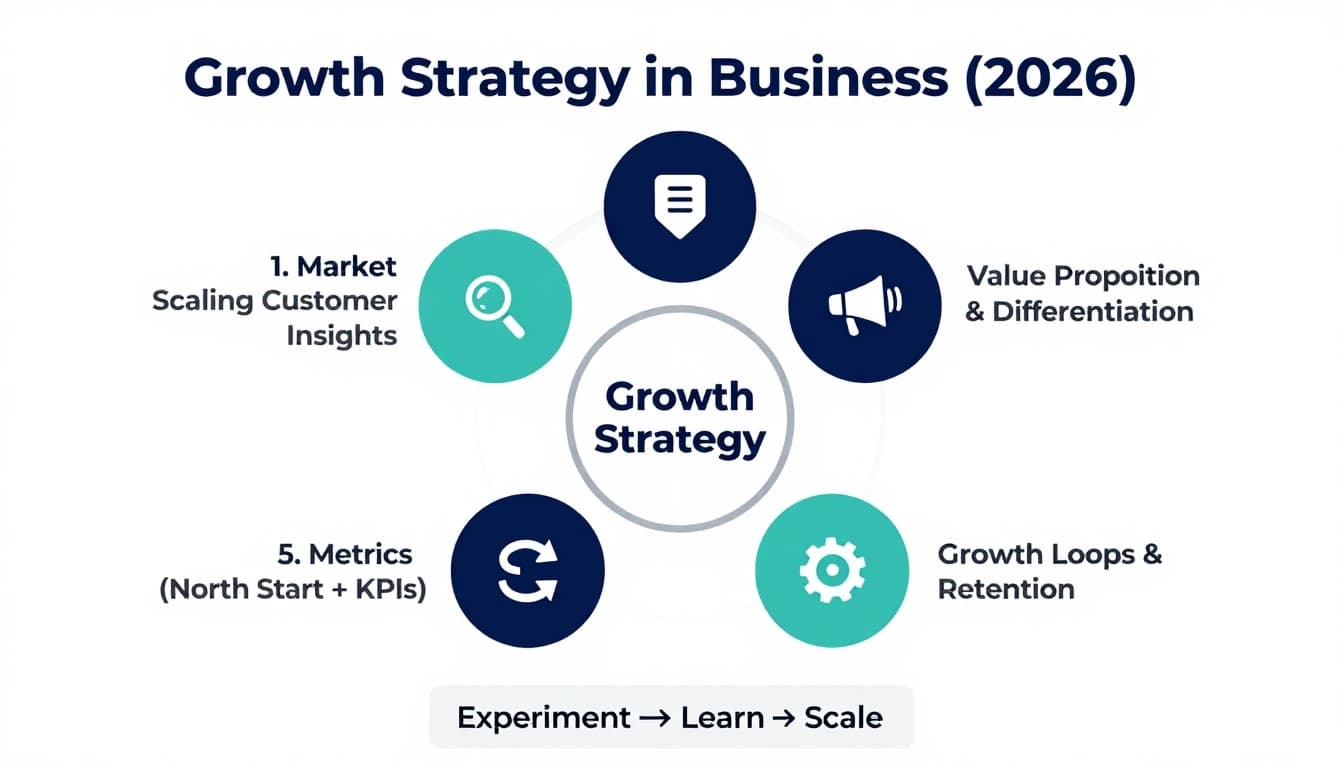
- Market and customer insights: You’re not selling to “everyone,” you’re solving one clear problem.
- Value proposition and differentiation: Why you, not the next tab in their browser?
- Go-to-market channels: Pick 1 to 2 channels you can do well, not six you can’t sustain.
- Growth loops and retention: Referrals, renewals, repeat buys, and habit-building beat constant cold outreach.
- Metrics (North Star + KPIs): A few numbers that tell the truth, fast.
- Scaling operations (people, process, tech): Growth should feel organized, not like a fire drill.
If your team is already pushing hard, but results are uneven, it usually means one of these modules is out of sync. This is also where business performance matters, and these 13 strategies to improve business performance can help tighten execution.
10 growth-ready business ideas (and the strategy behind each)
Below are business ideas designed to scale because they’re repeatable, measurable, and easy to systemize.
1) AI-powered customer support setup service
Summary: Set up chatbots, help desks, and support workflows for SMBs.
Why it’s valuable: Faster response times, fewer tickets, happier customers.
Who it’s for: Agencies, ops freelancers, IT consultants.
How to start: Package a “Support Stack in 7 Days,” use templates, document SOPs.
Tools: Intercom or Zendesk, HelpScout, Zapier or Make.
Example: A local clinic reduces phone calls by routing FAQs to a bot.
2) Niche B2B content engine (done-for-you)
Summary: Create 4 to 8 SEO pages per month for one industry (dentists, HVAC, SaaS).
Why it’s valuable: Recurring retainers and compounding traffic.
Who it’s for: Writers, SEO consultants, small agencies.
How to start: Pick one niche, build a content brief system, sell outcomes (leads).
Tools: Ahrefs or Semrush, Google Search Console, Notion.
Example: A bookkeeping firm ranks for “tax prep for contractors” and books calls weekly.
3) Micro-SaaS for one painful workflow
Summary: A small tool that fixes one task, not a “platform.”
Why it’s valuable: Clear value, simpler support, easier onboarding.
Who it’s for: Founders with dev skills, product teams, technical operators.
How to start: Validate with pre-sales, ship a basic version, charge early.
Tools: Stripe, PostHog, Vercel, Customer.io.
Example: A simple invoice-chasing tool for freelancers lowers late payments.
4) Productized lead qualification for service businesses
Summary: You filter, score, and book qualified leads for niche service providers.
Why it’s valuable: Clients pay for time saved, not “marketing activity.”
Who it’s for: SDRs, VAs, marketing generalists.
How to start: Offer a flat monthly plan with a booked-call target and clear rules.
Tools: HubSpot, Calendly, Apollo, Google Sheets.
Example: A remodeling company gets 12 booked estimates a month, no tire-kickers.
5) Local ecommerce brand with subscription refills
Summary: Sell a physical product that naturally replenishes (coffee, pet supplies, skincare).
Why it’s valuable: Predictable revenue through repeat orders.
Who it’s for: Makers, retailers, side-hustlers with sourcing skills.
How to start: Start with one hero product, add subscribe-and-save, improve margins.
Tools: Shopify, Klaviyo, ShipStation.
Example: A specialty tea shop turns best-sellers into monthly bundles.
6) Fractional marketing ops (systems, not “posts”)
Summary: Build tracking, automation, and reporting so marketing is measurable.
Why it’s valuable: Companies waste budget when data is messy.
Who it’s for: Growth marketers, RevOps pros, analytics-minded freelancers.
How to start: Audit tracking, fix attribution basics, automate weekly reporting.
Tools: GA4, Looker Studio, Segment, Zapier.
Example: A SaaS stops guessing which channel drives trials.
7) Online cohort course for a narrow outcome
Summary: Teach one result in 30 days (job-ready portfolio, Etsy launch, bookkeeping basics).
Why it’s valuable: Higher price point than self-paced, better completion rates.
Who it’s for: Experts, coaches, creators with a clear method.
How to start: Run a pilot cohort, record lessons, refine onboarding and support.
Tools: Circle, Zoom, Stripe, ConvertKit.
Example: A designer runs a “landing page in a weekend” cohort for founders.
8) Compliance and policy kit business
Summary: Templates and setup services for privacy, HR, and basic compliance needs.
Why it’s valuable: High trust, high urgency, repeatable assets.
Who it’s for: HR pros, legal ops freelancers, consultants.
How to start: Offer an industry-specific kit plus setup call and annual updates.
Tools: Google Docs, PandaDoc, Loom.
Example: A small agency gets a privacy policy and onboarding docs in one week.
9) Financial planning and cash-flow coaching for owners
Summary: Help small business owners set budgets, pricing, and cash-flow routines.
Why it’s valuable: Many profitable businesses still run out of cash.
Who it’s for: Accountants, bookkeepers, finance operators.
How to start: Productize a monthly cadence: review, forecast, decisions, actions.
Tools: QuickBooks, Xero, Fathom, Google Sheets.
Example: A contractor builds a 90-day cash plan and stops using credit cards.
If funding is the bottleneck, these new funding options for business growth can help you think beyond a traditional bank loan.
10) Retention and referral program setup for service brands
Summary: Build loyalty, referral, and reactivation systems that create repeat business.
Why it’s valuable: It’s often cheaper than finding new customers.
Who it’s for: Marketers, CRM specialists, agencies.
How to start: Map customer lifecycle, add referral triggers, measure repeat rate.
Tools: Klaviyo, HubSpot, ReferralCandy, Typeform.
Example: A salon fills slow weekdays using reactivation texts.
Quick comparison table: what to start, who it fits, and cost
| Business idea | Best for | Starting cost | Key benefit |
|---|---|---|---|
| AI support setup service | Ops and IT freelancers | Low | Fast delivery, clear ROI |
| Niche B2B content engine | Writers and SEO consultants | Low | Recurring revenue |
| Micro-SaaS | Builders and product teams | Medium | Scales with software margins |
| Subscription ecommerce | Product sellers | Medium | Predictable repeat orders |
| Fractional marketing ops | Analytics-minded marketers | Low | Better tracking, better decisions |
How to choose the right business idea (without guessing)
Picking a business is like picking a route on a map. The “best” route depends on your vehicle, fuel, and time.
Use this quick checklist:
Demand clarity: Can you name the buyer, the pain, and the budget in one sentence?
Distribution fit: Do you already have access to a channel (email list, LinkedIn, partners, local network)?
Repeatability: Can you deliver the same result with templates and SOPs?
Unit economics: Do you know your rough cost to deliver, and your target margin?
Time-to-cash: Can you get paid within 30 days?
For broader planning, HSBC’s guide to creating a business growth plan offers a useful structure you can adapt, even if you’re not UK-based.
Track the numbers that keep growth honest
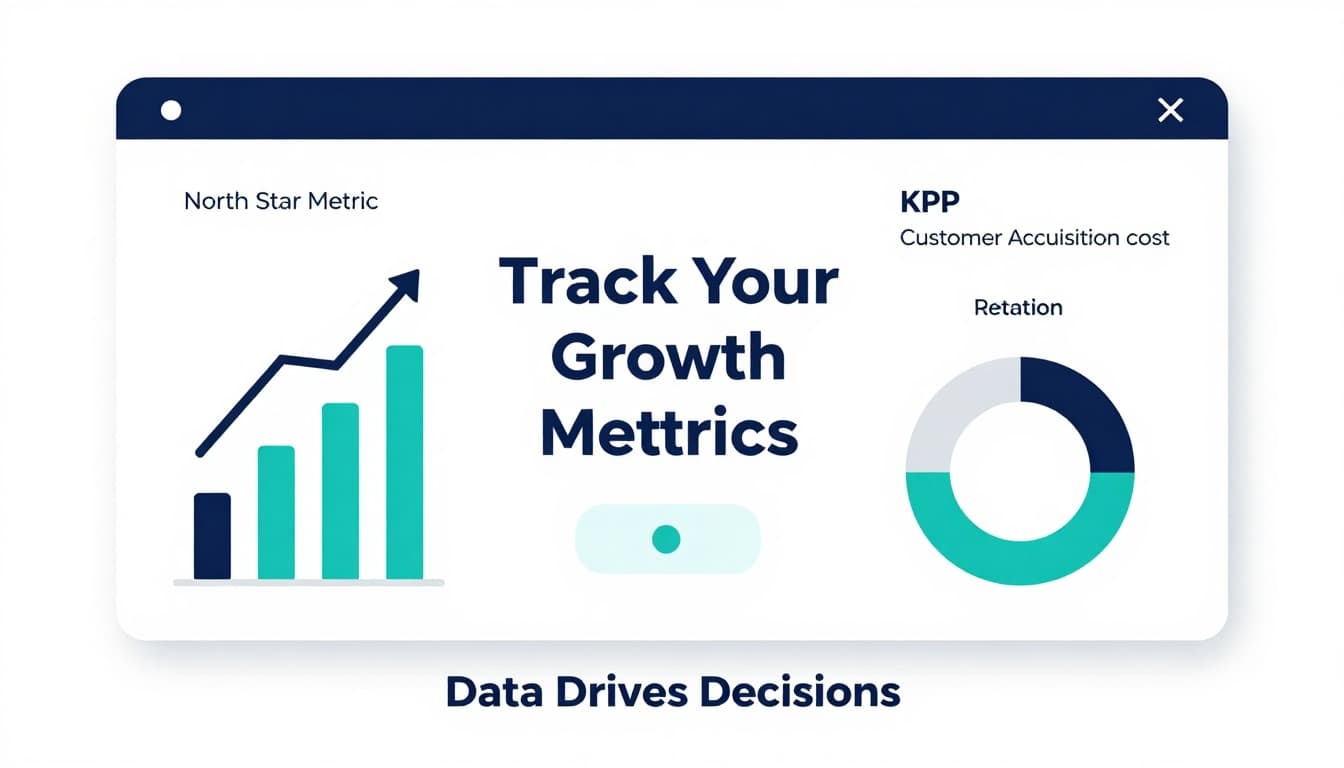
If you don’t measure it, you’ll manage it with vibes. Pick one North Star metric (like weekly active users, retained customers, or qualified calls booked), then track 3 to 5 KPIs that influence it.
If you want a practical checklist of proven growth moves, Bank of America’s strategies to grow your business is a solid reference.
Conclusion: turn a good idea into a system that scales
Growth doesn’t come from hustle alone. It comes from focus, clear offers, and repeatable systems.
Pick one of the business ideas above, pressure-test it with real customers, then build your process, metrics, and retention from day one. That’s what a business growth strategy looks like when it’s working.
Which idea fits your skills, and which channel can you commit to for the next 90 days?

Adeyemi Adetilewa leads the editorial direction at IdeasPlusBusiness.com. He has driven over 10M+ content views through strategic content marketing, with work trusted and published by platforms including HackerNoon, HuffPost, Addicted2Success, and others.