
A brand isn’t a logo, it’s a living system. It grows, gets tested, hits plateaus, and sometimes needs a fresh start. If you treat your brand like a one-time project, you’ll miss what’s actually happening in the market.
Brand lifecycle management is the practice of guiding your brand through those phases with clear decisions, consistent execution, and honest measurement. It helps founders, marketers, and small business owners know what to fix (and what not to touch) as customer needs shift.
This guide breaks down practical frameworks, the metrics that matter at each stage, and real examples you can copy across SaaS, e-commerce, services, and creator-led brands.
What brand lifecycle management really means (and why it’s worth your time)
Think of your brand like a storefront on a busy street. Early on, you need foot traffic and recognition. Later, you need reasons to stay top-of-mind, earn trust, and keep customers coming back. The goals change, so the playbook should change too.
Brand lifecycle management helps you:
- Match strategy to reality, not to last year’s plan.
- Avoid random rebrands when the real issue is distribution, pricing, or product fit.
- Spend smarter by tracking leading indicators (like share of search) before revenue dips.
It also creates a shared language across teams, so product, marketing, and sales aren’t pulling in different directions.
A practical brand lifecycle framework you can use (6 stages)
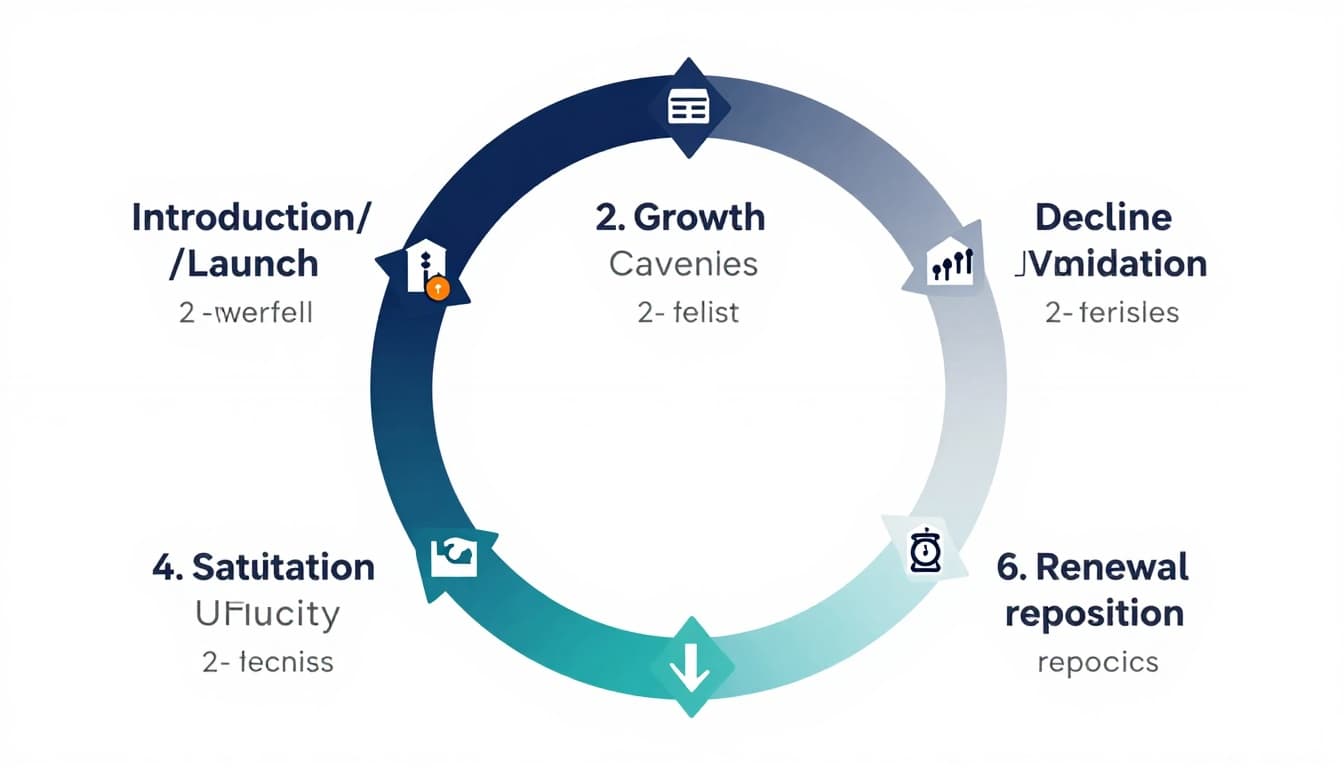
Most brands move through predictable stages. The timing varies, but the signals are familiar.
1) Brand strategy and positioning
This is where you decide what you stand for and who you’re for. The risk here isn’t low awareness, it’s vague differentiation.
Practical outputs: positioning statement, messaging pillars, category choice, competitor map.
2) Launch and awareness
Your job is to become “findable.” People can’t buy what they can’t recall.
Focus on reach, distribution, PR, creator partnerships, and tight onboarding.
3) Growth and expansion
The brand starts compounding. You’re building habits and trust, not just traffic.
Expect channel diversification, new segments, and the first serious pressure on customer support and operations.
4) Maturity and optimization
The brand is known. Now it must stay sharp.
This stage rewards conversion rate improvements, retention work, pricing tests, and stronger creative.
5) Renewal or repositioning
Renewal doesn’t mean a full rebrand. Often it’s a sharper promise, a new audience, a new product line, or a new narrative.
Packaging, content strategy, and a cleaner product experience can do more than a new logo (see this guide on best practices for product packaging design if you sell physical products).
6) Decline or retirement
Decline happens when the market moves, the category gets crowded, or customers lose interest. Some brands recover, others sunset a product line, change focus, or merge.
The key is to spot it early, before margins and morale collapse.
Metrics that matter at each stage (a brand dashboard that doesn’t lie)
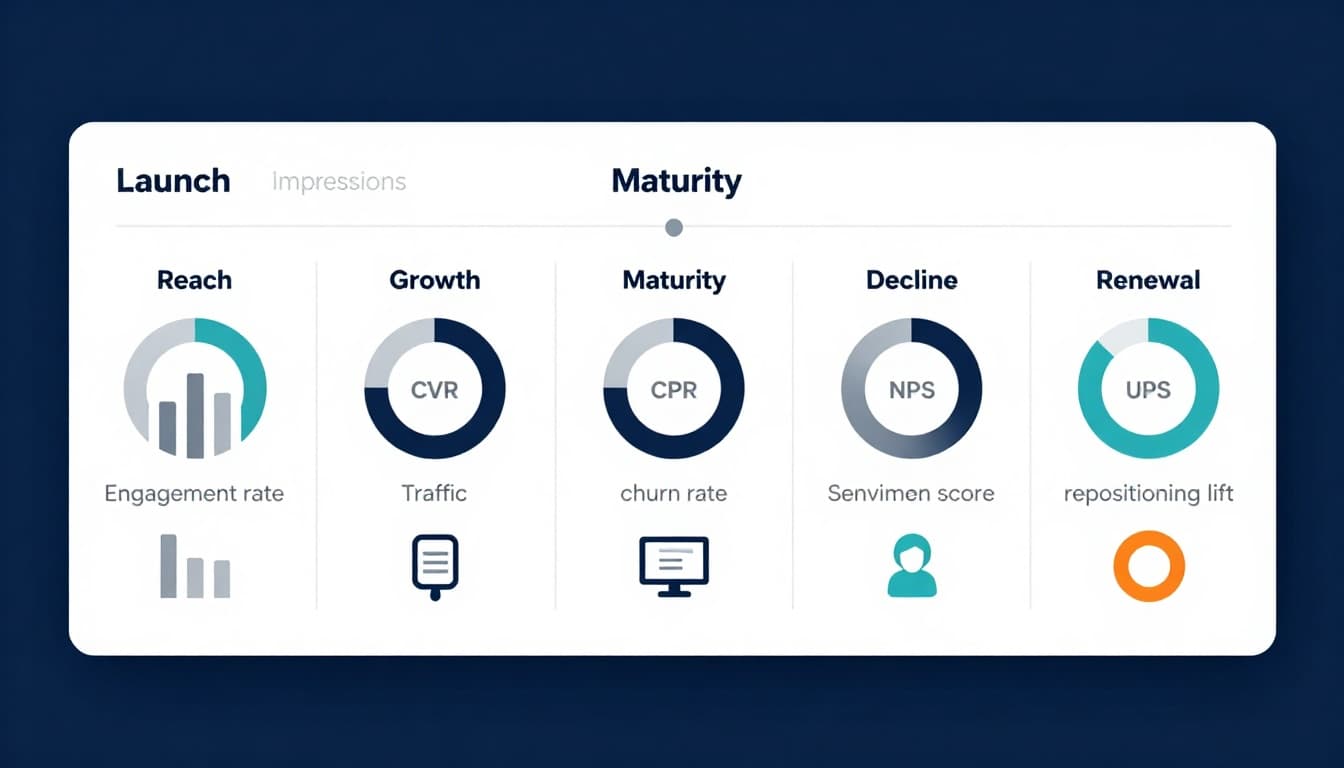
Many teams track what’s easy (followers, impressions), then wonder why sales stall. Better tracking starts by pairing stage-specific goals with a small set of metrics you can review every month.
If you’re setting up ongoing measurement, this overview of brand tracking metrics is a useful reference for common survey-based indicators, and Hanover Research’s brand tracking toolkit is helpful for designing a repeatable program.
Here’s a simple map you can adopt right away:
| Lifecycle stage | Primary goal | Metrics to watch |
|---|---|---|
| Strategy and positioning | Clarity and fit | Message testing feedback, win-loss notes, sales cycle friction |
| Launch and awareness | Recognition | Share of search, direct traffic, aided and unaided recall |
| Growth and expansion | Efficient acquisition | Conversion rate (CVR), CAC, pipeline velocity, branded search growth |
| Maturity and optimization | Profit and loyalty | Repeat rate, NPS, churn, gross margin by channel |
| Renewal or repositioning | New relevance | Brand sentiment trend, returning visitor rate, new segment conversion |
| Decline or retirement | Stabilize or exit | Revenue concentration, churn acceleration, price sensitivity, retention cohort drops |
A few metric guardrails that keep you honest:
- Share of search is often an early warning signal, it can move before revenue does.
- CAC without LTV is a trap, especially for SaaS and subscriptions.
- NPS without behavior is incomplete, pair it with renewals and repeat purchase.
If you want more KPI ideas, Launchmetrics’ list of essential brand KPIs and this breakdown of a brand measurement framework can help you round out your dashboard.
How to run brand lifecycle management in the real world (a simple operating rhythm)
You don’t need a big team. You need consistency.
Step 1: Assign your current stage (based on signals, not vibes)
Use a quick gut-check, then verify with data. For example, if awareness is high but conversion is flat, you’re probably in maturity, not growth.
Step 2: Choose one “north star” per quarter
Pick the single outcome that fits the stage (awareness, conversion, retention, repositioning lift). Then pick 3 to 5 supporting metrics.
Step 3: Set a monthly review that forces trade-offs
A clean agenda works:
What moved?
Why did it move?
What will we do next month?
Step 4: Document decisions like a lab notebook
Brands improve through memory. Write down what you tried, what changed, and what you learned. This is especially important for founders building credibility over time (this story on personal branding lessons from Googling my name is a good reminder that perception compounds, whether you manage it or not).
Practical examples across industries (so you can picture it)
Example 1: SaaS tool in “growth” that’s acting like it’s in “launch”
A B2B SaaS startup keeps pushing broad awareness ads, but their demo-to-paid rate is weak.
What to do: tighten onboarding, improve case-study pages, and align sales enablement with the strongest use case.
Tools: GA4, HubSpot, PostHog, a survey tool for churn reasons.
Small win: a single onboarding email sequence raises activation, which lowers CAC pressure.
Example 2: DTC skincare brand in “maturity” planning a full rebrand
Sales are steady, but customer repeat rate is slipping. The team wants a new name and look.
What to do: audit retention first. Test bundles, subscribe-and-save, and post-purchase education.
Tools: Shopify analytics, Klaviyo, Recharge, customer review mining.
Use case: content that answers “how to use it” often lifts repeats more than new colors and fonts (these content strategy tips for growing beauty brands apply well here).
Example 3: Local service business in “launch” needs trust fast
A new HVAC company has skilled techs but no brand history.
What to do: prioritize review generation, local SEO, and simple brand cues (uniforms, vehicles, consistent estimates).
Tools: Google Business Profile, review management software, a basic CRM.
Use case: a short “what to expect” checklist reduces no-shows and increases referrals.
Example 4: Creator-led brand entering “renewal”
A newsletter has plateaued. Open rates are stable, growth is flat, sponsorships slow down.
What to do: reposition around a tighter promise, add a paid tier with one strong outcome, and refresh the referral engine.
Tools: Beehiiv or ConvertKit, SparkLoop, a landing page builder.
Use case: changing the “why subscribe” message can lift conversion without changing the product.
Common mistakes that quietly derail the lifecycle
The most expensive errors are usually the quiet ones:
- Changing visuals to solve a product problem.
- Measuring everything weekly, then reacting to noise.
- Ignoring category shifts, especially when competitors educate the market better than you do.
Brand lifecycle management works when you treat measurement as a compass, not a scorecard.
Conclusion: manage the brand like an asset, not a campaign
Brands don’t fail all at once, they drift. A clear framework, a tight set of metrics, and stage-matched actions keep you from guessing. Use brand lifecycle management to decide what matters now, what can wait, and what needs to change before customers change their mind for you.
If you had to name your current brand stage in one sentence, what would you say, and what metric would prove it?

Adeyemi Adetilewa leads the editorial direction at IdeasPlusBusiness.com. He has driven over 10M+ content views through strategic content marketing, with work trusted and published by platforms including HackerNoon, HuffPost, Addicted2Success, and others.
Coaching and freelance writing has been very effective in helping me grow my online business. At the moment I haven’t created any digital information product I can monetize online but I hope to do that soon.
Thanks for sharing your idea with us.
You’re very much welcome Emmanuel.
Excellent post but I was wondering if you could write a litte more on this subject?
I’d be very thankful if you could elaborate a little bit more.
Thank you!
Sure. I’m working on that at the moment