
A brand isn’t a logo or a color palette. It’s a promise people remember, judge, and talk about when you’re not in the room.
That promise changes over time, and so do the tactics that keep it strong. If you’ve ever wondered why a brand that once felt unstoppable suddenly feels “meh,” you’re seeing the brand lifecycle at work.
This guide breaks down the main stages, real-world style examples, and practical strategies founders, marketers, and small business owners can use to build sustainable brand growth (even when you’re still validating business ideas).
What the brand lifecycle is (and why it matters)
The brand lifecycle describes the typical arc a brand follows, from launch to growth, maturity, and either decline or renewal. It’s similar to the product life cycle, but it focuses on brand perception, loyalty, and relevance, not just sales volume.
Why it matters: each stage has different risks. Early on, the risk is invisibility. Later, it’s sameness. And if you wait until decline is obvious, the fixes get expensive and slow.
For a deeper conceptual overview, the breakdown in Brand Lifecycle: Techniques & Examples is helpful context.
The 5 stages of the brand lifecycle (with practical examples)
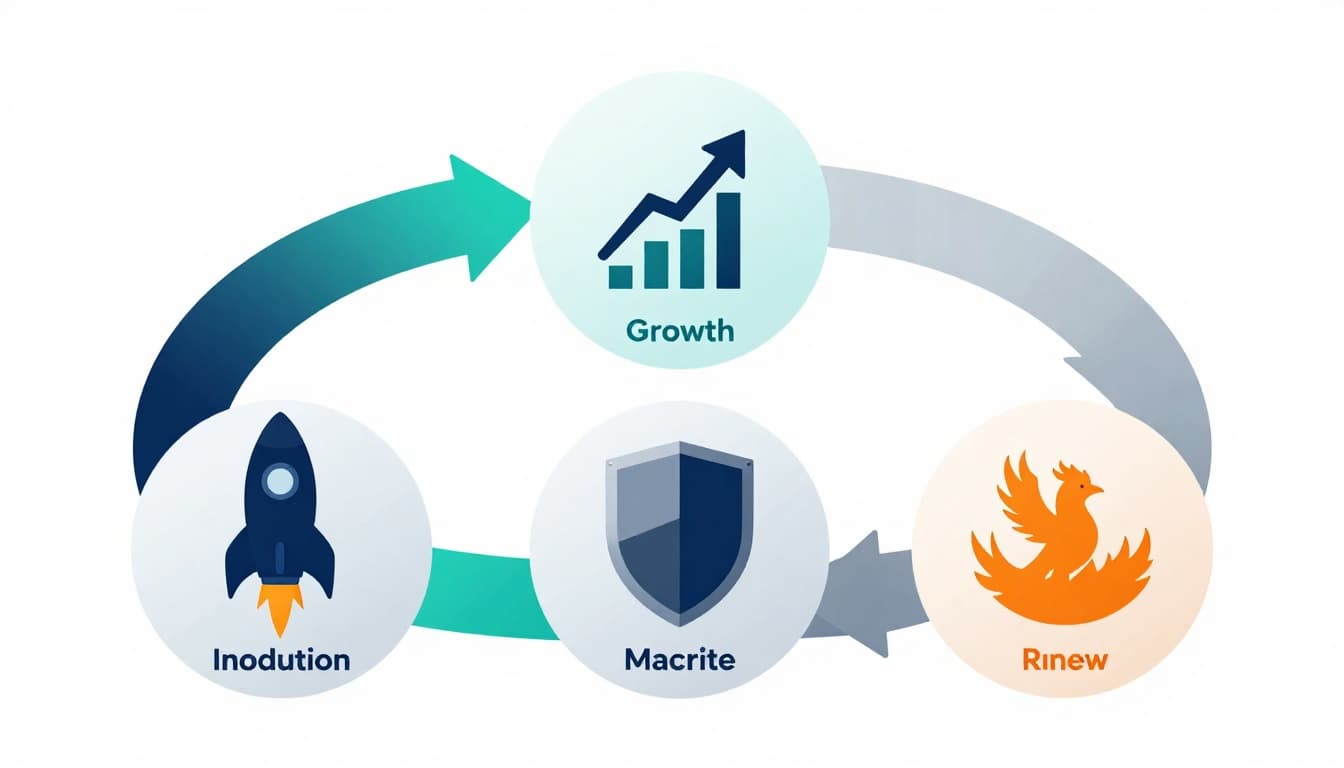
1) Launch (Introduction): “Do people even know we exist?”
At launch, you’re building awareness and meaning. Your brand is a new face in a crowded room, and you need one clear reason for someone to care.
Example: A niche bookkeeping service for freelancers starts with a tight promise: “Monthly books done in 48 hours, no calls required.”
What works here:
- One sharp positioning statement (who it’s for, what it fixes, why you)
- Proof fast (reviews, results, clear work samples)
- Distribution you can repeat weekly (not one viral hope)
2) Growth: “People want it, can we keep up?”
Growth is where demand rises and expectations rise faster. Customers start comparing you to alternatives. Your brand must move from “interesting” to “obvious choice.”
Example: A SaaS time-tracking tool finds traction with agencies, then expands into consultants and remote teams with tailored pages and onboarding flows.
What works here:
- Consistent messaging across ads, site, onboarding, and support
- Simple differentiation (speed, quality, niche focus, or outcomes)
- Strong lifecycle marketing, so new users don’t fade out after week one
If you’re building brand visibility through content, this guide on inbound content marketing strategies can help you set up a repeatable acquisition engine.
3) Maturity: “We’re known, but growth is slower”
Maturity isn’t failure. It’s a sign you’ve earned trust and reached a stable market position. The challenge is that the market now expects you to be “good,” so your brand needs fresh reasons to stay top-of-mind.
Example: A local bakery with a loyal base hits a ceiling, then grows by introducing corporate catering, seasonal drops, and a membership box.
What works here:
- Strengthening loyalty (community, perks, surprise-and-delight)
- Operational efficiency (same quality, better margins)
- Brand extensions that fit (new audiences, new use cases, new formats)
For more on sustaining growth during maturity (especially relevant for SaaS), see Maturity Stage of Product Life Cycle: How to Sustain Growth.
4) Decline: “Why are people leaving or not choosing us?”
Decline shows up as shrinking attention, weaker conversion rates, and more price pressure. Sometimes it’s because competitors caught up. Sometimes your customer changed, and you didn’t.
Example: An ecommerce brand built on one hero product sees demand drop as cheaper clones flood marketplaces.
What works here:
- Diagnosing the real cause (product gaps, messaging drift, channel changes)
- Fixing friction (shipping, support delays, unclear offers)
- Rebuilding differentiation (not just discounts)
5) Renewal (Repositioning): “What can we become now?”
Renewal is a deliberate reset. It might mean a rebrand, a new segment, a new flagship offer, or a refreshed story that matches what you actually do well today.
Example: A generalist marketing agency narrows into “B2B webinar production and promotion,” then rebuilds its site, case studies, and packages around that outcome.
What works here:
- Clear choices (what you’re stopping, who you’re focusing on)
- New proof (fresh case studies, stronger authority signals)
- A launch plan (announce, educate, convert, then nurture)
For more lifecycle-stage strategy ideas, Brand Lifecycle: Strategies for Building a Strong Brand at Every Stage of the Lifecycle offers additional frameworks.
How to tell which brand lifecycle stage you’re in
You don’t need perfect data. You need a few signals you can track monthly.
| Stage | Common signals | Primary goal |
|---|---|---|
| Launch | Low awareness, few reviews, inconsistent traffic | Clarity and trust |
| Growth | Rising demand, higher CAC pressure, scaling pains | Consistent differentiation |
| Maturity | Stable revenue, slower growth, more competitors | Loyalty and expansion |
| Decline | Falling conversion, churn rising, discount reliance | Diagnose and fix relevance |
| Renewal | New positioning, refreshed offer, re-entry campaigns | Rebuild demand and meaning |
One practical habit that helps across stages is tighter customer insight. This is where why marketing research matters for businesses becomes more than theory, it’s how you stop guessing.
Strategies for sustainable brand growth (that work across stages)
Build a “one-sentence brand” first, then expand
If your team can’t explain your brand in one sentence, customers won’t repeat it. Start simple: audience + problem + outcome.
Make proof a brand asset, not an afterthought
Collect reviews, case studies, and before-and-after stories continuously. Proof is what turns “nice branding” into belief.
Tighten the customer experience, not just the visuals
Your brand is also your support response time, billing clarity, delivery quality, and how you handle mistakes. Experience is memory.
Create a content system you can sustain
A blog post that ranks is good. A weekly system that teaches your market is better. Pair education with a clear next step.
Use line extensions carefully
New products and services can refresh a mature brand, but only if they fit the core promise. Random add-ons confuse people and weaken recall.
Track the few metrics that signal brand health
Pick a small dashboard: direct traffic trend, branded search trend, review velocity, repeat purchase rate, and churn (if you’re subscription-based). Then review it monthly.
If your goal is broader scaling, you can pair these brand moves with powerful tactics to accelerate business growth, especially when you need operations and marketing working together.
Mistakes that shorten the brand lifecycle
A few errors tend to speed-run brands into decline:
- Chasing every new channel and losing message consistency
- Competing on price because the brand can’t explain value
- Over-expanding into audiences you can’t serve well
- Letting customer experience slip while “marketing harder”
Brand growth isn’t magic. It’s maintenance, focus, and smart change at the right time.
Conclusion: Make the brand lifecycle work for you
The brand lifecycle is a map, not a verdict. When you know your stage, you stop wasting effort on the wrong plays and start building the right kind of momentum.
Audit your signals, pick one priority for the next 30 days, and execute with consistency. Sustainable brand growth comes from small, repeated wins that compound, until your brand feels less like a campaign and more like a habit customers don’t want to break.

Adeyemi Adetilewa leads the editorial direction at IdeasPlusBusiness.com. He has driven over 10M+ content views through strategic content marketing, with work trusted and published by platforms including HackerNoon, HuffPost, Addicted2Success, and others.